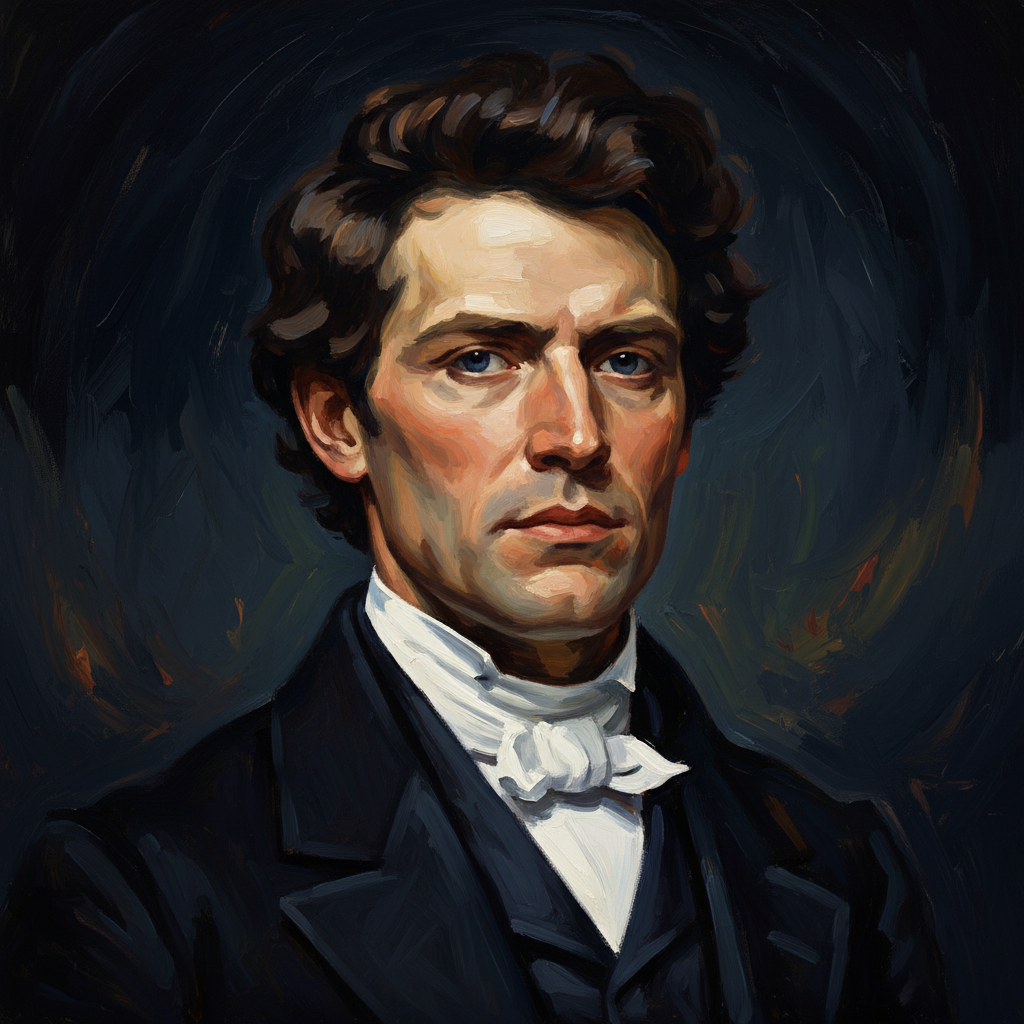
Joseph Smith — "I am a man of honor, and I will uphold the honor of God."
I am a man of honor, and I will uphold the honor of God.
I am a man of honor, and I will uphold the honor of God.
Click any product to generate a realistic preview. Up to 3 at a time.
* Initial load can take up to 90 seconds — revising the preview in another color is nearly instant.
"If a man marry a wife by my word, which is the word of the Lord, and by the new and everlasting covenant, and it is sealed unto them by the Holy Spirit of promise, according to the ordinances of my Ho…"
"God himself was once as we are now, and is an exalted man, and sits enthroned in yonder heavens!"
"I am a man of economy, and I will be economical in all things."
"God did not make the earth out of nothing—for it is contrary to a rational mind and reason that a something could be brought from a nothing."
"I believe the Bible as it read when it came from the pen of the original writers. Ignorant translators, careless transcribers, or designing and corrupt priests have committed many errors."
Found in 1 providers: grok
1 source checked
Personal integrity and devotion to God are treated as inseparable. To be honorable means living in a way that reflects well on God himself — your conduct becomes an extension of your faith. It is a declaration that ethical standards are not self-serving but sacred obligations. Keeping your own reputation clean is how you represent and protect something larger than yourself: your God, your mission, your community's trust in both.
Smith faced relentless accusations of fraud, false prophecy, and criminal conduct throughout his life. Defending his personal honor was structurally identical to defending his prophetic calling — to discredit Smith was to discredit God's revelation. His entire church rested on his personal testimony, making his integrity its foundation. This quote captures his lifelong posture: self-defense as sacred duty, personal reputation as living evidence of divine authenticity and legitimacy.
Smith lived during America's Second Great Awakening — explosive religious experimentation, frontier revivalism, and fierce rivalry among competing sects. In 1830s antebellum America, personal honor was a social contract; a man's reputation determined standing in law, commerce, and community. New religious claimants faced immediate suspicion and mob violence. Invoking honor — a concept his contemporaries held near-sacred — was a deliberate rhetorical move to anchor prophetic credibility in a value his culture already respected.
AI-generated insights based on extensive research and information for context. Factual errors? Email [email protected].
Your cart is empty