What it means
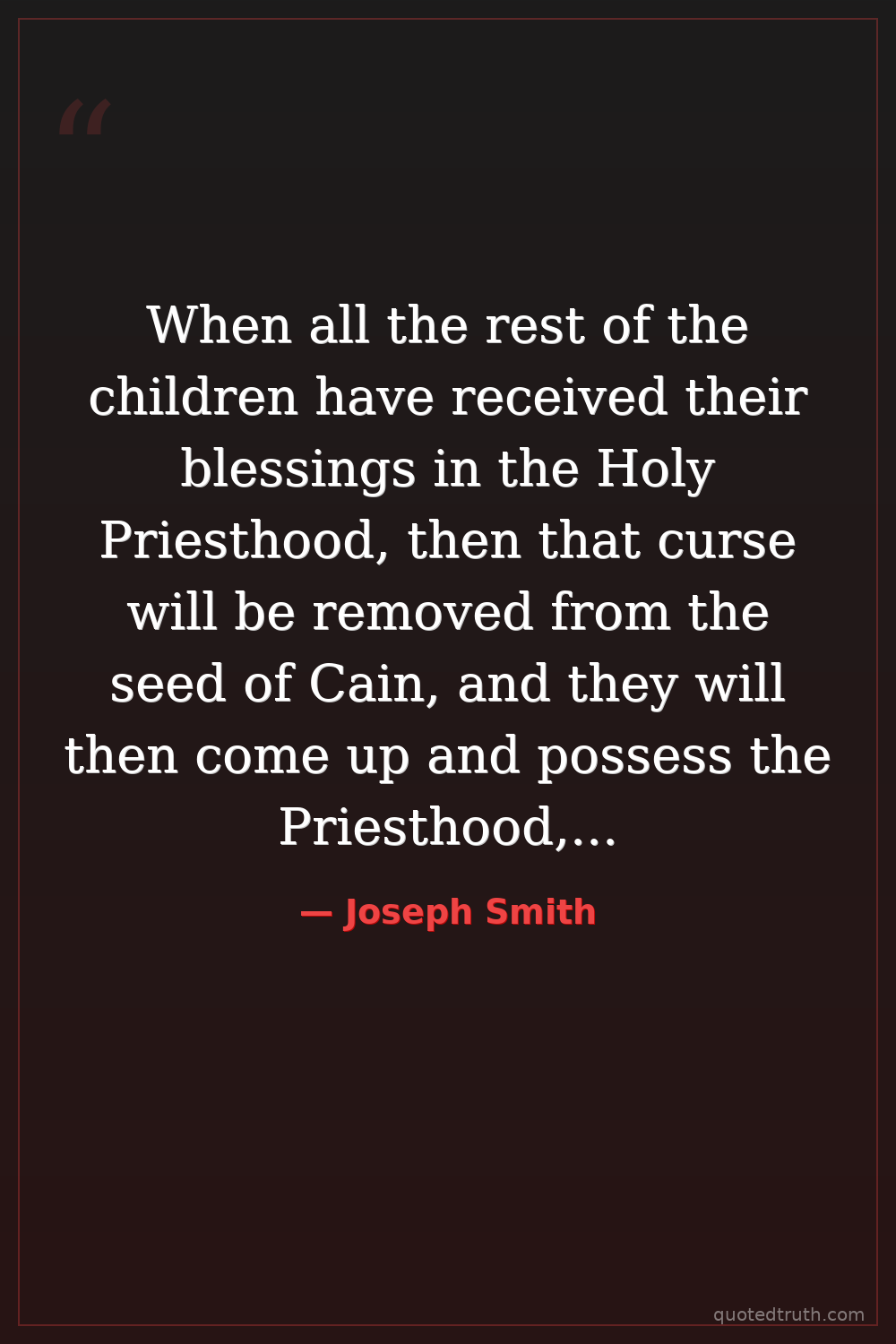
The quote expresses a deferred-equality theology: that Black people, described through the biblical "curse of Cain" framework, are temporarily excluded from LDS priesthood access, but will eventually receive full spiritual blessings after other lineages have first received theirs. It frames racial exclusion as sequential and provisional rather than permanent, promising ultimate inclusion within an eschatological timeline rooted in 19th-century Mormon theological reasoning about lineage and divine order.
Relevance to Joseph Smith
Joseph Smith founded the LDS Church in 1830, claiming continuous divine revelation as its cornerstone. Notably, during his lifetime he ordained Black members, including Elijah Abel, to the priesthood—making this quote theologically complex relative to his actual practice. Smith's broader theology emphasized progressive revelation, restoration of all blessings, and eventual universal redemption, themes that directly shape how this conditional, future-oriented priesthood promise was constructed and understood within early Mormon doctrine.
The era
In 1830s–1840s America, the "curse of Ham" and "curse of Cain" were standard Protestant frameworks used to justify racial hierarchy and slavery. The Second Great Awakening reshaped American religious life while abolitionism intensified national tension. New religious movements like Mormonism had to navigate slavery-era politics as they expanded across the South and frontier West. Theological statements about race carried enormous social and political weight in this volatile period of American religious formation.
AI-generated insights based on extensive research and information for context. Factual errors? Email [email protected].