What it means
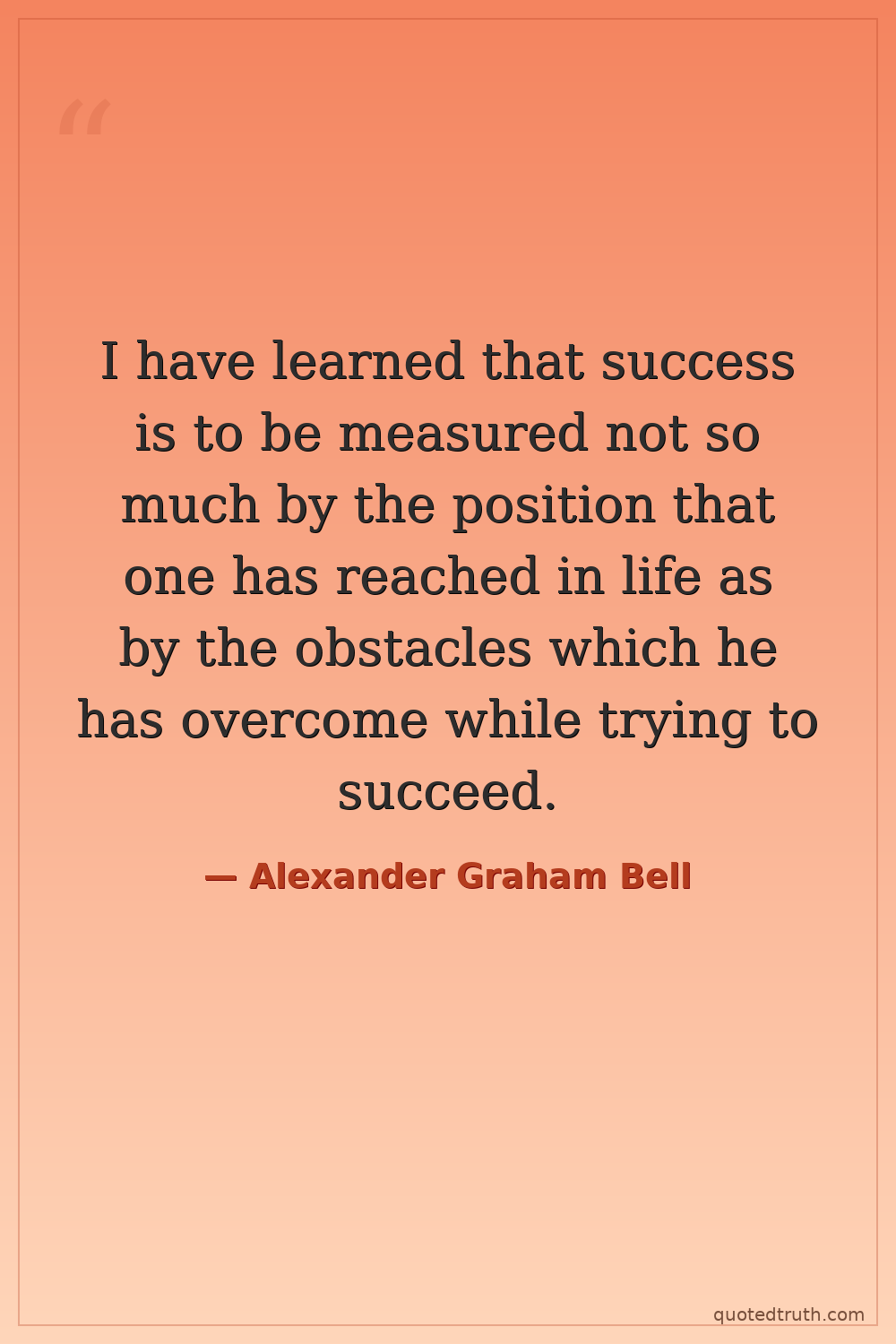
Success isn't defined by your rank, title, or wealth — it's measured by what you had to overcome to get there. Someone who clears difficult barriers earns more authentic success than someone handed an easy path to the top. The harder the climb, the more meaningful the achievement. Your struggles are the real scorecard, not your position when you finally arrive.
Relevance to Alexander Graham Bell
Bell spent years in fierce legal battle — Elisha Gray filed a competing telephone patent the same day in 1876, sparking one of history's most contested patent disputes. His mother and wife were both deaf, fueling his obsession with sound despite widespread skepticism. He failed repeatedly before that first successful call. Bell lived this principle: the obstacles he navigated defined him far more than the fame the telephone eventually brought.
The era
Bell's peak years fell during the Gilded Age, when American culture glorified the self-made man but measured success almost entirely by wealth and social standing. Robber barons dominated headlines. Inventors competed ferociously, often losing to those with superior legal resources or capital. Arguing that obstacles — not outcomes — define success was a meaningful counterweight to an era obsessed with rank, fortune, and the appearance of effortless achievement.
AI-generated insights based on extensive research and information for context. Factual errors? Email [email protected].