John Wesley — "I have not much time to spare for trifles."
I have not much time to spare for trifles.
I have not much time to spare for trifles.
Click any product to generate a realistic preview. Up to 3 at a time.
* Initial load can take up to 90 seconds — revising the preview in another color is nearly instant.
"What is the secret of your strength? I answer, the power of prayer."
"I have been writing a sermon on the use of money. Oh, what a flat, unprofitable subject it is!"
"I have found that the more I pray, the more I have to pray for."
"I have often thought, that if I were to choose a text to preach from, it should be 'God is love.'"
"I have often wondered that any man, who has tasted of the pleasures of retirement, can ever be prevailed upon to quit them."
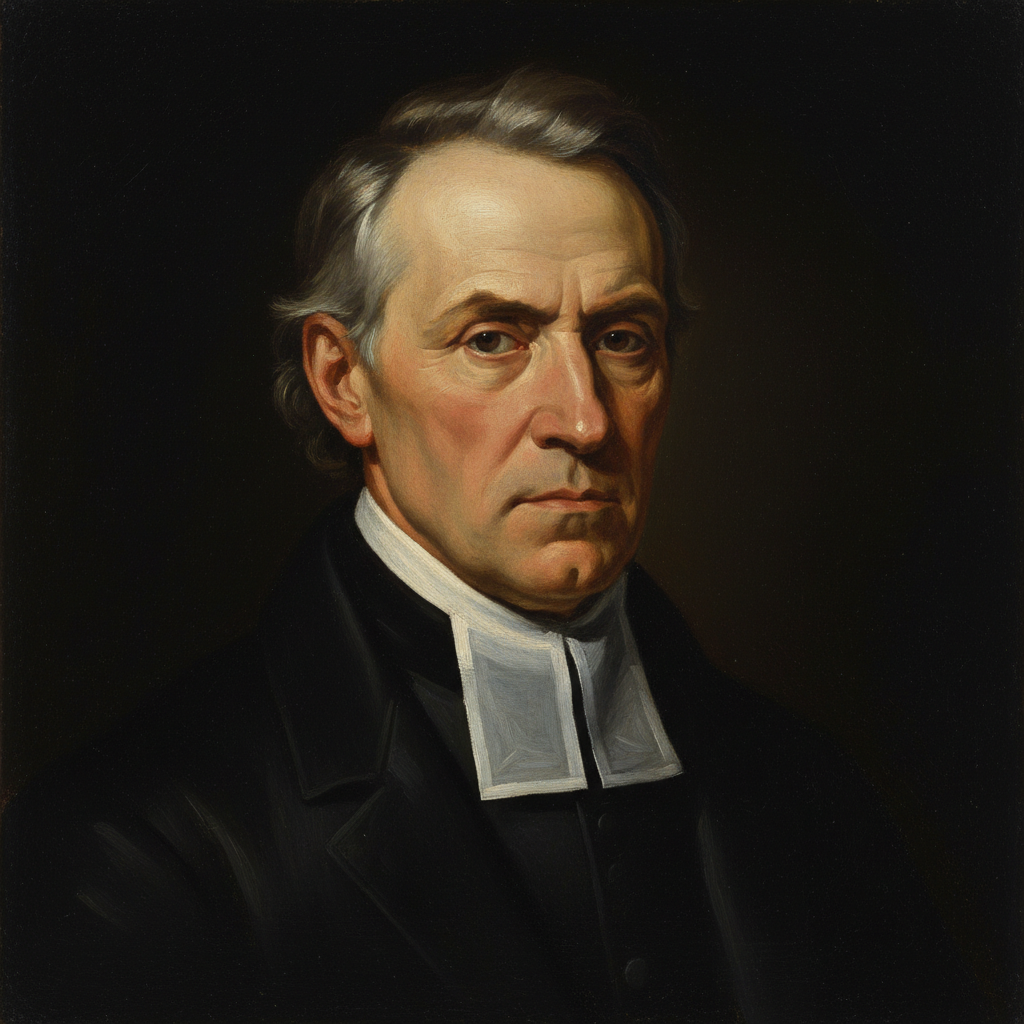
English Anglican cleric and founder of Methodism, whose open-air preaching and class-meeting structure created the largest 18th-century evangelical revival. Closely associated with Charles Wesley (his hymn-writing brother) and George Whitefield (early co-revivalist, later doctrinal opponent). For an intellectual contrast, see George Whitefield, Calvinist evangelical revivalist — Whitefield's predestinarian Calvinism vs Wesley's free-grace Arminian theology split the early Methodist movement permanently in the 1739-41 break. The founding evangelical Calvinist-Arminian schism — the two parallel evangelical traditions American Christianity descends from.
Found in 1 providers: grok
1 source checked
The quote expresses radical prioritization — a refusal to squander finite time on idle or trivial pursuits. Life's urgency demands focus on what genuinely matters. In modern terms: stop wasting hours on distractions when real, consequential work demands attention. It captures a mindset of purposeful scarcity, treating every hour as too valuable to fritter away on inconsequential things when bigger responsibilities press constantly forward.
Wesley rode roughly 250,000 miles on horseback, preached over 40,000 sermons, rose at 4 AM daily, and authored hundreds of books and pamphlets before turning 88. He believed time was God-given and squandering it was a moral failure. His Methodist movement was built on disciplined schedules and rigorous accountability. This quote is not rhetorical posturing — it describes the actual rhythm of his relentlessly productive life.
In 18th-century Britain, the Church of England was widely criticized as spiritually dormant while poverty, illiteracy, and the gin epidemic ravaged the working class. Wesley saw millions of souls unreached and social conditions deteriorating. Against a backdrop of nascent industrialization and grinding urban misery, dismissing trifles wasn't aristocratic aloofness — it was a moral response to overwhelming human need that demanded every available moment.
AI-generated insights based on extensive research and information for context. Factual errors? Email [email protected].
Your cart is empty