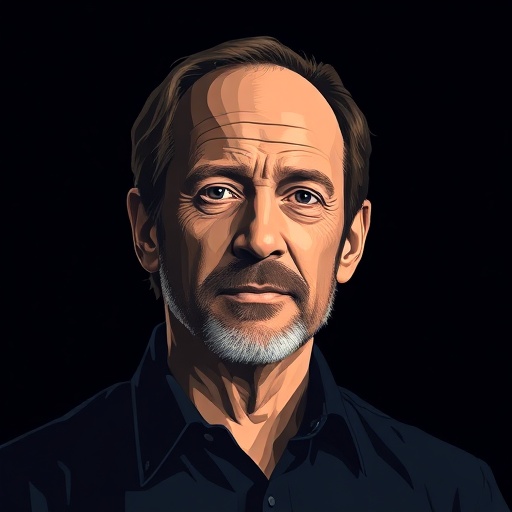
Tim Berners-Lee — "I never patented the web because I wanted it to be free and open for everyone."
I never patented the web because I wanted it to be free and open for everyone.
I never patented the web because I wanted it to be free and open for everyone.
Click any product to generate a realistic preview. Up to 3 at a time.
* Initial load can take up to 90 seconds — revising the preview in another color is nearly instant.
"If you put everything on the web, then the world will be a better place. You will be a better person."
"The web is not a privilege, it is a right."
"Centralization of the web gives too much power to a few companies. This is dangerous."
"The web is a shared space."
"I don't think I'm a visionary. I just saw a problem and tried to solve it."
British computer scientist who invented the World Wide Web at CERN in 1989 and founded the W3C, championing open web standards. Closely associated with Vint Cerf (TCP/IP co-creator and 'father of the internet') and Marc Andreessen (Mosaic browser creator and Netscape co-founder). For an intellectual contrast, see Mark Zuckerberg, Facebook (Meta) founder — Zuckerberg's walled-garden Facebook is the canonical contemporary opposite of Berners-Lee's open-web vision; Berners-Lee's Solid project and 'recapture the web' essays are explicitly written as a rebuttal to the platform-monopoly model Facebook pioneered.
Found in 1 providers: grok
1 source checked
Berners-Lee chose not to claim legal ownership over his invention because he believed it should belong to humanity rather than enrich one person or company. By refusing a patent, he ensured anyone could use, build on, and access the technology without paying licensing fees or seeking permission. The decision prioritized universal access and collaborative growth over personal wealth, treating the web as shared infrastructure rather than private property.
Working at CERN in 1989, Berners-Lee invented HTTP, HTML, and the first browser, then convinced CERN to release the underlying code royalty-free in 1993. He later founded the World Wide Web Consortium (W3C) to maintain open standards and launched the Solid project and Contract for the Web, consistently advocating that web access is a fundamental right and resisting corporate enclosure of the digital commons.
In the early 1990s, software patents were exploding and companies like Microsoft, AOL, and CompuServe ran walled-garden online services charging subscription fees. Competing hypertext systems like Xanadu sought royalties on every link. Releasing the web freely in 1993 was radical, enabling explosive global adoption, the dot-com era, and eventually social media. His stance now anchors ongoing debates over net neutrality, platform monopolies, data ownership, and AI scraping.
AI-generated insights based on extensive research and information for context. Factual errors? Email [email protected].
Your cart is empty