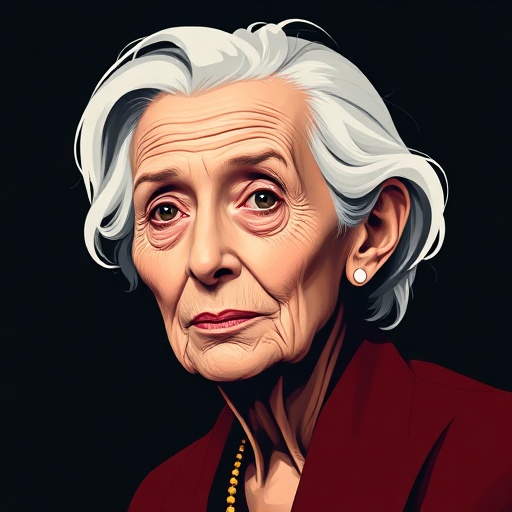
Jane Goodall — "I think the most important thing is to realize that we are part of the animal ki…"
I think the most important thing is to realize that we are part of the animal kingdom, and we're not above it.
I think the most important thing is to realize that we are part of the animal kingdom, and we're not above it.
Click any product to generate a realistic preview. Up to 3 at a time.
* Initial load can take up to 90 seconds — revising the preview in another color is nearly instant.
"Only if we understand, will we care. Only if we care, will we help. Only if we help, shall all be saved."
"The world needs more compassion."
"If we don't save the planet, we don't save ourselves."
"I believe that every day is an opportunity to make a positive difference."
"The world is a beautiful place, and we need to protect it for future generations."
British primatologist who in 1960 began the longest-running wild primate study at Gombe Stream, transforming our understanding of chimpanzees. Closely associated with Dian Fossey (mountain-gorilla researcher) and Birutė Galdikas (orangutan researcher; together with Goodall and Fossey one of Louis Leakey's 'Trimates'). For an intellectual contrast, see Walter Palmer, American dentist who killed Cecil the Lion in Zimbabwe in 2015 — Palmer represents the trophy-hunting tradition Goodall's life's work has been organized against — the colonial-era hunter-naturalist worldview that treated primates and big game as specimens or trophies, which Goodall's Roots & Shoots and Jane Goodall Institute exist specifically to displace.
Found in 1 providers: grok
1 source checked
Humans are not separate from or superior to the rest of the animal world — we are biological creatures like any other species. The quote challenges the assumption of human exceptionalism, the belief that intelligence or culture places us above nature's rules. Recognizing our membership in the animal kingdom demands humility: we share the planet as participants in a larger ecosystem, not as its owners or rulers.
Goodall spent decades living among chimpanzees at Gombe Stream, Tanzania, documenting tool use, grief, and complex social bonds — behaviors science once considered exclusively human. Her discoveries compelled scientists to redefine humanity itself. As a primatologist turned global conservationist, her entire career rests on this conviction: the divide between humans and other animals is far narrower than assumed, granting animals moral weight and kinship rather than subordinate status.
Goodall began her Gombe fieldwork in 1960 as postwar industrialization ravaged ecosystems worldwide. Rachel Carson's Silent Spring (1962) exposed chemical destruction of nature, and Earth Day launched in 1970, marking a culture awakening to human-caused ecological collapse. In a century that industrialized mass species extinction and deforestation, her argument that humans belong within nature — not above it — gave science-backed moral urgency to an emerging environmental movement demanding systemic change.
AI-generated insights based on extensive research and information for context. Factual errors? Email [email protected].
Your cart is empty