Jane Goodall — "Only if we understand, will we care. Only if we care, will we help. Only if we h…"
Only if we understand, will we care. Only if we care, will we help. Only if we help, shall all be saved.
Only if we understand, will we care. Only if we care, will we help. Only if we help, shall all be saved.
Click any product to generate a realistic preview. Up to 3 at a time.
* Initial load can take up to 90 seconds — revising the preview in another color is nearly instant.
"I believe in a spiritual power, but I don't necessarily identify with any particular religion."
"The chimpanzees taught me that it's important to be patient, to observe, and to listen."
"I believe that every single one of us can make a difference."
"The greatest lesson I learned from the chimpanzees is that we are all connected."
"I believe that every creature has a right to exist, and to live a life free from suffering."
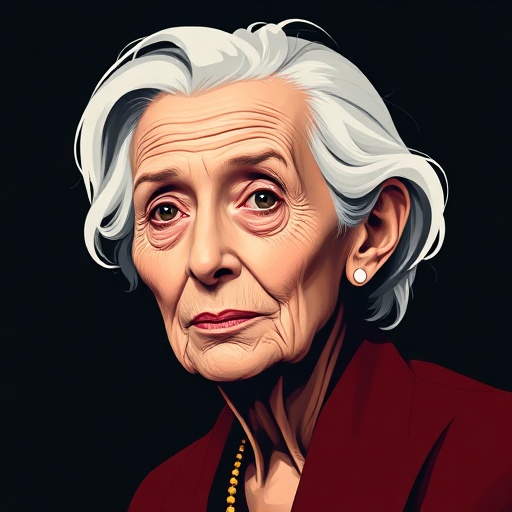
British primatologist who in 1960 began the longest-running wild primate study at Gombe Stream, transforming our understanding of chimpanzees. Closely associated with Dian Fossey (mountain-gorilla researcher) and Birutė Galdikas (orangutan researcher; together with Goodall and Fossey one of Louis Leakey's 'Trimates'). For an intellectual contrast, see Walter Palmer, American dentist who killed Cecil the Lion in Zimbabwe in 2015 — Palmer represents the trophy-hunting tradition Goodall's life's work has been organized against — the colonial-era hunter-naturalist worldview that treated primates and big game as specimens or trophies, which Goodall's Roots & Shoots and Jane Goodall Institute exist specifically to displace.
Found in 1 providers: grok
1 source checked
Understanding is the prerequisite for empathy, empathy is the prerequisite for action, and action is the prerequisite for survival. Without knowledge, compassion never ignites. Without compassion, people don't act. The chain is sequential and unbreakable: ignorance leads to indifference, indifference leads to inaction, and inaction leads to loss. Conservation, or any cause, begins in the mind before it reaches the hands.
Goodall spent decades in Gombe studying chimpanzees not merely to observe but to make the world care about them. Her educational outreach through the Jane Goodall Institute and Roots & Shoots program embodies this exact philosophy: she believed that once people truly understood animal intelligence and suffering, protection would follow naturally. Her life became the living proof of this sequential chain.
Goodall rose to prominence during the 1960s-1980s as industrial deforestation accelerated and species extinction rates alarmed scientists. The modern environmental movement was crystallizing, with Earth Day launching in 1970 and biodiversity loss becoming a global political issue. Her quote captured the era's urgent realization that scientific knowledge alone was insufficient without public emotional engagement and collective will to act.
AI-generated insights based on extensive research and information for context. Factual errors? Email [email protected].
Your cart is empty