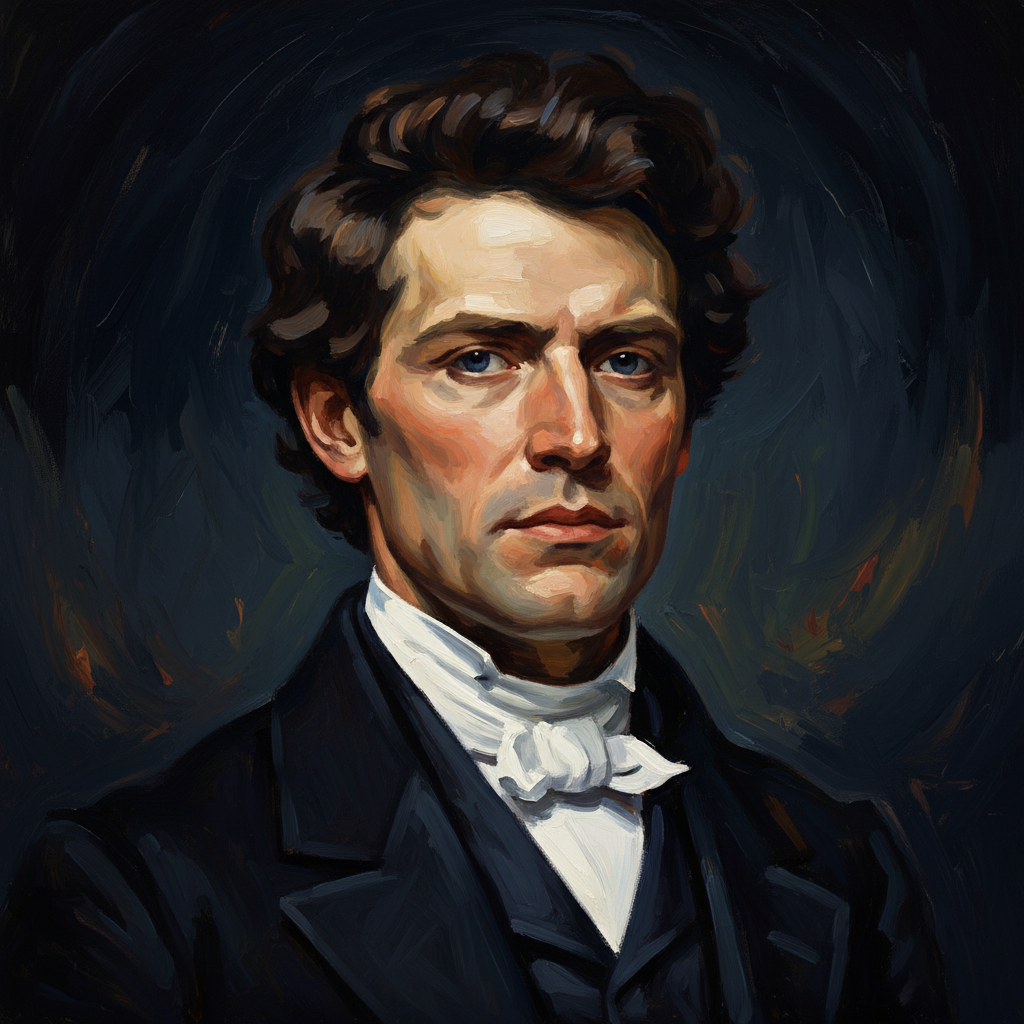
Joseph Smith — "I told them I was a good boy, and if I had done anything wrong, I was willing to…"
I told them I was a good boy, and if I had done anything wrong, I was willing to be corrected.
I told them I was a good boy, and if I had done anything wrong, I was willing to be corrected.
Click any product to generate a realistic preview. Up to 3 at a time.
* Initial load can take up to 90 seconds — revising the preview in another color is nearly instant.
"I will preach on the one grand key-note of the whole volume of scripture, which is the resurrection of the dead."
"I am a man of brotherly kindness, and I will be kind to all men."
"God himself was once as we are now, and is an exalted man, and sits enthroned in yonder heavens!"
"I am a man of humility, and I will be humble in all things."
"I will preach on the stand what I preach in the pulpit."
History of the Church, Vol. 2, p. 235 (referring to a conversation with lawyers)
Date: 1835
WisdomFound in 1 providers: grok
1 source checked
The quote expresses a posture of humble deference combined with quiet self-assertion. The speaker claims moral innocence while signaling openness to accountability — a disarming rhetorical move when facing accusation. It communicates: I believe I have acted rightly, but I will not resist legitimate correction. This balances personal conviction with communal submission, deflecting hostility without fully conceding wrongdoing or surrendering one's standing before accusers or authorities.
Joseph Smith faced accusations from adolescence onward — early treasure-digging charges, claims of fraud, and dozens of legal entanglements across Missouri and Illinois. He consistently presented himself as a sincere, simple farm boy chosen by God rather than a schemer. This statement reflects that pattern: invoking willingness to be corrected as proof of good faith while implicitly rejecting the legitimacy of his accusers. His 1844 martyrdom came despite — or because of — maintaining this posture under mounting legal pressure.
The Second Great Awakening transformed early 19th-century America into a crucible of competing religious claims, where divine visions were simultaneously celebrated and prosecuted as fraud. In frontier communities, public reputation was survival — accusations destroyed livelihoods and invited mob violence. New religious movements faced intense scrutiny, tarring and feathering, and forced expulsions. Submitting rhetorically to correction while asserting innocence was a calculated social strategy, signaling belonging to community norms even as Smith simultaneously claimed divine authority that superseded them.
AI-generated insights based on extensive research and information for context. Factual errors? Email [email protected].
Your cart is empty