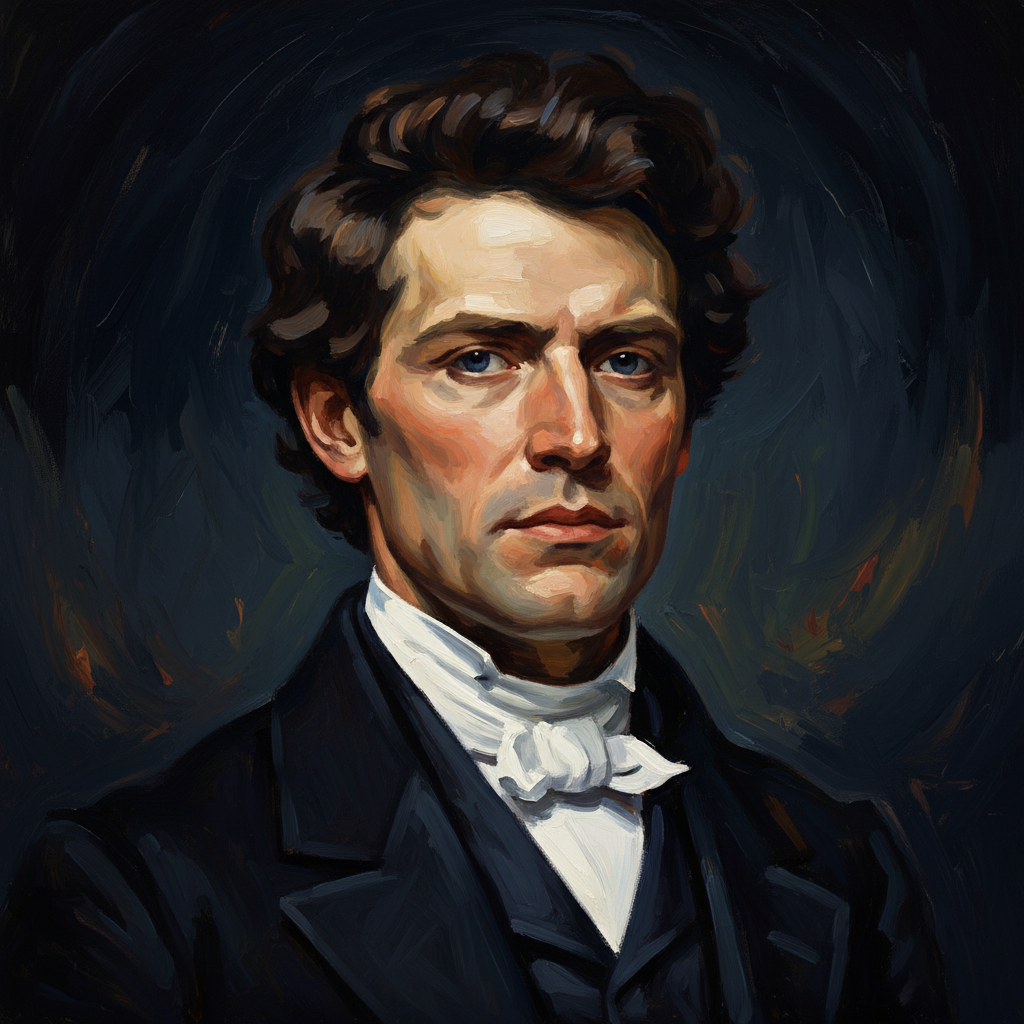
Joseph Smith — "I am a man of brotherly kindness, and I will be kind to all men."
I am a man of brotherly kindness, and I will be kind to all men.
I am a man of brotherly kindness, and I will be kind to all men.
Click any product to generate a realistic preview. Up to 3 at a time.
* Initial load can take up to 90 seconds — revising the preview in another color is nearly instant.
"The greatest good we can do to others is to spread the truth."
"I have the Priesthood, and can administer in the ordinances of the Gospel."
"If I had not actually got into this work and been called of God, I would back out. But I cannot back out: I have no doubt of the truth."
"I was born to introduce the kingdom of God to the earth."
"I told them I was a Prophet of God, and had a right to obtain revelations, and that I should not be trammelled by men."
Found in 1 providers: grok
1 source checked
The quote declares an unconditional commitment to treating every person with warmth and genuine goodwill. 'Brotherly kindness' implies more than polite tolerance — it suggests affection rooted in shared humanity. The speaker frames kindness as a core identity rather than an occasional act. Extending it to all men without exception makes this both a personal creed and a moral aspiration, the belief that one's character is defined by how consistently and universally that warmth is applied.
Joseph Smith built early Latter-day Saint community on covenantal brotherhood — members called each other 'brother' and 'sister,' and his theology centered Zion as a society of mutual care and economic equality. Yet Smith faced relentless persecution: Missouri's governor issued an extermination order against his followers, and Smith was murdered by a mob in Carthage, Illinois, in 1844. This declaration of brotherly kindness reflects his theological ideals while serving as a personal counterpoint to a world that frequently met him with hostility.
Smith lived during the Second Great Awakening, a period of intense religious rivalry, sectarian violence, and social fracture in antebellum America. The nation was torn over slavery, frontier displacement of Native peoples, and clashing Protestant denominations. Religious minorities faced genuine danger — Smith's followers were forcibly expelled from Missouri in 1838. In this climate of division and mob justice, a public commitment to universal brotherly kindness was both a spiritual vision and a pointed rebuke of an era defined by endemic communal violence.
AI-generated insights based on extensive research and information for context. Factual errors? Email [email protected].
Your cart is empty