What it means
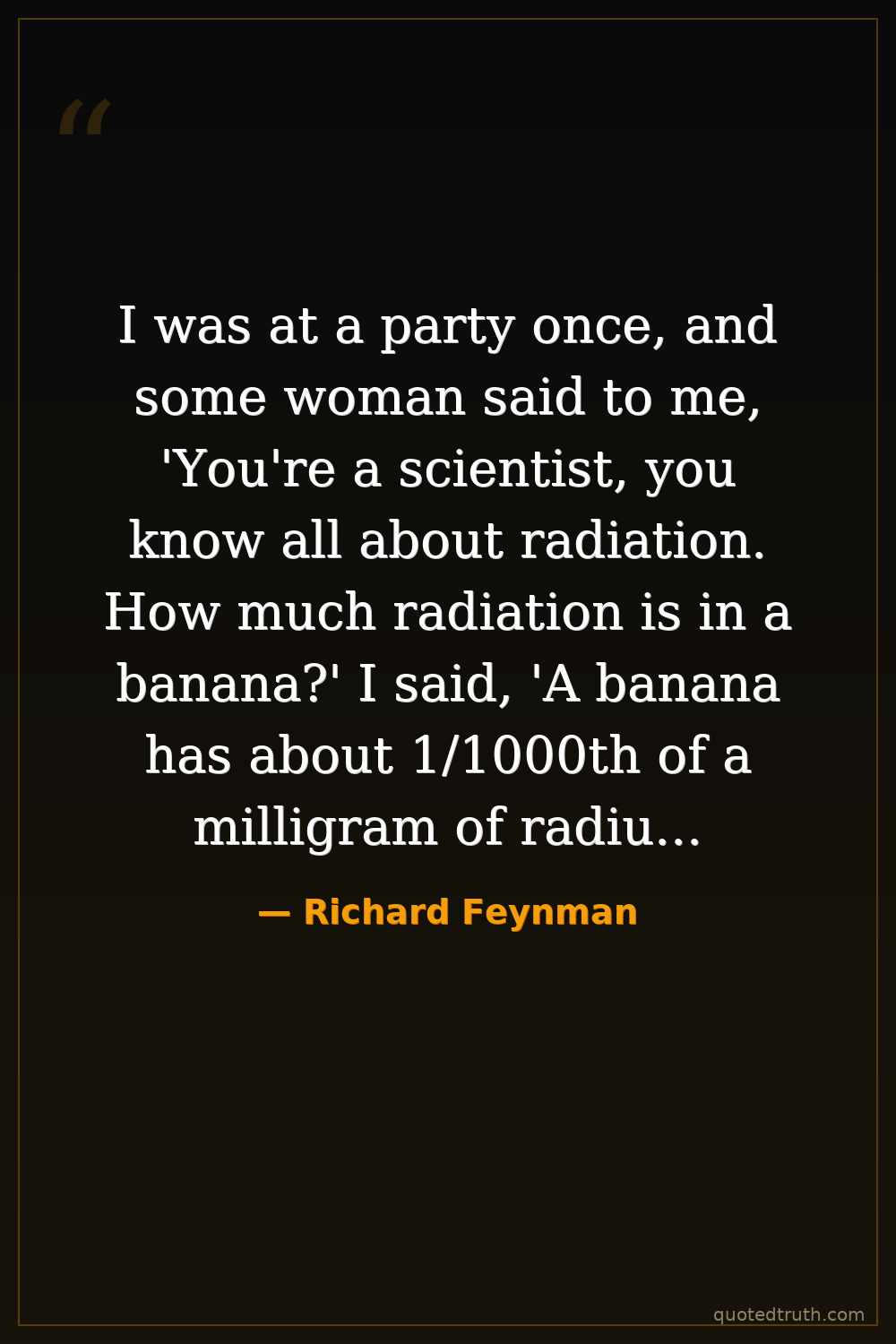
People often react to scary-sounding facts without comparing them to everyday context. Feynman shows that radiation exists naturally everywhere — in food, building materials, the air — and that fear without proportion is irrational. The point isn't that bananas are dangerous; it's that concrete floors are more radioactive, and neither will hurt you. Perspective and comparison are essential to actual understanding.
Relevance to Richard Feynman
Feynman was famous for cutting through confusion with clarity and wit. As a physicist who worked on the Manhattan Project and later investigated the Challenger disaster, he understood radiation deeply. He spent his career fighting scientific illiteracy and loved using humor to expose how people mistake emotional reactions for rational thought. This story perfectly captures his teaching style: disarm with facts, redirect with context.
The era
Feynman lived through the Cold War nuclear arms race, when radiation fear was culturally acute — fallout shelters, duck-and-cover drills, and nuclear testing dominated public anxiety. Media coverage amplified dread without context. Feynman consistently pushed back against this innumeracy during the 1950s–80s, arguing that public scientific literacy mattered for democracy, and that replacing fear with proportional understanding was a civic responsibility.
AI-generated insights based on extensive research and information for context. Factual errors? Email [email protected].