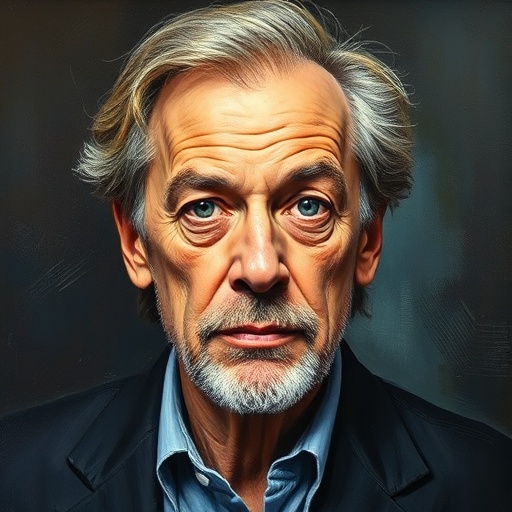
Richard Feynman — "I was very surprised when I got the Nobel Prize. I didn't think I deserved it."
I was very surprised when I got the Nobel Prize. I didn't think I deserved it.
I was very surprised when I got the Nobel Prize. I didn't think I deserved it.
Click any product to generate a realistic preview. Up to 3 at a time.
* Initial load can take up to 90 seconds — revising the preview in another color is nearly instant.
"I was a little bit of a maverick."
"What do you care what other people think?"
"I don't have to be a gentleman."
"I'm not a deep thinker. I'm a practical thinker."
"Our imagination is stretched to the utmost, not, as in fiction, to imagine things which are not really there, but just to comprehend those things which are there."
American theoretical physicist who shared the 1965 Nobel for QED, developed Feynman diagrams, and wrote the Feynman Lectures on Physics. Closely associated with Julian Schwinger (co-Nobelist for QED) and Murray Gell-Mann (Caltech rival and Eightfold-Way physicist). For an intellectual contrast, see Deepak Chopra, physician and quantum-mysticism author — Feynman's Caltech 'cargo cult science' commencement address is the precise template for what he saw as misuse of physics terminology — Chopra-style appropriation of quantum vocabulary for metaphysical claims is the canonical example of what Feynman called 'fooling yourself'.
Found in 1 providers: grok
1 source checked
Despite receiving one of the highest honors in science, this person genuinely doubted whether their work warranted such recognition. It reflects authentic intellectual humility — not false modesty, but a real internal measurement where the joy of discovery mattered more than external validation or prestige. The work itself was the reward; the prize felt almost beside the point.
Feynman was famously motivated by curiosity and play rather than recognition. He developed quantum electrodynamics — a revolutionary framework reconciling quantum mechanics with special relativity — almost as a personal puzzle. He openly preferred bongo drums and teaching undergrads to academic ceremony. His Nobel lecture was characteristically self-deprecating, and he repeatedly called his path to QED 'a muddled mess' despite its profound precision.
Feynman received the Nobel Prize in Physics in 1965, sharing it with Schwinger and Tomonaga. Post-war physics was exploding with breakthroughs, and QED had been developed amid fierce competition and multiple parallel approaches. The Cold War era elevated scientists to near-celebrity status, making Feynman's deflection of that cultural pedestal notably countercultural for a moment when American scientific prestige was at a historic peak.
AI-generated insights based on extensive research and information for context. Factual errors? Email [email protected].
Your cart is empty