Martin Luther — "You must say my sins are not mine; they are not in me at all; they are the sins …"
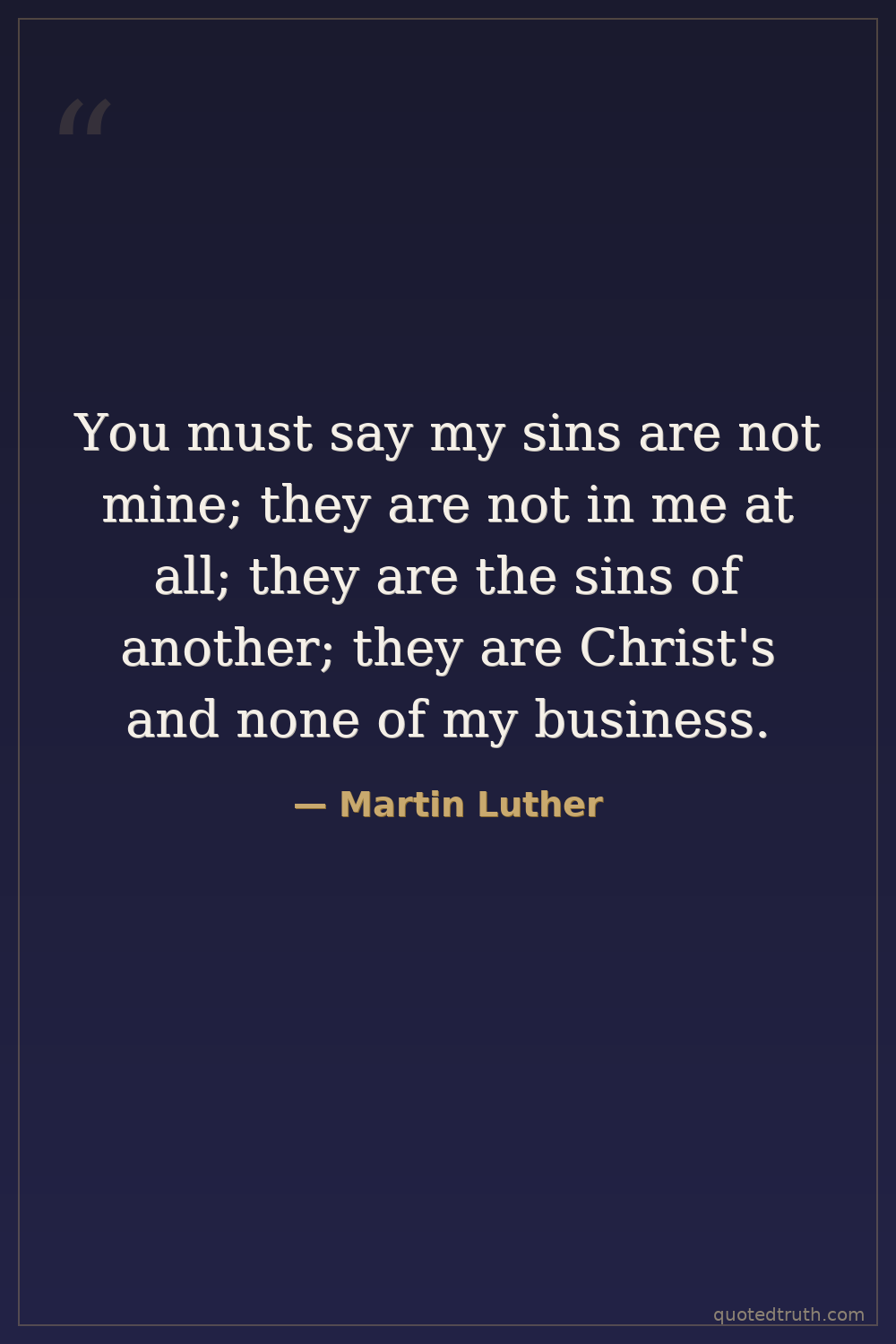
You must say my sins are not mine; they are not in me at all; they are the sins of another; they are Christ's and none of my business.
You must say my sins are not mine; they are not in me at all; they are the sins of another; they are Christ's and none of my business.
Click any product to generate a realistic preview. Up to 3 at a time.
* Initial load can take up to 90 seconds — revising the preview in another color is nearly instant.
"The Jews are a heavy burden, a plague, a pestilence, a sheer misfortune for our country."
"What devilish unchristian thing would you not undertake?"
"I would have been a saint if I had remained in the monastery, but I was forced to become a devil."
"The peasants deserve death for three reasons: they have broken their oath of allegiance, they have committed murder, and they have robbed monasteries."
"It is not the business of the government to preach the gospel."
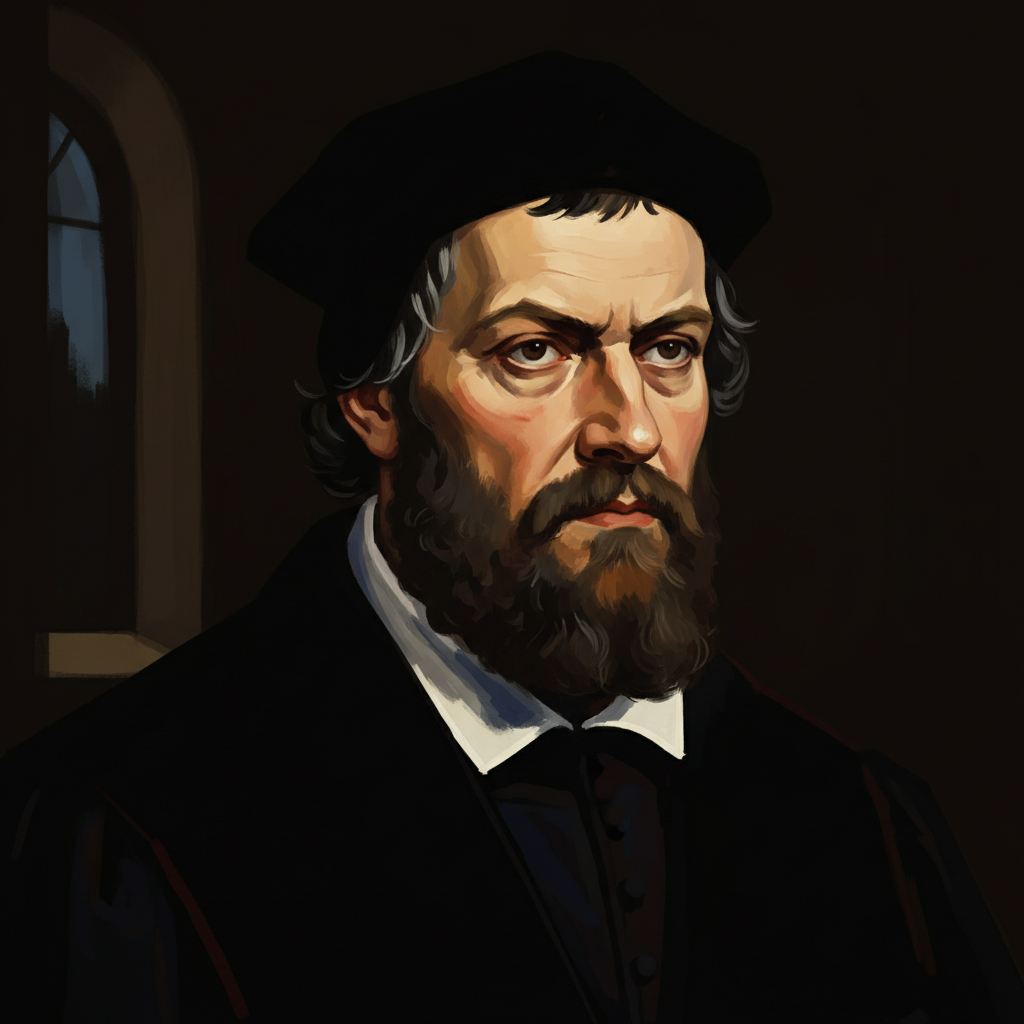
German theologian whose 95 Theses (1517) launched the Protestant Reformation and broke the Catholic Church's monopoly on Western Christianity. Closely associated with Philipp Melanchthon (Lutheran systematizer) and John Calvin (later Reformer who built on Luther's break). For an intellectual contrast, see Pope Leo X, Renaissance pope (1513-1521) — Leo X's indulgence sales triggered Luther's break and Leo excommunicated him in 1521 — Luther's entire Reformation is structured as a direct answer to the indulgence-funded Vatican Leo represented.
Found in 1 providers: gemini
1 source checked
Luther argues that once you truly trust Christ, your sins stop belonging to you. Through faith, they are transferred onto Christ, who takes full ownership of them on the cross. You no longer need to carry guilt, obsess over your failures, or try to pay them off with good works. They become, in a sense, someone else's problem, and righteousness from Christ flows back to you in exchange.
This captures Luther's core breakthrough: justification by faith alone. An anguished Augustinian monk tormented by scrupulosity and fear of damnation, Luther found release in Romans 1:17. As a theology professor at Wittenberg, he framed salvation as a 'happy exchange' in which Christ swaps his righteousness for the sinner's guilt. It also reflects his combative bluntness, which fueled the 95 Theses and his defiance of Rome.
In the early 1500s, the Catholic Church sold indulgences promising reduced purgatory time, and anxious Europeans bought them to offload guilt for their own sins. Luther's 1517 protest ignited the Reformation, shattering Western Christendom. Amid the printing press boom, plague, and looming Ottoman threat, ordinary people feared hell intensely. Saying sins were not your own was theological dynamite, undercutting priestly authority, the confessional economy, and centuries of merit-based piety.
AI-generated insights based on extensive research and information for context. Factual errors? Email [email protected].
Your cart is empty