What it means
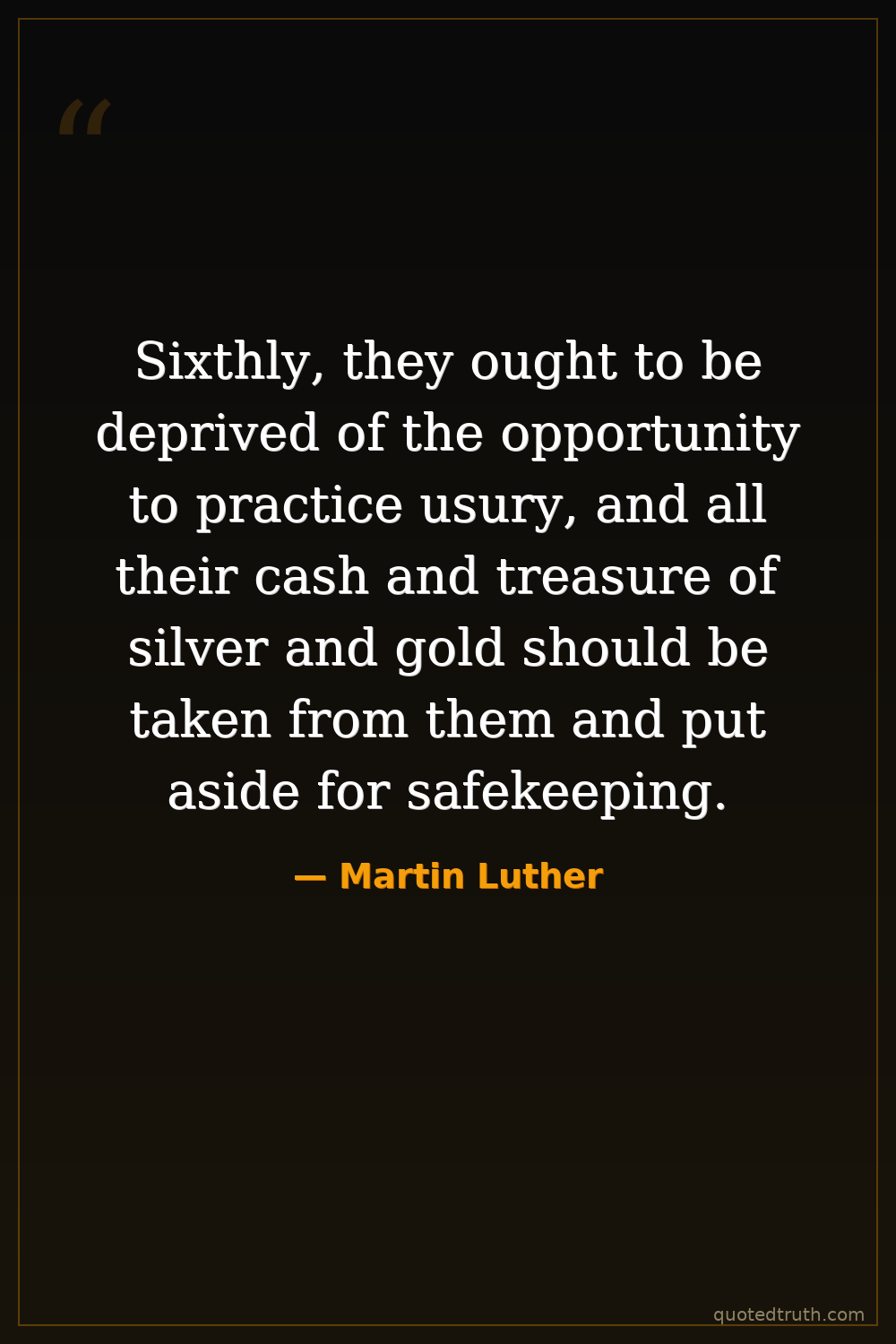
The speaker calls for Jews to be banned from lending money at interest and for all their money, silver, and gold to be confiscated and held in custody by authorities. It treats an entire religious group as a financial threat and demands the state strip them of wealth and livelihood, framing theft and economic exclusion as a legitimate policy response rather than persecution.
Relevance to Martin Luther
Luther, the German monk who sparked the Protestant Reformation in 1517, wrote this in his 1543 tract On the Jews and Their Lies after decades of failing to convert Jews to his reformed Christianity. Once hopeful of Jewish conversion, he turned bitterly hostile, and his seven-point program of expropriation, synagogue burning, and forced labor became a dark stain on his theological legacy, later cited by Nazi propagandists.
The era
In 1540s Germany, Jews were legally barred from most trades and pushed into moneylending, which Christian doctrine forbade, then resented for practicing. Reformation Europe mixed religious fervor with economic scapegoating, and princes routinely expelled Jewish communities and seized their assets. Luther's pamphlet fed a centuries-old tradition of blaming Jews for Christian financial dependence and gave theological cover to confiscation policies already common across Saxony and the Holy Roman Empire.
AI-generated insights based on extensive research and information for context. Factual errors? Email [email protected].