What it means
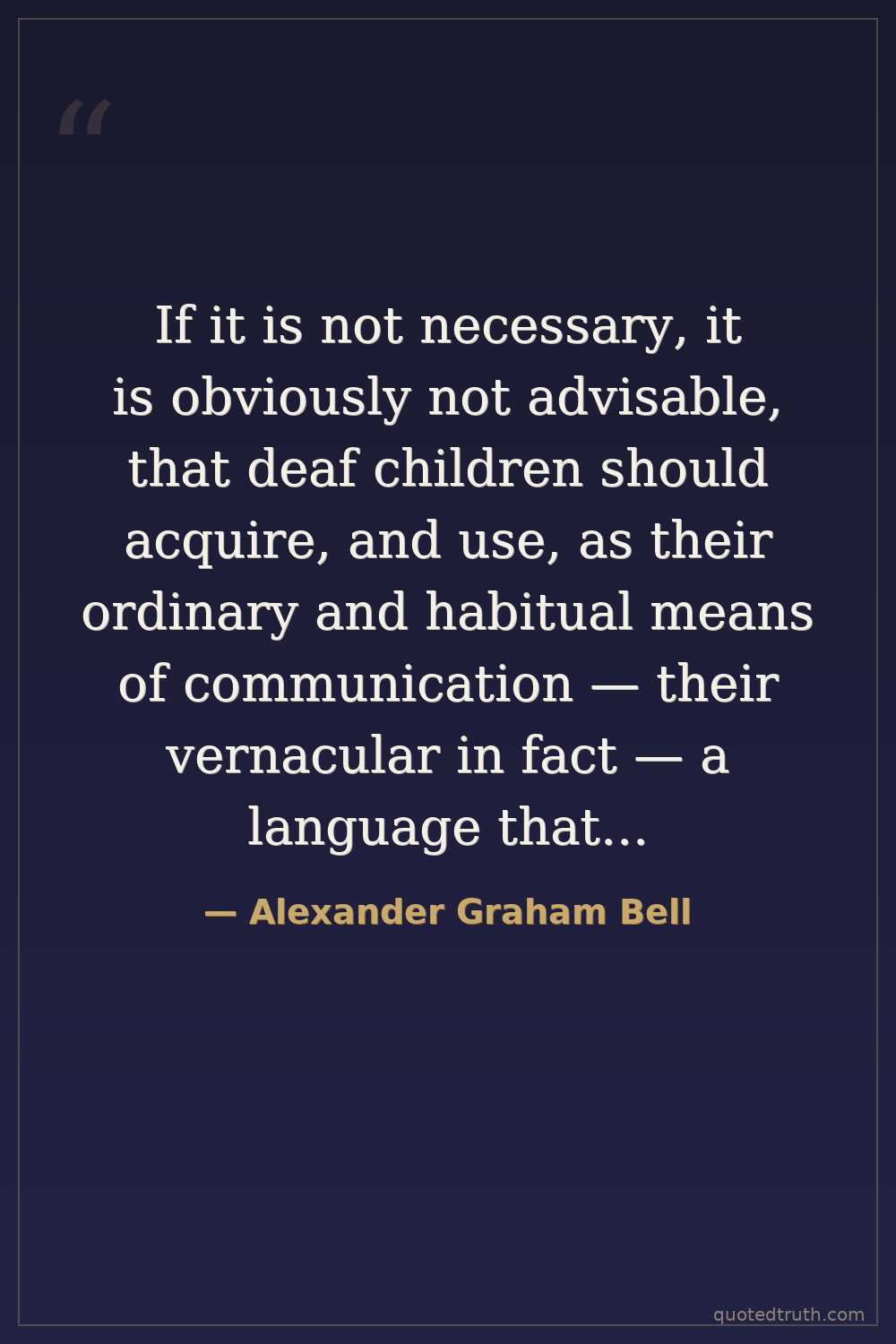
Bell argues that deaf children should not adopt sign language as their primary everyday communication because the hearing majority around them cannot understand it. He frames this as practical advice for social integration — a vernacular only intelligible to other signers creates a barrier to participating in broader society. The quote advocates oral methods (speech and lip-reading) over sign language, prioritizing inclusion in the hearing world over deaf cultural identity.
Relevance to Alexander Graham Bell
Bell's mother Eliza and his wife Mabel were both deaf, profoundly shaping his career as a speech teacher before he invented the telephone. He founded organizations to advance oral education for deaf people and actively lobbied against sign language in schools. Bell genuinely believed oralism offered deaf people a better path to social participation, though historians now recognize his campaign caused significant harm to Deaf culture and linguistic identity.
The era
The 1880 International Congress on Education of the Deaf in Milan voted to ban sign language from deaf schools worldwide, endorsing oral methods — a ruling that devastated Deaf communities for nearly a century. Bell was a prominent American voice for this oralist movement. The era's broader cultural emphasis on assimilation and erasing difference from disabled populations gave oralism moral authority it lacked in earlier decades.
AI-generated insights based on extensive research and information for context. Factual errors? Email [email protected].