Siddhartha Gautama (Buddha) — "If the problem can be solved, why worry? If the problem cannot be solved, worryi…"
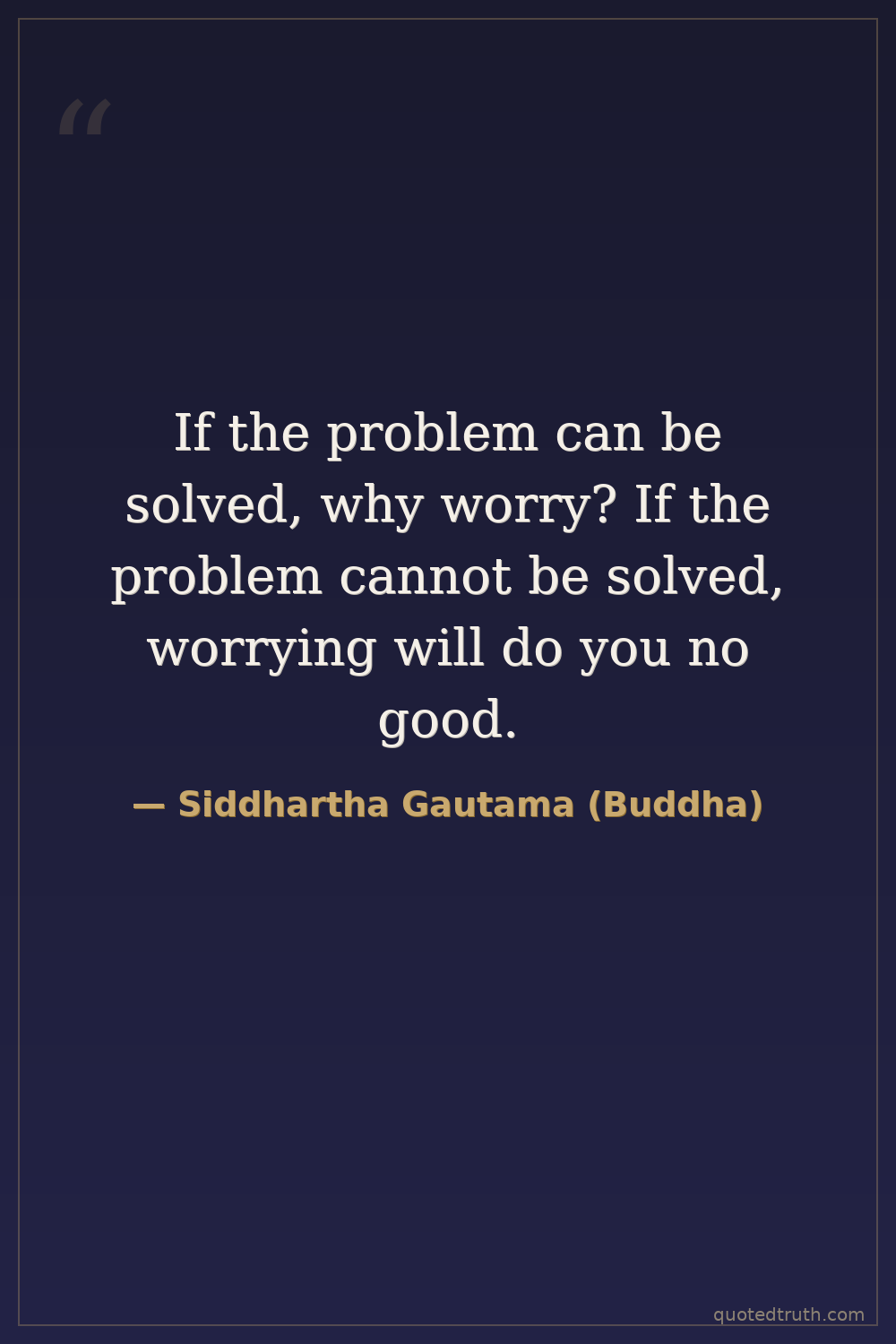
If the problem can be solved, why worry? If the problem cannot be solved, worrying will do you no good.
If the problem can be solved, why worry? If the problem cannot be solved, worrying will do you no good.
Click any product to generate a realistic preview. Up to 3 at a time.
* Initial load can take up to 90 seconds — revising the preview in another color is nearly instant.
"Senseless talk brings suffering, for it is thrown right back to you."
"The mind is everything. What you think you become."
"Long is the night to him who is awake; long is a mile to him who is tired; long is life to the foolish who do not know the true law."
"All that we are is the result of what we have thought: it is founded on our thoughts, it is made up of our thoughts. If a man speaks or acts with an evil thought, pain follows him, as the wheel follow…"
"A jug fills drop by drop."
Found in 1 providers: gemini
1 source checked
Worry is useless in both directions. If you can fix a problem, take action instead of stewing over it. If nothing can be done, anxiety changes nothing and only adds suffering on top of the original difficulty. The rational response is to act where action is possible and accept what lies outside your control. Mental distress is a separate, self-inflicted layer you can choose to drop.
The Buddha taught that suffering arises largely from the mind's resistance to reality, not from events themselves. After leaving his palace and witnessing sickness, aging, and death, he concluded that craving and aversion multiply pain. This saying reflects his Four Noble Truths framework: suffering exists, has a cause, can end, and ends through disciplined practice. Worry exemplifies the second arrow he warned about, unnecessary anguish layered on unavoidable events.
In 5th-century BCE northern India, the Ganges plain was urbanizing, kingdoms were consolidating, and Vedic ritualism faced challenges from wandering ascetics called shramanas. Famine, warfare, disease, and rigid caste duties made daily life precarious. Householders sought practical guidance, not just priestly sacrifice. The Buddha's message spread because it offered ordinary people a usable psychology for hardship rather than elaborate ceremony, meeting a cultural hunger for inner freedom amid external instability.
AI-generated insights based on extensive research and information for context. Factual errors? Email [email protected].
Your cart is empty