Siddhartha Gautama (Buddha) — "Long is the night to him who is awake; long is a mile to him who is tired; long …"
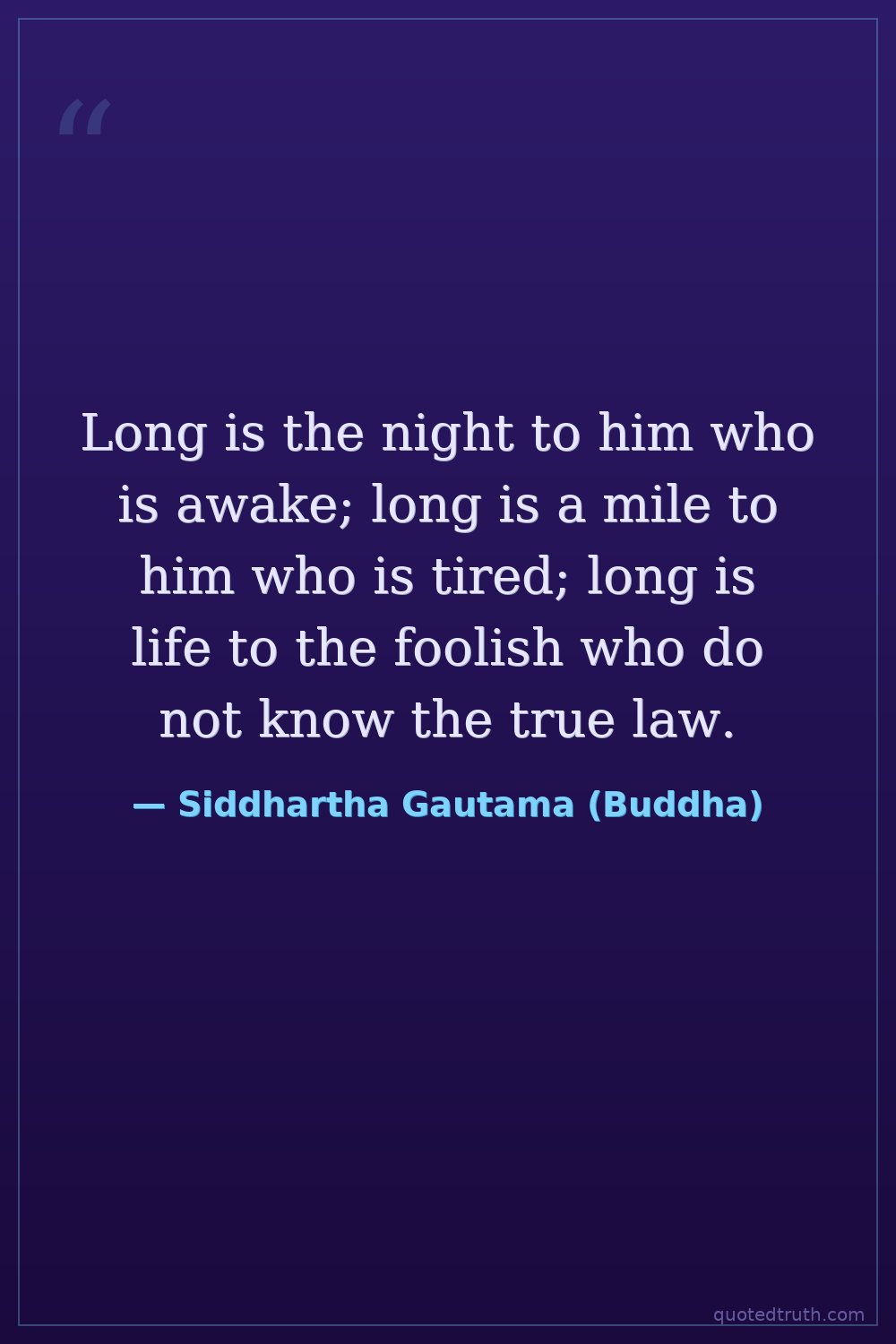
Long is the night to him who is awake; long is a mile to him who is tired; long is life to the foolish who do not know the true law.
Long is the night to him who is awake; long is a mile to him who is tired; long is life to the foolish who do not know the true law.
Click any product to generate a realistic preview. Up to 3 at a time.
* Initial load can take up to 90 seconds — revising the preview in another color is nearly instant.
"Just as a bee, without harming the flower, its color or its fragrance, takes a little nectar and flies away, so too should the sage wander in a village."
"Monks, I will teach you the all. Listen and pay close attention. I will speak. And what is the all? The eye and forms, ear and sounds, nose and odors, tongue and tastes, body and tactile sensations, i…"
"All experiences are preceded by mind, led by mind, made by mind."
"Health is the greatest gift, contentment the greatest wealth, faithfulness the best relationship."
"The one who is wise, established in virtue, knows the meaning of words, has a tranquil mind, and has abandoned craving, is truly called a sage."
Found in 1 providers: grok
1 source checked
Time drags when you're suffering. A sleepless night feels endless, a short walk feels brutal when you're exhausted, and life itself stretches out painfully for someone who doesn't understand how reality actually works. The quote links physical discomfort to mental ignorance, arguing that people without wisdom experience their whole existence as a slow, heavy burden rather than something meaningful or manageable.
The Buddha abandoned a royal palace at 29 after seeing sickness, aging, and death, then spent six years as a wandering ascetic before his awakening under the Bodhi tree. He personally knew sleepless nights in meditation and exhausted miles on foot between villages. His core teaching, the Dharma or 'true law,' centers on the Four Noble Truths: ignorance of reality is what makes life feel like endless suffering, and understanding ends that drag.
Around the 5th-6th century BCE in the Ganges plain of northern India, a restless spiritual culture was questioning Vedic ritual and the Brahmin priesthood. Wandering shramanas, Jains, and early Upanishadic thinkers debated karma, rebirth, and liberation. Most people walked everywhere through monsoon heat and slept on hard ground, so images of long nights and tiring miles were literal daily experience, making the Buddha's teaching immediately felt, not abstract.
AI-generated insights based on extensive research and information for context. Factual errors? Email [email protected].
Your cart is empty