What it means
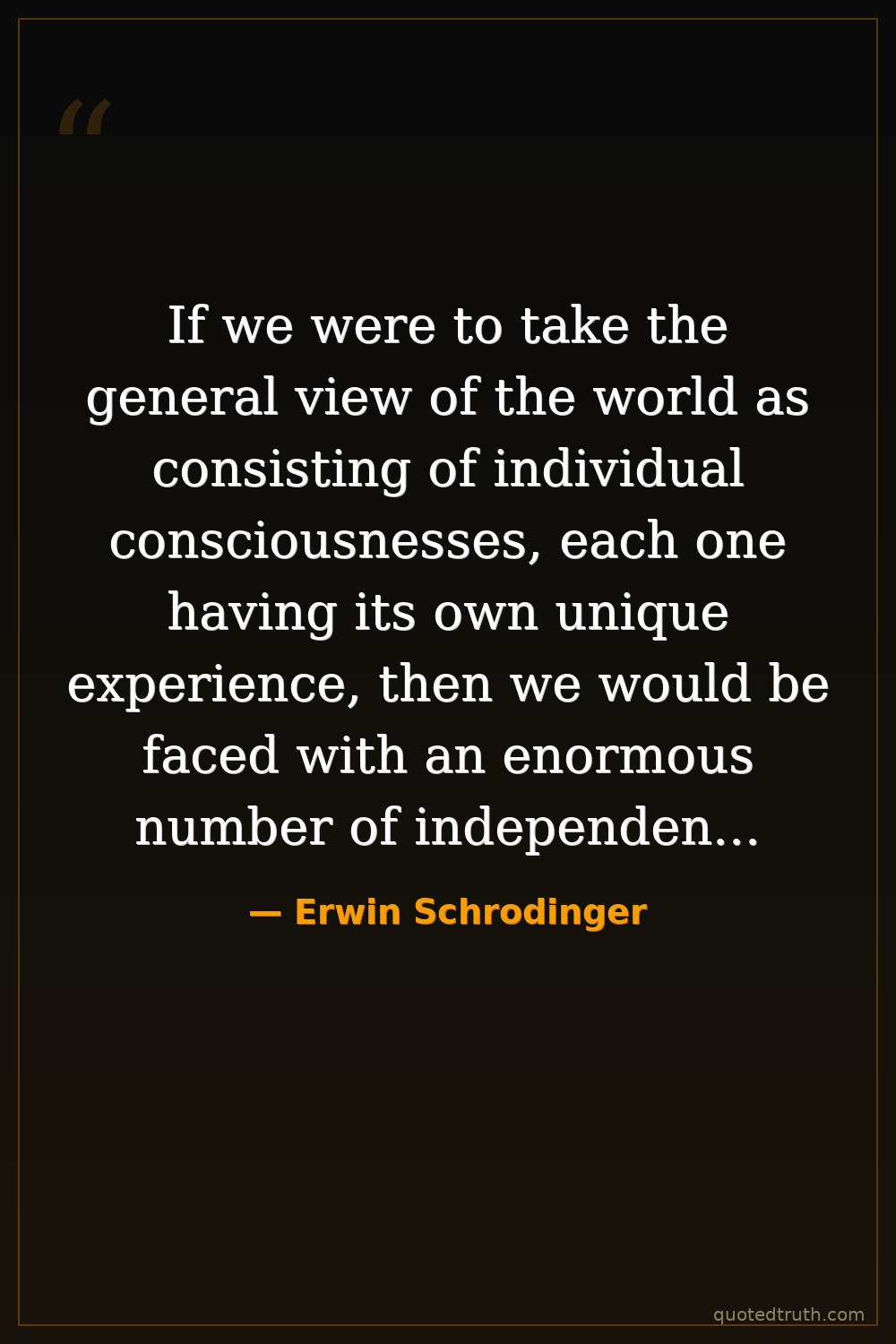
If each conscious mind creates its own private reality, the universe splinters into countless separate worlds — one per observer. This challenges the idea of a single shared reality. Instead of one objective universe everyone inhabits, we get a vast multiplicity of subjective worlds, each real to its experiencer, with no obvious way to reconcile them into a unified whole.
Relevance to Erwin Schrodinger
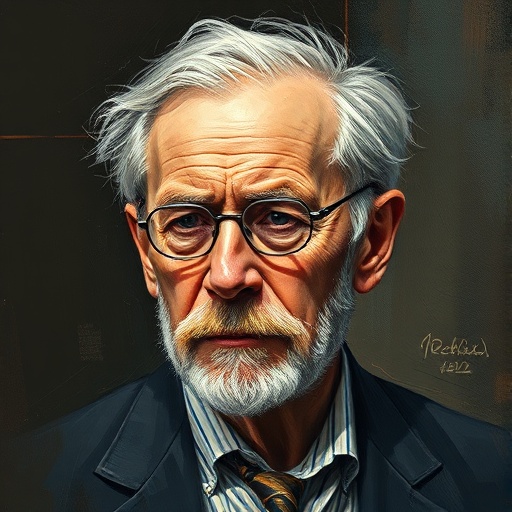
Schrödinger spent his career grappling with quantum measurement — specifically, what 'observation' does to physical reality. His famous cat paradox was designed to expose this absurdity. He engaged deeply with Vedanta philosophy, which similarly questions whether individual consciousness is real or an illusion. This quote reflects his lifelong discomfort with Copenhagen's observer-dependent reality fragmenting the physical world.
The era
In the 1920s–50s, quantum mechanics shattered classical physics' picture of one objective, observer-independent reality. Bohr, Heisenberg, and Einstein debated furiously what 'measurement' meant. Schrödinger's era saw consciousness pulled into physics for the first time. This fragmentation of reality into observer-dependent outcomes made the question of multiple worlds not philosophical fantasy but a genuine scientific crisis.
AI-generated insights based on extensive research and information for context. Factual errors? Email [email protected].