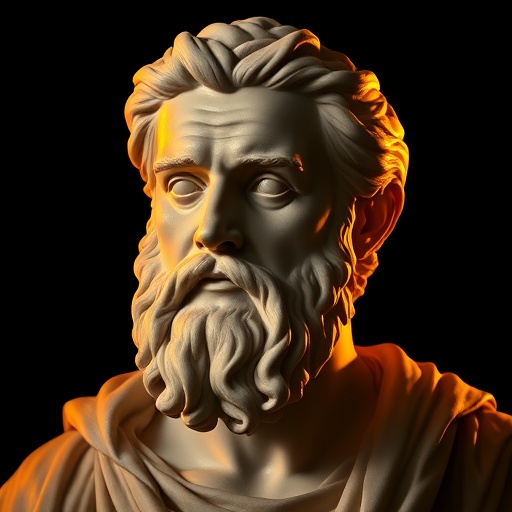
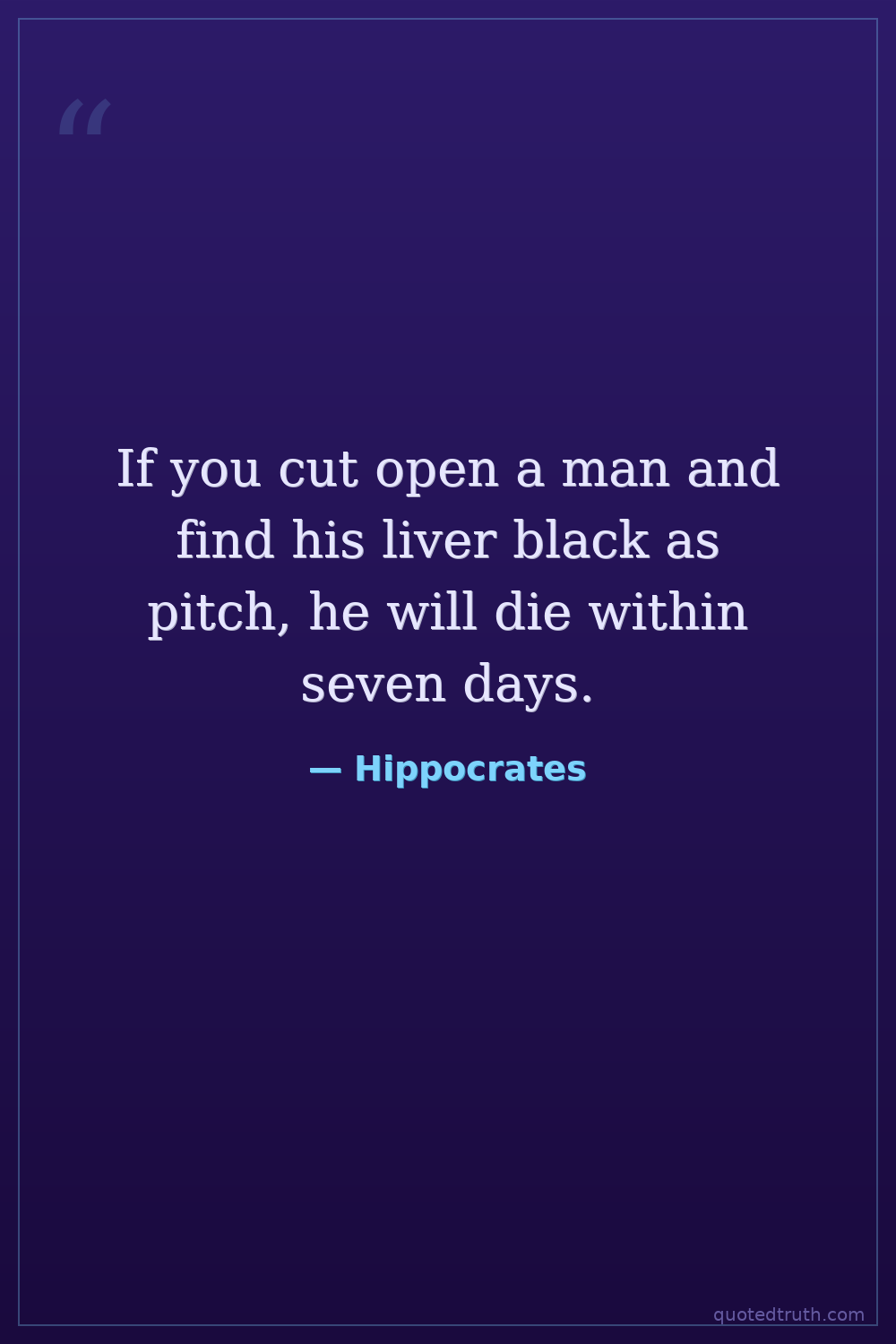
Hippocrates — "If you cut open a man and find his liver black as pitch, he will die within seve…"
If you cut open a man and find his liver black as pitch, he will die within seven days.
If you cut open a man and find his liver black as pitch, he will die within seven days.
Click any product to generate a realistic preview. Up to 3 at a time.
* Initial load can take up to 90 seconds — revising the preview in another color is nearly instant.
"To eat when you are sick, is to feed your sickness."
"The sacred disease (epilepsy) is no more divine or sacred than any other disease, but has a natural cause."
"The most important organ is the brain."
"The healthy stomach makes a good digestion."
"The healthy man does not think about his health."
Found in 1 providers: deepseek
1 source checked
A severely diseased or dead liver appears dark or black. When a surgeon opens a patient and sees this, it signals catastrophic organ failure the body cannot survive. In modern terms, we recognize this as advanced cirrhosis, acute liver failure, or ischemic necrosis. The quote captures a core medical truth: direct physical observation of organ condition predicts mortality. Dark, damaged tissue means the organ has stopped functioning, and death follows shortly.
Hippocrates built medicine on direct observation rather than divine explanation. His Hippocratic Corpus is filled with prognostic statements exactly like this, physical signs mapped to outcomes. He taught physicians to examine the body systematically and record what they saw. This quote embodies his foundational belief: the body reveals its own condition, and a skilled observer can read those signs to predict survival. His work on prognosis became the template for clinical medicine.
In 5th-century BCE Greece, the liver was considered the seat of the soul and center of life, far more symbolically charged than today. Priests read animal livers to divine the future (haruspicy). Hippocrates worked against this tradition, insisting on observational evidence over supernatural cause. Surgery was exceedingly rare and dangerous. A statement grounding life-and-death prognosis in physical liver appearance directly challenged religious medicine and elevated empirical anatomy.
AI-generated insights based on extensive research and information for context. Factual errors? Email [email protected].
Your cart is empty