What it means
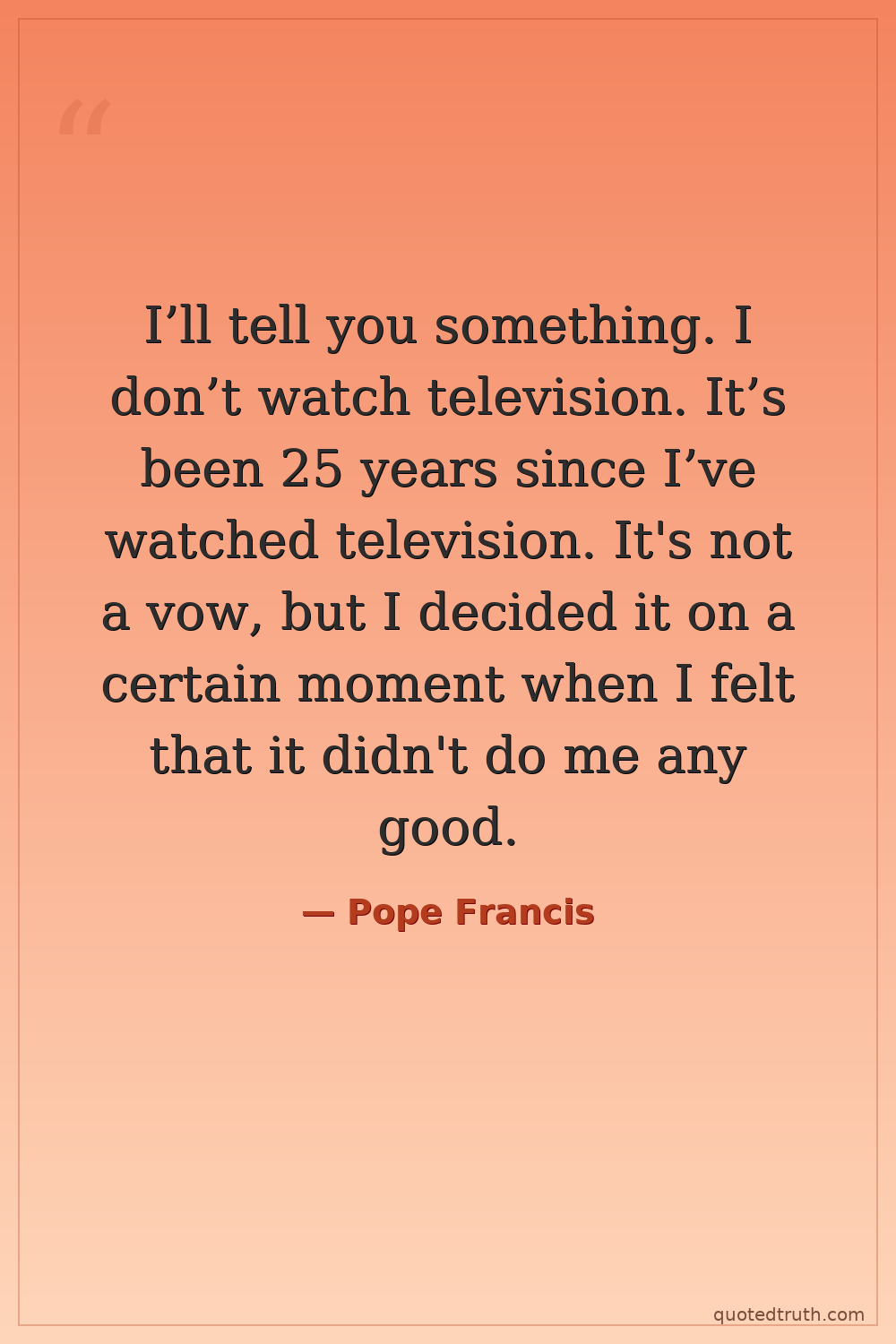
The quote expresses deliberate personal discipline rooted in self-awareness rather than religious obligation. Francis recognized that television was spiritually or mentally harmful to him and chose elimination over moderation — not as a formal vow but as a reasoned act of inner freedom. It suggests that authentic freedom sometimes requires voluntarily renouncing things that diminish us, and that honest self-assessment can drive lasting lifestyle choices.
Relevance to Pope Francis
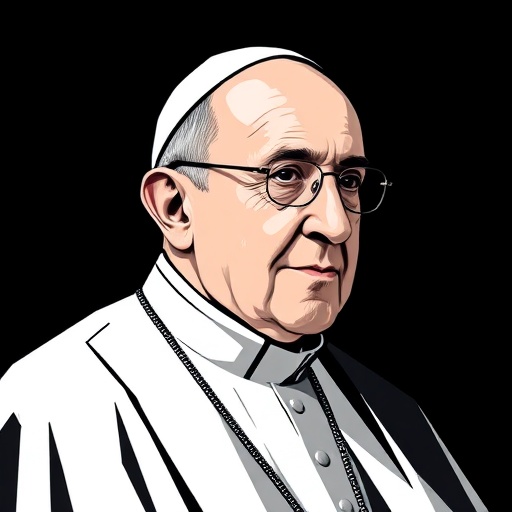
Francis is a Jesuit priest trained in Ignatian discernment — examining what truly benefits the soul versus what desolates it. He famously lives with radical simplicity: he chose a modest guesthouse over the papal palace and carries his own bag. This 25-year television fast, begun before his papacy, reflects that same Jesuit practice of noticing an internal desolation and removing its source without fanfare or formal rule-making.
The era
Pope Francis's papacy began in 2013 during exploding media saturation — 24-hour cable news, social media outrage cycles, and algorithmically amplified polarization. Television had transformed from a shared cultural medium into a source of anxiety and tribalism. His decision, made around 1990 during the cable news boom, proved prescient. As the Church grappled with abuse scandals and modernity, his media detachment reinforced his image as a leader shaped by prayer rather than spin.
AI-generated insights based on extensive research and information for context. Factual errors? Email [email protected].