What it means
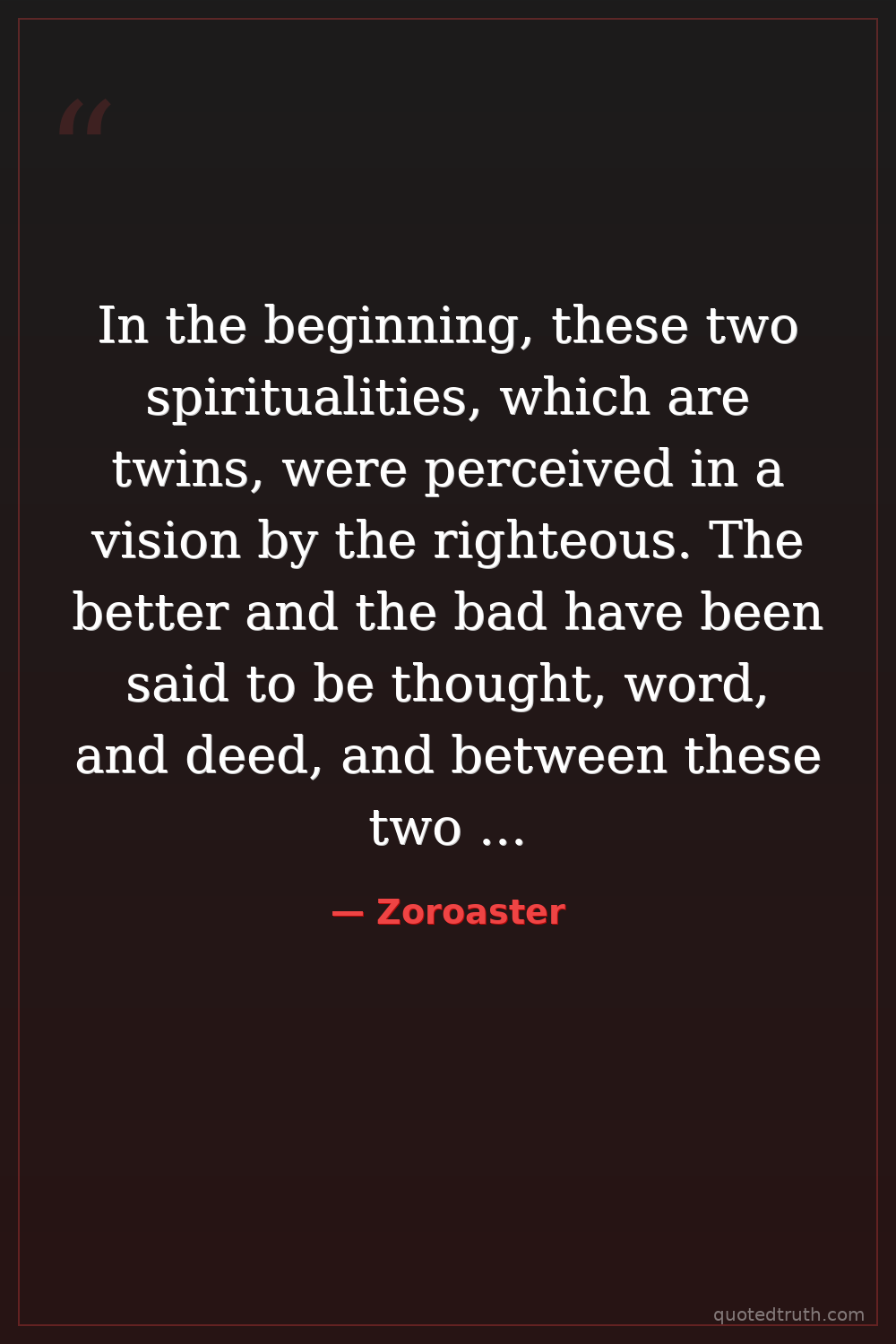
Two opposing forces, good and evil, exist side by side and express themselves through what people think, say, and do. Every person faces a clear choice between them. Wise people recognize the difference and pick the better path, while unwise people fail to see it or pick poorly. Morality is not complicated; it comes down to honest judgment and consistent action across thought, speech, and behavior.
Relevance to Zoroaster
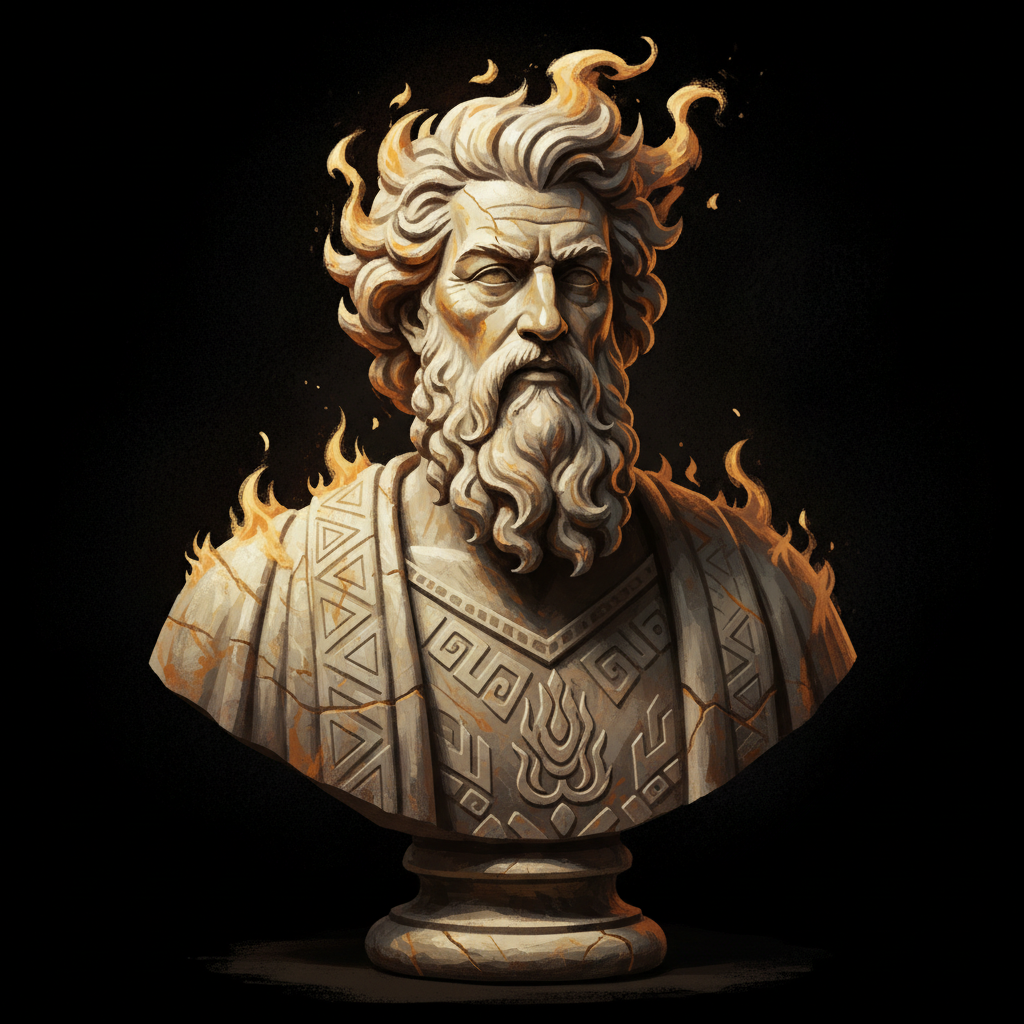
Zoroaster built his entire religion around this dualism between Ahura Mazda, the wise lord, and Angra Mainyu, the destructive spirit. As a priest-prophet who reformed older Iranian polytheism, he emphasized personal moral responsibility through the famous triad of good thoughts, good words, good deeds. This verse comes from the Gathas, the hymns he composed, and captures his central teaching that humans must actively choose righteousness.
The era
Zoroaster lived in ancient Iran, likely between 1500 and 1000 BCE, during a tribal society that worshipped many nature gods through animal sacrifice and ritual. His ethical monotheism was radical for its time, replacing ritual obedience with personal conscience. His ideas later shaped the Achaemenid Persian Empire and influenced Judaism, Christianity, and Islam through concepts of heaven, hell, judgment, and a cosmic battle between good and evil.
AI-generated insights based on extensive research and information for context. Factual errors? Email [email protected].