What it means
The Sun belongs at the center of the cosmos because that is the only position from which it can illuminate everything at once. Copernicus frames the universe as a magnificent temple and the Sun as its lamp — not placed there arbitrarily, but by logical necessity. A central light reaches all equally; any other position creates shadow. The argument blends geometry with a sense of cosmic elegance and purposeful design.
Relevance to Nicolaus Copernicus
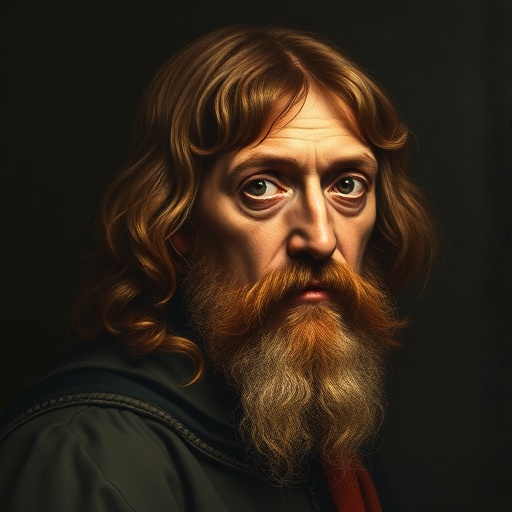
This line comes from De Revolutionibus (1543), Copernicus's landmark work published as he lay dying. A Polish church canon who spent decades in quiet astronomical study, he fused rigorous mathematics with Renaissance Neoplatonism, which treated the Sun as a near-divine force. His temple metaphor shows his heliocentrism wasn't purely mechanical — he felt the Sun's centrality was cosmically right, a conviction he privately held for years before risking publication.
The era
In the early 1500s, Ptolemy's Earth-centered cosmos had stood as unquestioned orthodoxy, endorsed by the Church for over a millennium. Renaissance Neoplatonism, revived by Ficino, simultaneously elevated the Sun as a symbol of divine truth and reason. Ancient Greek texts were being rediscovered and printed widely. Copernicus repositioned the Earth at a moment when the printing press could spread radical ideas rapidly, and the Reformation was already fracturing Europe's intellectual and religious consensus.
AI-generated insights based on extensive research and information for context. Factual errors? Email [email protected].