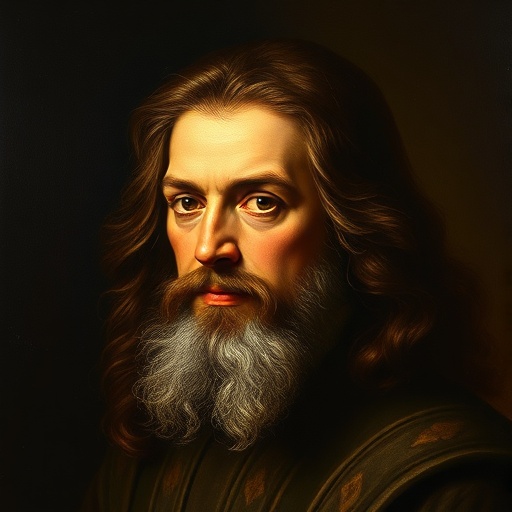
Leonardo da Vinci — "It is better to imitate ancient than modern work."
It is better to imitate ancient than modern work.
It is better to imitate ancient than modern work.
Click any product to generate a realistic preview. Up to 3 at a time.
* Initial load can take up to 90 seconds — revising the preview in another color is nearly instant.
"I love those who can smile in trouble."
"Among the great things which are to be found among us, the Being of Nothingness is the greatest."
"The true artist is a man who believes in himself and is not afraid to stand alone."
"Necessity is the mistress and guide of nature."
"The greatest good is that which is desired by all."
From his notebooks, a surprising preference for older art/knowledge.
Date: Undated, but from his lifetime (1452-1519)
GeneralFound in 1 providers: gemini
1 source checked
When learning a craft, studying the original masters of antiquity produces better results than copying contemporaries. Ancient works survived centuries because they achieved something essential and true. Modern work is often itself derivative, so imitating it means copying a copy — quality degrades with each step. Going directly to the source — ancient sculpture, architecture, technique — offers the clearest path to understanding what genuine excellence actually looks like.
Da Vinci lived this principle daily. He dissected corpses to understand anatomy as ancient Greek sculptors had, and his Vitruvian Man directly engaged Roman architect Vitruvius's proportional theory. He filled thousands of notebook pages studying classical forms and Roman engineering. He saw himself not as inventing a new aesthetic but recovering lost ancient mastery. Studying first principles from antiquity, rather than fashionable contemporary trends, was central to how he trained his eye and hand.
Da Vinci worked at the height of the Italian Renaissance, a movement explicitly defined by recovering ancient Greek and Roman knowledge after what humanists called the medieval decline. Scholars had recently rediscovered Vitruvius, Pliny, and Aristotle. Patrons paid premiums for work resembling classical antiquity. The printing press was spreading ancient manuscripts across Europe. In this context, ancient meant proven, time-tested excellence, while modern meant the flawed, derivative attempts of recent generations.
AI-generated insights based on extensive research and information for context. Factual errors? Email [email protected].
Your cart is empty