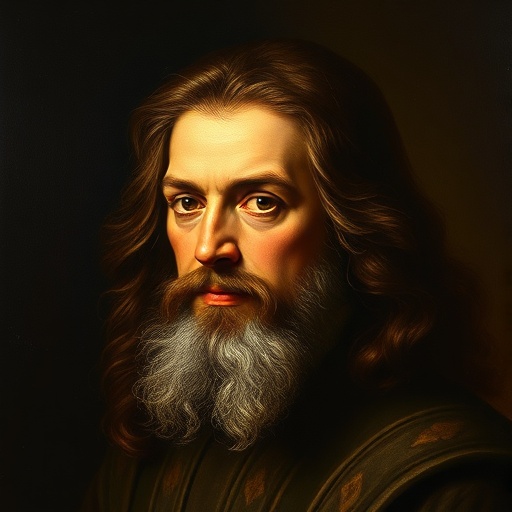
Leonardo da Vinci — "The true artist is a man who believes in himself and is not afraid to stand alon…"
The true artist is a man who believes in himself and is not afraid to stand alone.
The true artist is a man who believes in himself and is not afraid to stand alone.
Click any product to generate a realistic preview. Up to 3 at a time.
* Initial load can take up to 90 seconds — revising the preview in another color is nearly instant.
"Learning never exhausts the mind."
"The greatest deception men suffer is from their own opinions."
"Blind ignorance misleads us and makes us content with this empty life."
"It is an easy thing to praise and blame, but not so easy to know what to praise and what to blame."
"The painter who draws merely by practice and by eye, without any reason, is like a mirror which copies everything placed in front of it without understanding."
This quote is widely attributed but lacks a clear source in his notebooks, possibly a modern interpretation.
Date: unknown
GeneralFound in 1 providers: grok
1 source checked
Authentic artistic identity demands self-conviction and independence. A true artist doesn't seek external validation or follow prevailing trends—they trust their own vision even when it diverges from popular opinion. Standing alone isn't isolation; it's a mark of genuine creative integrity. The artist's worth is measured by internal conviction, not crowd approval or institutional acceptance. Belief in oneself is the foundation of meaningful creative work.
Leonardo's entire life embodied independent self-belief. He pursued anatomy, engineering, and art simultaneously when rigid guild traditions confined most craftsmen to single trades. His private notebooks—filled with hydraulics, optics, and flight studies no patron requested—reveal a man driven by internal curiosity. He left dozens of commissions unfinished, prioritizing personal investigations over client expectations. Across courts in Milan, Florence, and France, he answered ultimately to his own relentless intellect.
The Italian Renaissance was dismantling medieval guild culture, elevating individual artists from anonymous craftsmen to celebrated creative visionaries. Humanist philosophy championed reason and self-determination, yet powerful patrons—popes, dukes, merchant princes—still controlled most artistic output. Standing independent of institutional expectation required genuine courage. Leonardo worked at the exact historical inflection point where the modern concept of the solitary creative genius was first becoming imaginable as a legitimate identity.
AI-generated insights based on extensive research and information for context. Factual errors? Email [email protected].
Your cart is empty