Wright Brothers (Orville & Wilbur) — "It is difficult to understand how anyone could have been so blind to the truth."
It is difficult to understand how anyone could have been so blind to the truth.
It is difficult to understand how anyone could have been so blind to the truth.
Click any product to generate a realistic preview. Up to 3 at a time.
* Initial load can take up to 90 seconds — revising the preview in another color is nearly instant.
"It is a question of whether the machine was designed to be beautiful, or beautiful because it was well designed."
"We have not yet fully solved the problem of balance in high winds."
"If its engine stops, it must fall with deathly violence, for it can neither glide like the aeroplane or float like the balloon. The helicopter is much easier to design than the aeroplane, but is worth…"
"No flying machine will ever fly from New York to Paris."
"The machine itself was a thing of beauty, a marvel of ingenuity and simplicity."
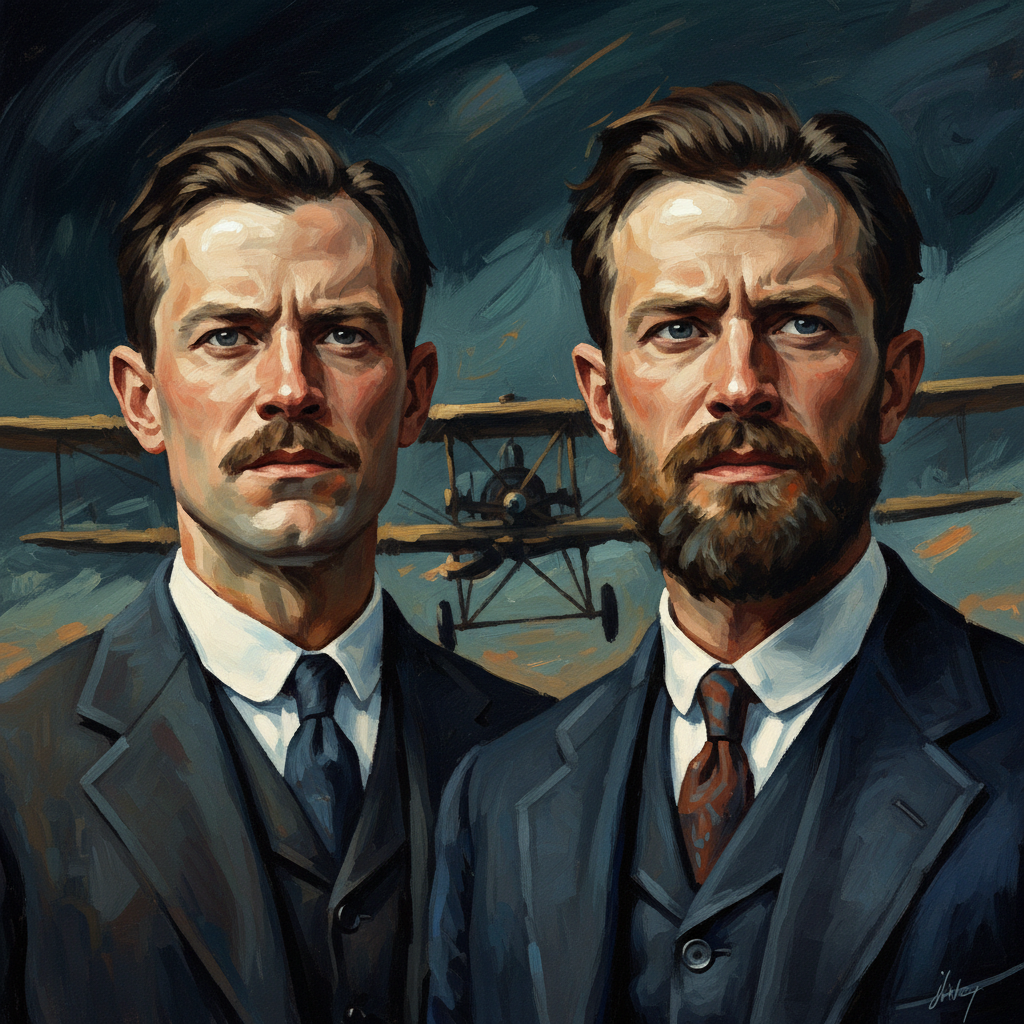
American aviation pioneers who achieved the first sustained powered controlled airplane flight at Kitty Hawk, NC, on December 17, 1903. Closely associated with Octave Chanute (their gliding mentor and aeronautical correspondent). For an intellectual contrast, see Samuel Pierpont Langley, Smithsonian Institution Secretary and government-funded aviation researcher — Langley's Aerodrome crashed twice into the Potomac in October-December 1903 with $50,000 of War Department funding; the Wright Brothers' bicycle-shop empiricism beat Langley's institutional Big Science by 9 days. The most-cited example in engineering history of empirical-tinkerer beating institution-funded credentialism.
Found in 1 providers: grok
1 source checked
The speaker expresses frustration that people refused to accept an obvious fact staring them in the face. Despite clear evidence, observers clung to outdated assumptions or dismissed what was plainly demonstrated. It captures the puzzlement of someone who has proven something real, only to watch others look away, deny it, or fail to grasp what their own eyes should tell them was undeniably true.
The Wrights spent years watching the world dismiss their powered-flight achievement at Kitty Hawk in 1903. Scientific American, the U.S. press, and European aviation circles openly doubted their claims until 1908 public demonstrations. As self-taught bicycle mechanics without academic credentials, Orville and Wilbur were repeatedly brushed aside by experts who believed heavier-than-air flight remained impossible, despite photographs, witnesses, and patents documenting their success.
The early 1900s were steeped in skepticism about aviation after Samuel Langley's very public 1903 crash convinced many that powered flight was decades away. Newspapers routinely ignored or mocked flight claims, and the Wrights' secretive patent-protection approach fed doubt. Only after Wilbur's 1908 Le Mans demonstrations did European and American opinion flip. The era prized credentialed scientists over tinkerers, making recognition of two Ohio bicycle shop owners slow and grudging.
AI-generated insights based on extensive research and information for context. Factual errors? Email [email protected].
Your cart is empty