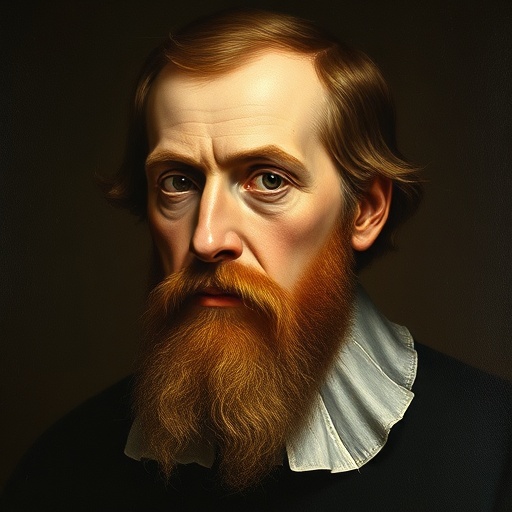
John Calvin — "It is not in our power to believe, but it is the gift of God."
It is not in our power to believe, but it is the gift of God.
It is not in our power to believe, but it is the gift of God.
Click any product to generate a realistic preview. Up to 3 at a time.
* Initial load can take up to 90 seconds — revising the preview in another color is nearly instant.
"The Lord then would have all the godly to burn with so much zeal in the defense of lawful worship and true religion, that no connection, no relationship, nor any other consideration, connected with th…"
"The reprobate are created for the purpose of being destroyed."
"We are poor, miserable sinners, but God is rich in mercy."
"The elect are saved by God's free grace, without any merit of their own."
"This is plainly to ascribe divinity to 'free will.'"
French theologian whose Institutes of the Christian Religion (1536) systematized Protestant Reformed doctrine, including predestination. Closely associated with Martin Luther (Reformation founder, Calvin's predecessor). For an intellectual contrast, see Jacobus Arminius, Dutch Reformed theologian (1560-1609) — Arminius's rejection of strict double-predestination founded Arminianism — the theological tradition modern Methodism, most evangelicalism, and Pentecostalism descend from. The Calvinist-Arminian debate has divided Protestantism for 400 years.
Found in 1 providers: grok
1 source checked
Belief cannot be manufactured by human effort or willpower—it is entirely a gift God grants. People have no innate capacity to generate saving faith on their own. Salvation originates solely in God's sovereign decision, not in human choice or merit. This cuts against any notion that individuals earn or select their own spiritual awakening; faith arrives as an unearned divine endowment given to those God has chosen.
Calvin's entire theological system rests on God's absolute sovereignty over salvation. His doctrine of predestination held that God unconditionally elects whom He saves, while total depravity argued humans are spiritually incapable of turning to God without divine intervention. His landmark Institutes of the Christian Religion (1536) developed these ideas systematically. As Geneva's civic and spiritual leader, Calvin built a society ordered around this God-sovereign, human-helpless framework.
The sixteenth-century Protestant Reformation shattered Western Christianity's assumption that humans cooperate with God's grace through free will, works, and sacraments. Luther's 1525 Bondage of the Will had already struck at Erasmus's defense of human freedom; Calvin pushed further, hardening predestination into a systematic doctrine. As Catholic and Protestant Europe fought theological and literal wars over salvation's mechanics, this claim that faith is entirely God's gift was explosive, reshaping church governance, ethics, and politics across the continent.
AI-generated insights based on extensive research and information for context. Factual errors? Email [email protected].
Your cart is empty