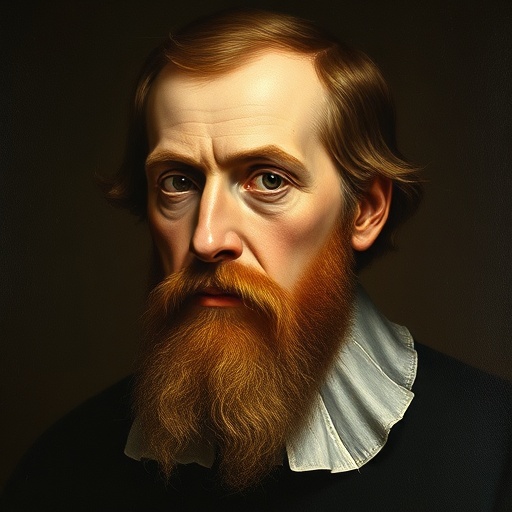
John Calvin — "The reprobate are created for the purpose of being destroyed."
The reprobate are created for the purpose of being destroyed.
The reprobate are created for the purpose of being destroyed.
Click any product to generate a realistic preview. Up to 3 at a time.
* Initial load can take up to 90 seconds — revising the preview in another color is nearly instant.
"It would be indeed better to grant license to thieves and sorcerers and adulterers, than to suffer the blasphemies which the ungodly utter against God, to prevail without any punishment and without an…"
"The whole life of a Christian should be a perpetual exercise of repentance."
"The true way to learn God's will is to listen to his Word."
"The heart of man is a perpetual idol factory."
"The proper knowledge of God is when we know him to be our Father."
French theologian whose Institutes of the Christian Religion (1536) systematized Protestant Reformed doctrine, including predestination. Closely associated with Martin Luther (Reformation founder, Calvin's predecessor). For an intellectual contrast, see Jacobus Arminius, Dutch Reformed theologian (1560-1609) — Arminius's rejection of strict double-predestination founded Arminianism — the theological tradition modern Methodism, most evangelicalism, and Pentecostalism descend from. The Calvinist-Arminian debate has divided Protestantism for 400 years.
Found in 1 providers: grok
1 source checked
This statement expresses double predestination: the belief that God has decreed, before creation, not only who will be saved but also who will be eternally condemned. The reprobate are those God chose not to redeem. Their destruction is not merely permitted but purposeful within divine sovereignty. It is a stark theological claim that God's absolute will governs both salvation and damnation, leaving no room for human choice to alter the outcome.
Calvin's Institutes of the Christian Religion systematically argued for God's absolute sovereignty over all things, including eternal destinies. Trained as a lawyer, he approached theology with relentless logical consistency: if God is omnipotent and omniscient, predestination must extend to damnation as well as salvation. As Geneva's reforming pastor, he built a theocratic community on this doctrine. His willingness to follow arguments to their hardest conclusions, regardless of controversy, defined his character and divided Protestantism.
The 16th-century Reformation shattered Catholic Europe's unified framework of salvation through sacrament and merit. Every reformer had to answer: who is saved, and how? Luther emphasized grace over works; Calvin pushed further, insisting God's election was unconditional and total. Amid plague, religious wars, and the collapse of medieval certainty, Calvin's rigid predestinarian framework gave believers assurance that history served divine purposes — but it also provoked fierce backlash from Catholics and fellow Protestants who saw it as making God the author of evil.
AI-generated insights based on extensive research and information for context. Factual errors? Email [email protected].
Your cart is empty