What it means
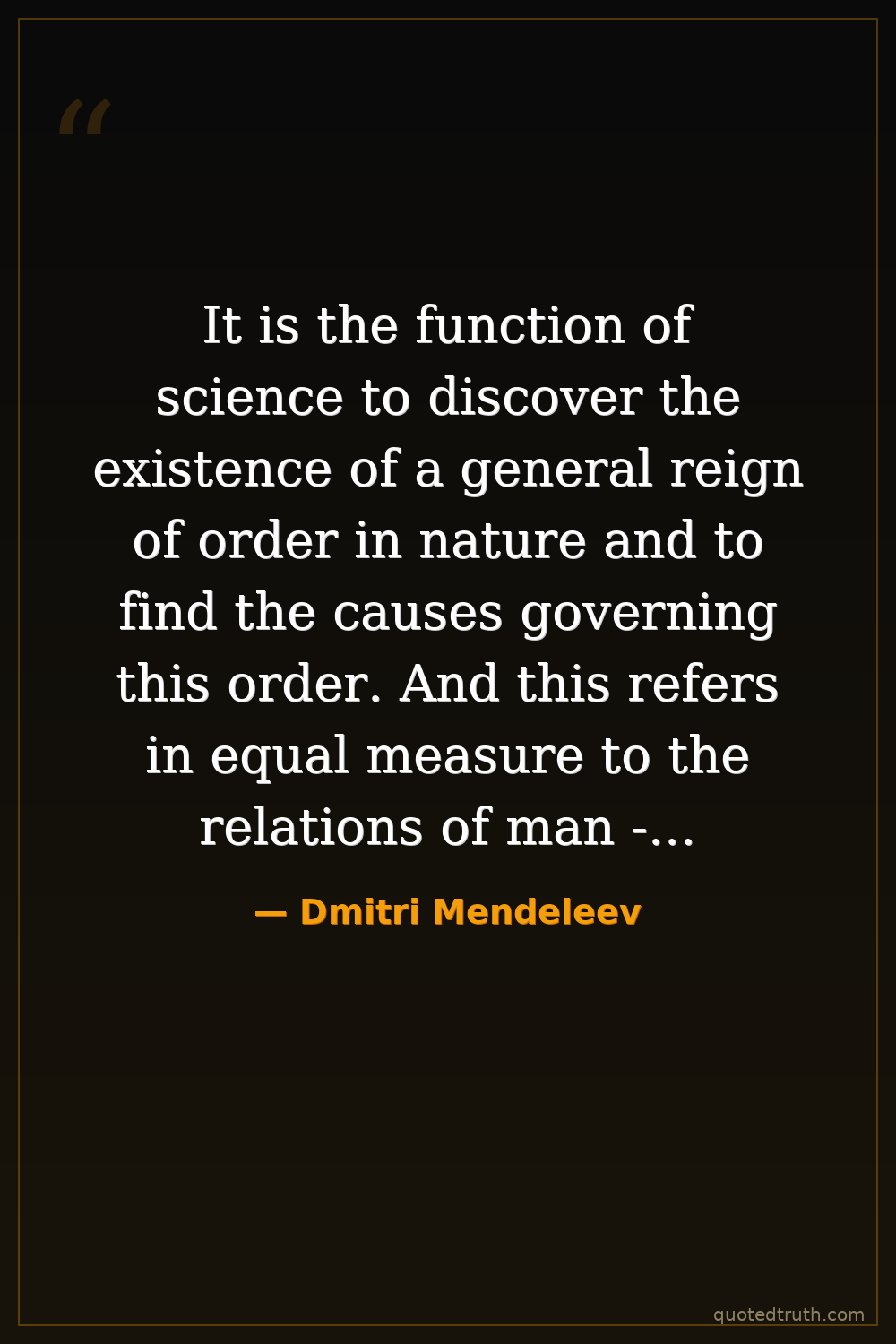
Science exists to uncover the hidden order running through nature and to identify the causes that produce that order. The same approach applies everywhere: not just to atoms, planets, or chemicals, but also to how people organize themselves socially and politically. Reality, whether physical or human, is governed by discoverable patterns, and the scientist's job is to map those patterns and explain why they exist.
Relevance to Dmitri Mendeleev
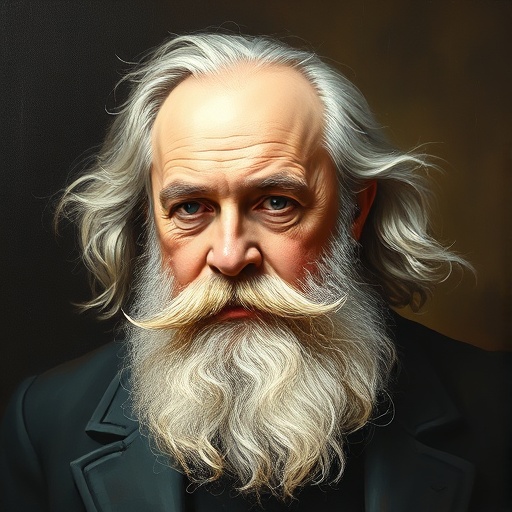
Mendeleev built the periodic table by trusting that scattered chemical elements obeyed an underlying law, even predicting undiscovered elements from gaps in the pattern. That faith in hidden order defines this quote. He also wrote on Russian economics, tariffs, and agriculture, applying the same systematizing mind to society. For him, chemistry and statecraft were not separate domains but parallel arenas where rational inquiry could expose governing causes.
The era
Mendeleev worked in late-19th-century Russia, an era when science was rapidly professionalizing and thinkers believed natural laws could explain everything from gases to governments. Positivism, Darwinism, and Marxism all framed society as lawful and analyzable. Russia itself was wrestling with serfdom's aftermath, industrialization, and political reform, so claims that science could illuminate social and political relations carried real weight in public debate, not merely academic curiosity.
AI-generated insights based on extensive research and information for context. Factual errors? Email [email protected].