What it means
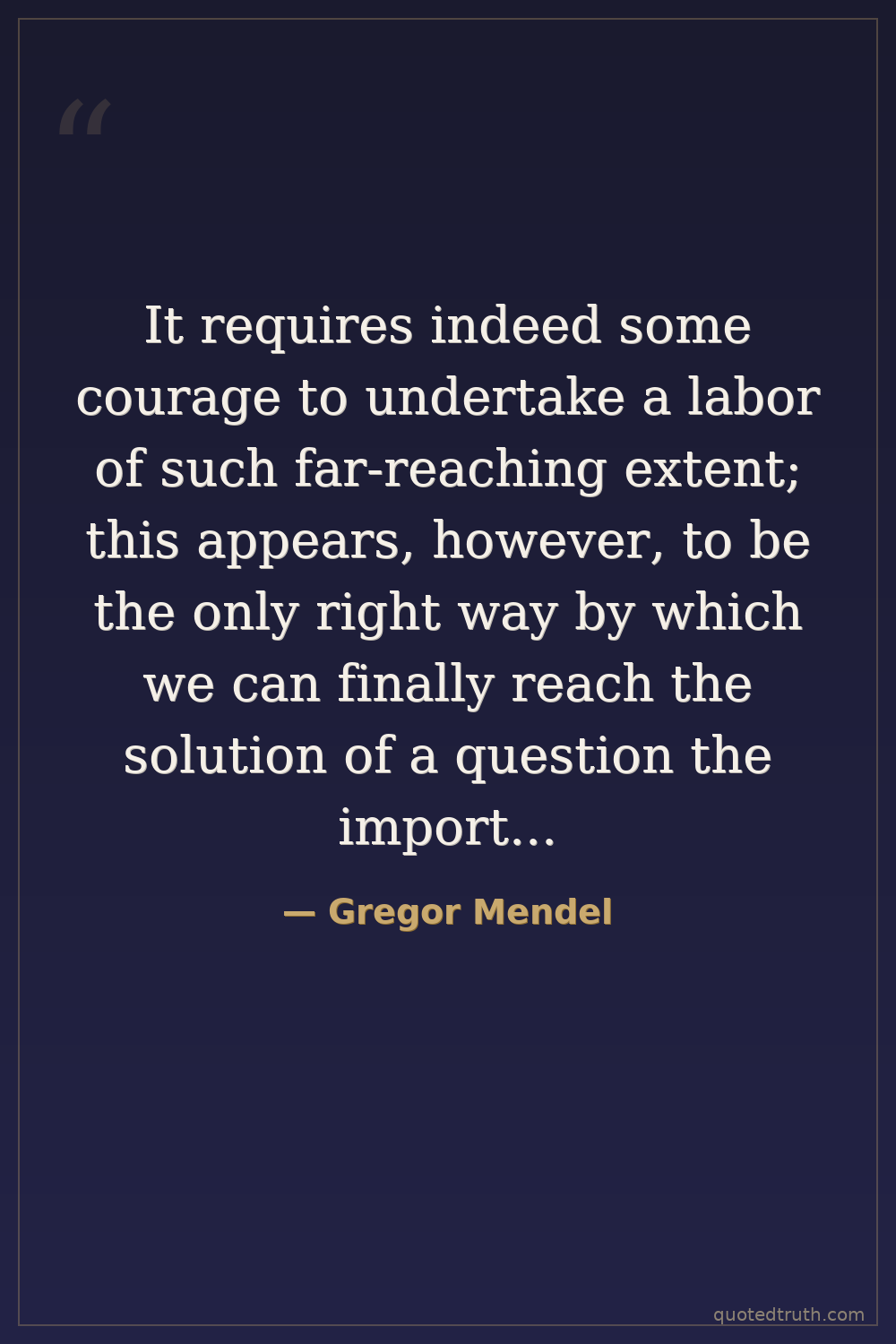
Taking on a massive, ambitious project demands real bravery, but sometimes there is no shortcut — only the exhausting, comprehensive path leads to answers that truly matter. The scale of the work is justified by the scale of the question. Some problems are too important to approach halfway, and only full commitment produces the breakthrough that changes how we understand the world.
Relevance to Gregor Mendel
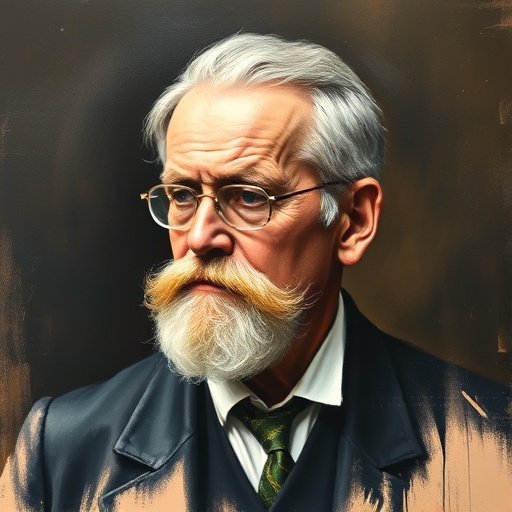
Mendel spent eight years cultivating and tracking nearly 29,000 pea plants in a monastery garden, a painstaking labor most scientists of his day ignored. He wrote this in his 1866 landmark paper, fully aware the scope was daunting. His monastic discipline, mathematical rigor, and quiet persistence defined his character — someone who trusted process over recognition, working largely alone without validation from the scientific establishment.
The era
Mendel published his findings in 1866, just seven years after Darwin's On the Origin of Species ignited fierce debate about how traits pass between generations. The mechanism of heredity was biology's central unsolved mystery. Mendel's era had no chromosomal theory, no knowledge of DNA — yet evolution demanded an explanation for inheritance. His courage was real: proposing quantitative laws in a field dominated by qualitative, speculative naturalism.
AI-generated insights based on extensive research and information for context. Factual errors? Email [email protected].