Wright Brothers (Orville & Wilbur) — "It was a beautiful machine and it worked."
It was a beautiful machine and it worked.
It was a beautiful machine and it worked.
Click any product to generate a realistic preview. Up to 3 at a time.
* Initial load can take up to 90 seconds — revising the preview in another color is nearly instant.
"We were not seeking fame or fortune, but simply to solve a problem."
"The aeroplane is not an invention, but a discovery."
"We were much pleased with the general performance of the machine."
"The greatest obstacle to progress is not ignorance, but the illusion of knowledge."
"The desire for flight is the expression of a deep-seated human instinct."
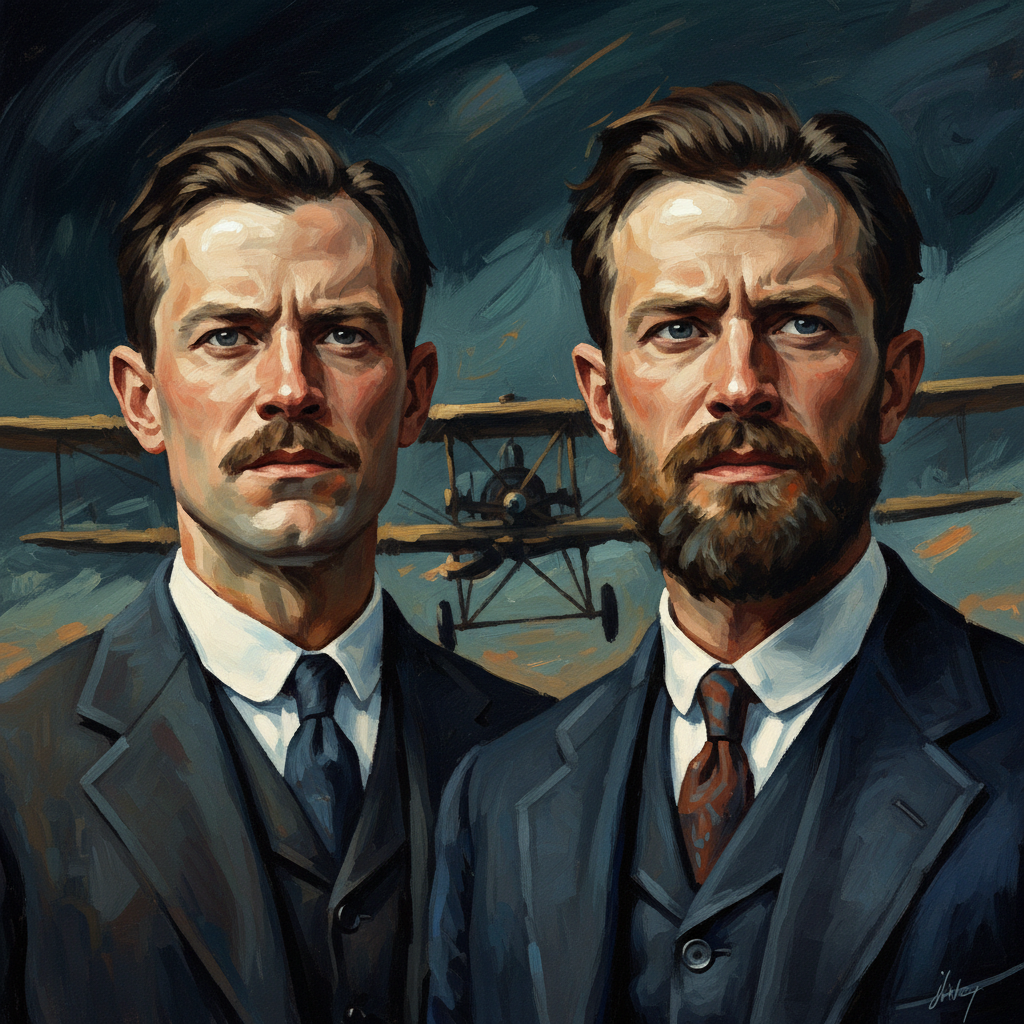
American aviation pioneers who achieved the first sustained powered controlled airplane flight at Kitty Hawk, NC, on December 17, 1903. Closely associated with Octave Chanute (their gliding mentor and aeronautical correspondent). For an intellectual contrast, see Samuel Pierpont Langley, Smithsonian Institution Secretary and government-funded aviation researcher — Langley's Aerodrome crashed twice into the Potomac in October-December 1903 with $50,000 of War Department funding; the Wright Brothers' bicycle-shop empiricism beat Langley's institutional Big Science by 9 days. The most-cited example in engineering history of empirical-tinkerer beating institution-funded credentialism.
Found in 1 providers: grok
1 source checked
The speaker expresses quiet satisfaction at a creation that was both aesthetically pleasing and functionally successful. It captures the rare joy of design meeting execution—when craftsmanship produces something elegant to behold and reliable in performance. The statement is understated, preferring direct observation over boastful claims, and treats beauty and utility as equally valid measures of a finished piece of engineering.
The Wright Brothers were meticulous bicycle mechanics turned aviation pioneers who designed, built, and tested their own airframes, engines, and propellers. Their 1903 Flyer was hand-crafted spruce, muslin, and a custom aluminum engine block. Neither brother was prone to grand pronouncements; Wilbur and Orville preferred plain, factual speech. This quote reflects their craftsman ethos: judging a machine by whether it flew, and quietly admiring the workmanship that made it possible.
In the early 1900s, flight was widely dismissed as fantasy, and prominent scientists publicly declared heavier-than-air machines impossible. The Wrights worked in a Dayton bicycle shop during the Second Industrial Revolution, an era obsessed with mechanical progress—automobiles, electrification, and telephones were reshaping daily life. Their December 1903 success at Kitty Hawk predated widespread acceptance by years. Calling a flying machine 'beautiful' and noting simply that 'it worked' was revolutionary understatement in a time when the impossible had just become real.
AI-generated insights based on extensive research and information for context. Factual errors? Email [email protected].
Your cart is empty