What it means
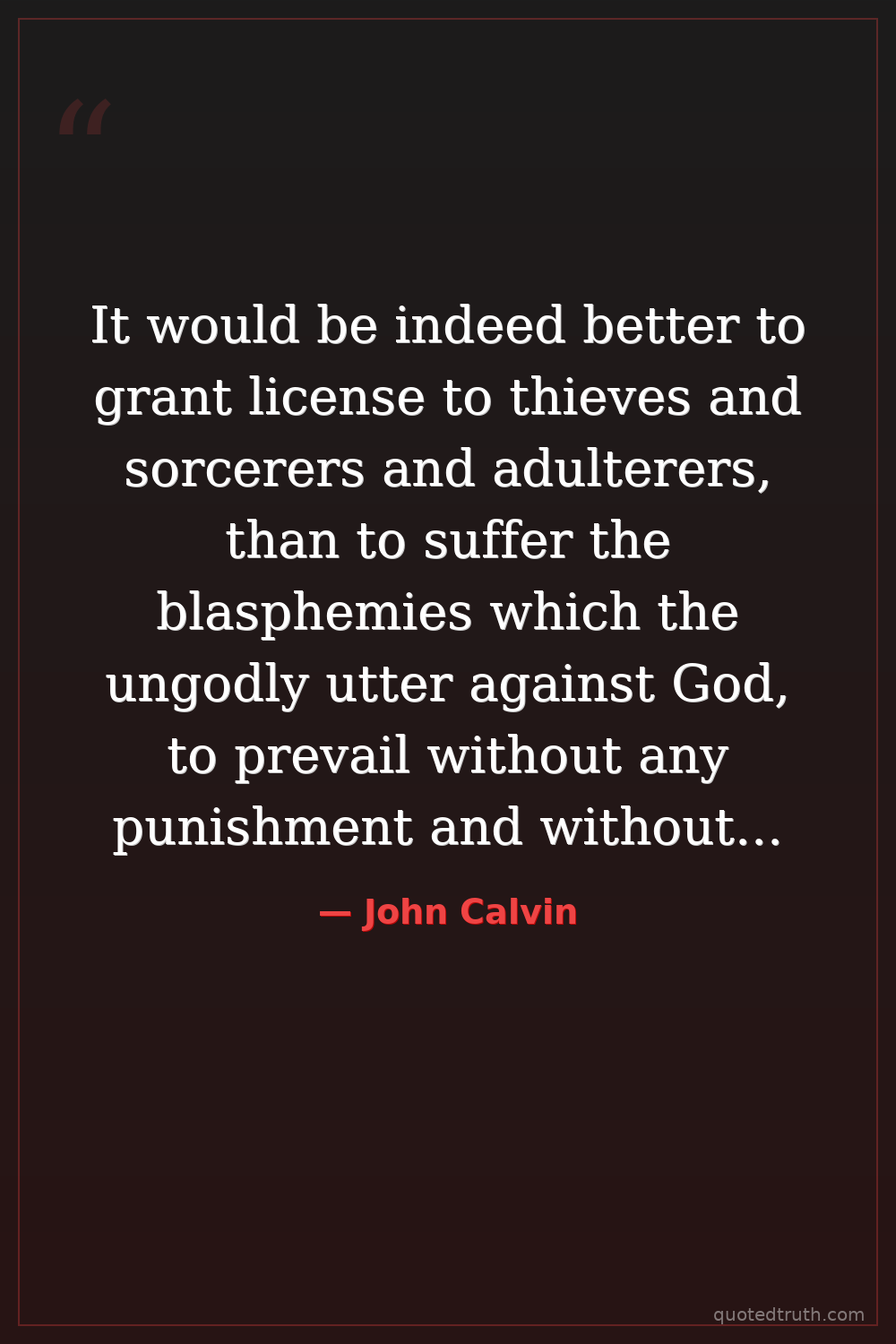
Calvin argues that allowing people to publicly mock or denounce God is more dangerous to society than tolerating theft or sexual sin. He sees blasphemy as the gravest threat to social order—worse than crimes against people or property. In his view, a community that ignores contempt for God is more corrupt than one that tolerates ordinary criminals, because divine authority underlies all legitimate law and order.
Relevance to John Calvin
Calvin governed Geneva as a near-theocracy where church discipline and civil law intertwined. He championed God's absolute sovereignty above all earthly concerns. His backing of Michael Servetus's execution in 1553 for denying the Trinity shows this conviction in action. Calvin wrote extensively about magistrates' duty to punish religious crimes, believing ungodly speech corrupted whole communities and undermined the covenant between God and a rightly ordered Christian society.
The era
The 16th-century Reformation shattered Western Christianity's unity, sparking religious wars and competing state churches across Europe. Calvin wrote from Geneva in the 1540s–1560s, where civic authorities actively prosecuted heresy and blasphemy. The Council of Trent hardened Catholic doctrine against Protestant error simultaneously. Rulers everywhere tied religious conformity to political legitimacy, making public speech against God a threat to civic order as much as a spiritual transgression.
AI-generated insights based on extensive research and information for context. Factual errors? Email [email protected].