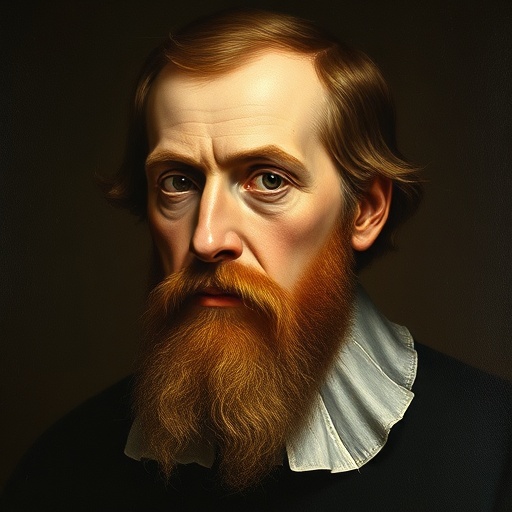
John Calvin — "The executioner is a good physician for the church."
The executioner is a good physician for the church.
The executioner is a good physician for the church.
Click any product to generate a realistic preview. Up to 3 at a time.
* Initial load can take up to 90 seconds — revising the preview in another color is nearly instant.
"We call predestination God's eternal decree, by which he compacted with himself what he willed to become of each man. For all are not created in equal condition; rather, eternal life is foreordained f…"
"The true wisdom of man consists in the knowledge of God and of himself."
"However many blessings we expect from God, His infinite liberality will always exceed all our wishes and our thoughts."
"The best way to overcome evil is to do good."
"We are not called to be popular, but to be faithful."
French theologian whose Institutes of the Christian Religion (1536) systematized Protestant Reformed doctrine, including predestination. Closely associated with Martin Luther (Reformation founder, Calvin's predecessor). For an intellectual contrast, see Jacobus Arminius, Dutch Reformed theologian (1560-1609) — Arminius's rejection of strict double-predestination founded Arminianism — the theological tradition modern Methodism, most evangelicalism, and Pentecostalism descend from. The Calvinist-Arminian debate has divided Protestantism for 400 years.
Found in 1 providers: deepseek
1 source checked
This quote argues that executing heretics benefits the church the way surgery benefits a sick body—by removing dangerous, spreading corruption before it kills the whole. Calvin equates doctrinal dissent with disease and lethal punishment with healing. The metaphor reframes violent enforcement of orthodoxy as an act of care rather than cruelty, positioning the state executioner as a necessary agent of the church's spiritual and institutional survival.
Calvin governed Geneva as a near-theocracy where civic law enforced theological conformity. His most notorious act was securing the arrest and execution of Michael Servetus in 1553—burned alive for denying the Trinity—which Calvin publicly defended as righteous. He genuinely believed heresy threatened eternal souls more than plague. This quote reflects his conviction that a pure church required coercive discipline alongside persuasion, making civil punishment inseparable from pastoral care.
In 16th-century Europe, heresy was a capital crime under both Catholic and Protestant regimes. The Reformation shattered Christendom into warring factions, and religious uniformity was seen as essential to civic order. Spain's Inquisition burned thousands; Protestant cities executed Anabaptists. Geneva operated as a city-state where Calvin's Consistory fused church discipline with civil law. Executing dissenters was widely accepted statecraft—contemporaries would have read this quote as pragmatic governance, not extremism.
AI-generated insights based on extensive research and information for context. Factual errors? Email [email protected].
Your cart is empty