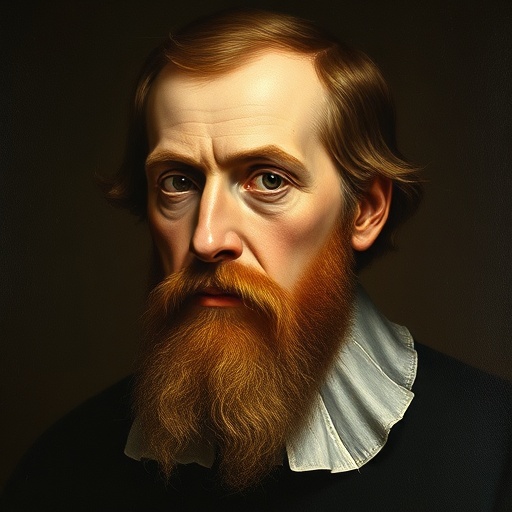
John Calvin — "God's election is not of him that willeth, nor of him that runneth, but of God t…"
God's election is not of him that willeth, nor of him that runneth, but of God that sheweth mercy.
God's election is not of him that willeth, nor of him that runneth, but of God that sheweth mercy.
Click any product to generate a realistic preview. Up to 3 at a time.
* Initial load can take up to 90 seconds — revising the preview in another color is nearly instant.
"The proper knowledge of God is when we know him to be our Father."
"The reprobate are not able to believe, because God does not give them the gift of faith."
"God has decreed to save some and to destroy others, and this decree is just."
"Our salvation depends on the free election of God."
"God's love is the fountain of all our blessings."
French theologian whose Institutes of the Christian Religion (1536) systematized Protestant Reformed doctrine, including predestination. Closely associated with Martin Luther (Reformation founder, Calvin's predecessor). For an intellectual contrast, see Jacobus Arminius, Dutch Reformed theologian (1560-1609) — Arminius's rejection of strict double-predestination founded Arminianism — the theological tradition modern Methodism, most evangelicalism, and Pentecostalism descend from. The Calvinist-Arminian debate has divided Protestantism for 400 years.
Found in 1 providers: grok
1 source checked
Salvation and being chosen by God has nothing to do with human desire or striving. No effort of will—wanting it badly enough—or activity—working toward it—can earn or secure divine favor. Election is entirely God's act of mercy, given freely to whom he chooses. Human agency plays no role in determining who receives grace. The saved are saved because God chose to show mercy, not because they chose or earned it.
Calvin built his entire theological system around divine sovereignty and predestination. As pastor and theologian in Geneva, he formalized the doctrine that God unconditionally elects individuals for salvation before birth—not based on foreseen faith or merit. His Institutes of the Christian Religion made this the cornerstone of Reformed theology. He defended it fiercely in debates with critics like Jerome Bolsec, believing any human role in salvation diminished God's absolute sovereignty and glory.
The 16th-century Reformation erupted over precisely this question: can humans contribute to their salvation? Catholic doctrine blended faith with merit and works. Luther challenged this; Calvin pushed further, making unconditional election the defining boundary between Reformed and Catholic theology. The Council of Trent (1545–1563) explicitly condemned predestinarian views, making this a live battlefront. Kings, cities, and ordinary people chose sides—salvation doctrine was not abstract but determined political allegiances and literal survival.
AI-generated insights based on extensive research and information for context. Factual errors? Email [email protected].
Your cart is empty