What it means
Don't just follow established routines and conventional methods — deliberately step into unfamiliar territory. The beaten track is what everyone does: the safe, predictable path. The woods represents unexplored ideas, fields, and approaches. Bell's point is direct: discovery is structurally impossible if you only repeat what is already known. To find something genuinely new, you must go somewhere genuinely unfamiliar. Curiosity and willingness to wander are prerequisites for any real innovation or insight.
Relevance to Alexander Graham Bell
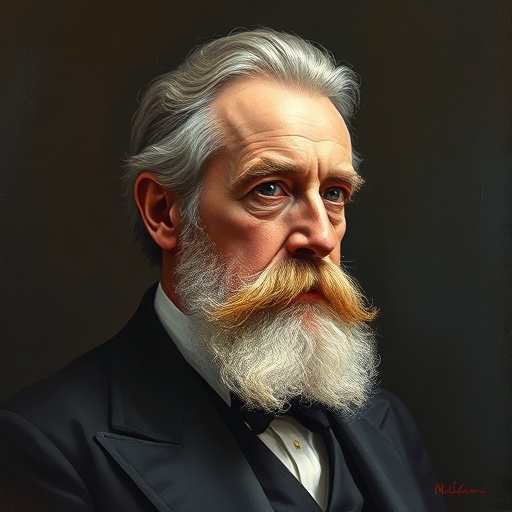
Bell was trained as a speech therapist for the deaf, not an engineer. Yet he invented the telephone by straying into acoustic physics and electrical engineering. He held patents across hydrofoils, aviation, and optical communications, and co-founded the National Geographic Society. His entire career was built on refusing to stay inside his professional lane. This quote reads less like advice and more like autobiography — a direct description of how he actually lived and worked.
The era
Bell worked through the Gilded Age and Second Industrial Revolution, an era of unprecedented invention but rigid professional hierarchies. Scientific authority was concentrated in universities and established institutions. Yet Bell, Edison, Tesla, and the Wright Brothers — all working across disciplinary boundaries — proved transformative breakthroughs came from independent, wandering curiosity rather than institutional conformity. Bell's quote captures the animating spirit of an era when deviating from the beaten track was producing more progress than the track itself.
AI-generated insights based on extensive research and information for context. Factual errors? Email [email protected].