What it means
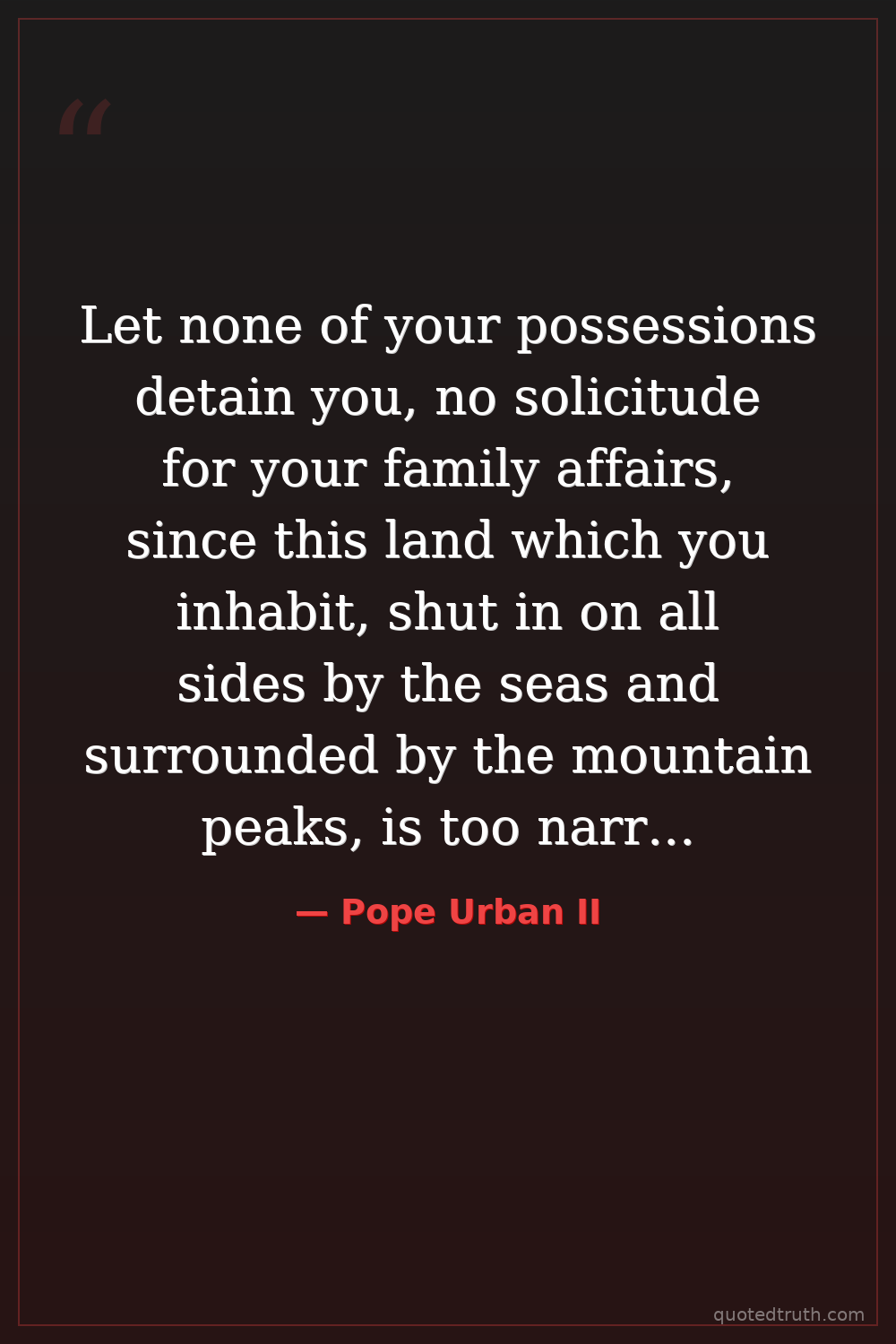
Urban II argues that Europe's crowded, resource-poor geography breeds murderous internal conflict — neighbors killing neighbors over scarce land and food. He frames overpopulation and poverty as root causes of the endemic warfare tearing Christendom apart. The implicit solution follows: redirect this destructive energy outward. Rather than a purely religious appeal, this is a coldly pragmatic diagnosis — European violence stems from material deprivation, and that energy needs an external outlet.
Relevance to Pope Urban II
Urban II, born a French nobleman, intimately knew feudal violence. As a champion of the Peace of God movement and former prior of Cluny, he spent his career curtailing Christian-on-Christian warfare. This passage reflects his practical genius: rather than moralizing alone, he diagnosed structural causes of European strife — land scarcity, overpopulation, inheritance conflicts — then offered the Crusade as both a spiritual duty and a pressure-release valve for a violent, landless warrior class.
The era
In 1095, feudal France was plagued by private warfare among nobles competing for scarce land. Primogeniture left younger sons landless and prone to violence. The Peace of God and Truce of God movements had only partially contained knightly aggression. Meanwhile, the Byzantine Empire, devastated at Manzikert in 1071, begged for help against the Seljuk Turks. Urban exploited this perfect storm — offering European knights a theologically sanctioned war abroad as relief from the resource competition destroying them at home.
AI-generated insights based on extensive research and information for context. Factual errors? Email [email protected].