Martin Luther — "Let us therefore be rid of the Mass and all that pertains to it, and let us use …"
Let us therefore be rid of the Mass and all that pertains to it, and let us use the holy Supper of Christ in its simplicity.
Let us therefore be rid of the Mass and all that pertains to it, and let us use the holy Supper of Christ in its simplicity.
Click any product to generate a realistic preview. Up to 3 at a time.
* Initial load can take up to 90 seconds — revising the preview in another color is nearly instant.
"Let goods and kindred go, this mortal life also; The body they may kill: God's truth abideth still, His kingdom is forever."
"The greatest good in marriage is the love of husband and wife."
"Fifthly, passport and traveling privileges should be absolutely forbidden to the Jews. For they have no business in the countryside, since they are not farmers or craftsmen or merchants, but only usur…"
"I have no pleasure in any man who despises music. It is no invention of ours: it is the gift of God."
"Those who despise these, or treat them with contempt, are worthy of purchasing, adoring, and praising the pope's excrement as balsam."
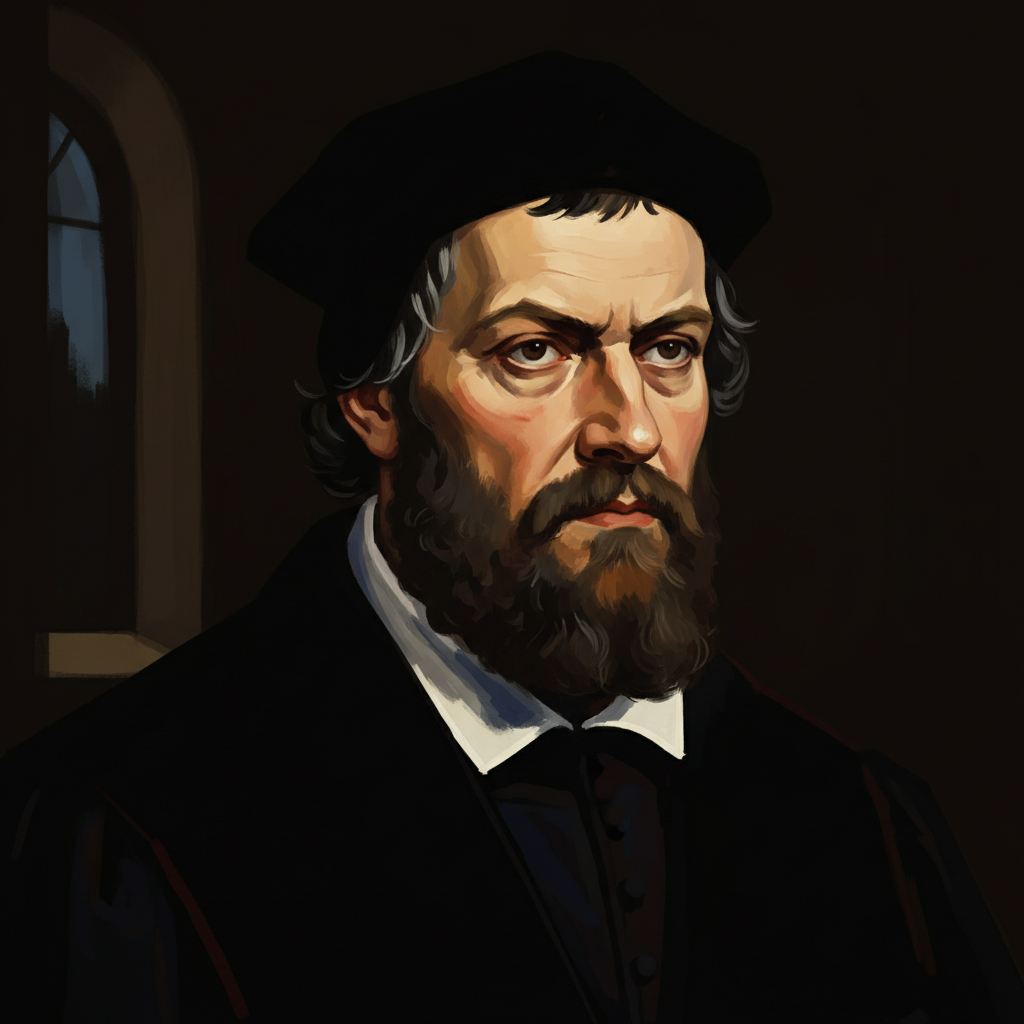
German theologian whose 95 Theses (1517) launched the Protestant Reformation and broke the Catholic Church's monopoly on Western Christianity. Closely associated with Philipp Melanchthon (Lutheran systematizer) and John Calvin (later Reformer who built on Luther's break). For an intellectual contrast, see Pope Leo X, Renaissance pope (1513-1521) — Leo X's indulgence sales triggered Luther's break and Leo excommunicated him in 1521 — Luther's entire Reformation is structured as a direct answer to the indulgence-funded Vatican Leo represented.
Found in 1 providers: grok
1 source checked
Luther calls for abolishing the Catholic Mass and all its elaborate rituals, ceremonies, and theological trappings. Instead, believers should return to a stripped-down observance of the Lord's Supper exactly as Christ instituted it: bread, wine, and remembrance. Strip away the priestly sacrifice, the Latin liturgy, and the accumulated traditions. Keep only what Jesus actually did at the Last Supper, nothing added by centuries of church custom.
Luther spent his career dismantling medieval Catholic sacramental theology. A former Augustinian monk and theology professor at Wittenberg, he rejected the Mass as a re-sacrifice of Christ, calling it idolatrous in works like 'The Babylonian Captivity of the Church' (1520). He reformed worship into German-language services centered on scripture and a simplified Eucharist, directly reshaping how millions of Protestants worship to this day.
In early 16th-century Europe, the Catholic Mass dominated daily life, with priests performing Latin rites, selling indulgences, and claiming sacramental power to transform bread into Christ's body. Luther's 1517 Ninety-Five Theses ignited the Reformation, and the printing press spread his attacks across Germany within weeks. Princes seized church lands, peasants revolted, and Christendom fractured permanently, splitting Europe into Catholic and Protestant territories that would war for over a century.
AI-generated insights based on extensive research and information for context. Factual errors? Email [email protected].
Your cart is empty