William Harvey — "Man comes into the world naked and unarmed, as if nature had destined him for a …"

Man comes into the world naked and unarmed, as if nature had destined him for a social creature, and ordained him to live under equitable laws and in peace...
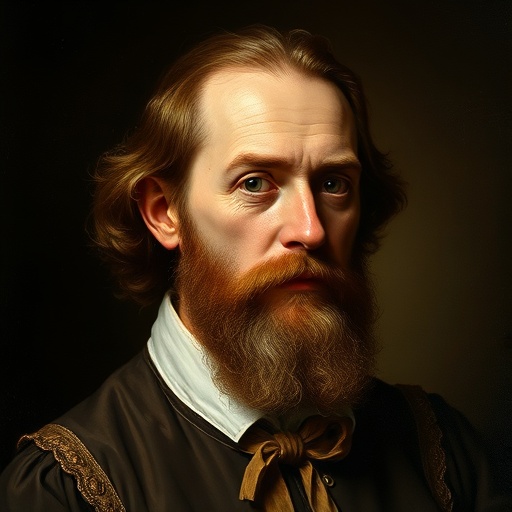
William Harvey — William Harvey Early Modern · Blood circulation

Get This Quote & Author's Image Illustrated On:

Click any product to generate a realistic preview. Up to 3 at a time.
* Initial load can take up to 90 seconds — revising the preview in another color is nearly instant.

Kitchen

Apparel

Other

About William Harvey (1578-1657)

English physician whose On the Motion of the Heart and Blood in Animals (1628) demonstrated blood circulation, overturning 1,400 years of Galenic medicine. Closely associated with Francis Bacon (his contemporary in the new English empiricism). For an intellectual contrast, see Galenic medicine, the 2nd-century Greek medical tradition (humors, blood-as-consumed-fuel) — Harvey calculated that the heart pumps more blood per hour than the body could possibly produce as fuel — a single quantitative observation that demolished the entire Galenic-Aristotelian medical worldview. The cleanest example in medical history of arithmetic disproving 14 centuries of authority.

Details

From 'De Generatione Animalium' (1651), Introduction. A philosophical observation on human nature and societal destiny.

Date: 1651

Philosophical

Verification

Unverifiable

Found in 1 providers: gemini

1 source checked

Understanding this quote

What it means

Humans arrive in the world physically defenseless and unequipped for solitary survival. Harvey argues this is nature's deliberate design — a built-in signal that we are meant to live cooperatively, governed by fair laws rather than brute force. Our biological vulnerability at birth is read as nature's blueprint for civil society: peaceful coexistence and legal order are not impositions on human nature but expressions of it.

Relevance to William Harvey

Harvey's entire career rested on reading nature as a precise, purposeful system — the same method that revealed blood's circulation applies here to human society. As physician to King Charles I, he lived inside political upheaval and witnessed the English Civil War firsthand, watching colleagues and patrons fall to violence. His belief that nature itself ordains peaceful, law-governed society reflects both his empirical worldview and his personal horror at the chaos around him.

The era

Harvey worked during one of Europe's most violent centuries — the Thirty Years' War (1618–1648) killed millions across the continent, and England's Civil War (1642–1651) executed a king and shattered civil order. Natural law philosophy was simultaneously rising through thinkers like Grotius and Hobbes, debating whether humans were naturally peaceful or violent. Harvey's claim that nature designed humans for peace and law was a direct, hopeful counter to the bloodshed he witnessed.

AI-generated insights based on extensive research and information for context. Factual errors? Email [email protected].
Your Cart

Your cart is empty