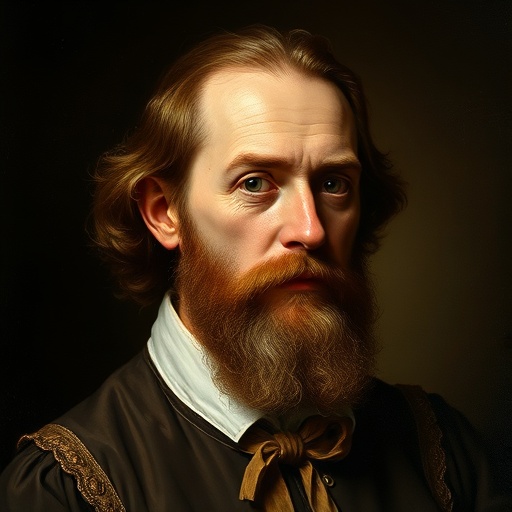
William Harvey — "The physician must be a man of experience."
The physician must be a man of experience.
The physician must be a man of experience.
Click any product to generate a realistic preview. Up to 3 at a time.
* Initial load can take up to 90 seconds — revising the preview in another color is nearly instant.
"The heart is the beginning of life; the sun of the microcosm, even as the sun in his turn might well be designated the heart of the world; for it is the heart by whose virtue and pulse the blood is mo…"
"Very many maintain that all we know is still infinitely less than all that still remains unknown; nor do philosophers pin their faith to others' precepts in such wise that they lose their liberty, and…"
"It is not simply by chance that the heart is placed in the midst of the body, as if it were the sun of the microcosm."
"I hold that the motion of the blood is in a circle, and is constantly impelled and distributed by the pulsific action of the heart."
"The blood in the veins moves towards the heart, not away from it."
English physician whose On the Motion of the Heart and Blood in Animals (1628) demonstrated blood circulation, overturning 1,400 years of Galenic medicine. Closely associated with Francis Bacon (his contemporary in the new English empiricism). For an intellectual contrast, see Galenic medicine, the 2nd-century Greek medical tradition (humors, blood-as-consumed-fuel) — Harvey calculated that the heart pumps more blood per hour than the body could possibly produce as fuel — a single quantitative observation that demolished the entire Galenic-Aristotelian medical worldview. The cleanest example in medical history of arithmetic disproving 14 centuries of authority.
Emphasizing the practical and empirical nature of medical knowledge.
Date: Uncertain (attributed)
WisdomFound in 1 providers: gemini
1 source checked
A doctor cannot rely solely on book learning or theory — practical, hands-on experience with real patients is essential to medical competence. Knowledge gained through observation, repeated practice, and direct engagement with illness and the human body is what separates a capable healer from a merely educated one. Experience sharpens judgment in ways no text can replicate.
Harvey embodied this principle by spending decades dissecting animals and observing living hearts before publishing his theory of blood circulation in 1628. He rejected inherited Galenic doctrine when his direct observations contradicted it, demonstrating that empirical experience outweighs inherited authority. His career as physician to King James I and Charles I gave him unparalleled clinical exposure.
In early modern Europe, medicine was still largely governed by ancient Greco-Roman texts, especially Galen. Universities taught theory over practice, and dissection was rare and controversial. Harvey's era saw the Scientific Revolution beginning to challenge this bookish tradition, making the call for experiential knowledge genuinely radical — a direct strike against scholastic medicine's dominance of European universities.
AI-generated insights based on extensive research and information for context. Factual errors? Email [email protected].
Your cart is empty