What it means
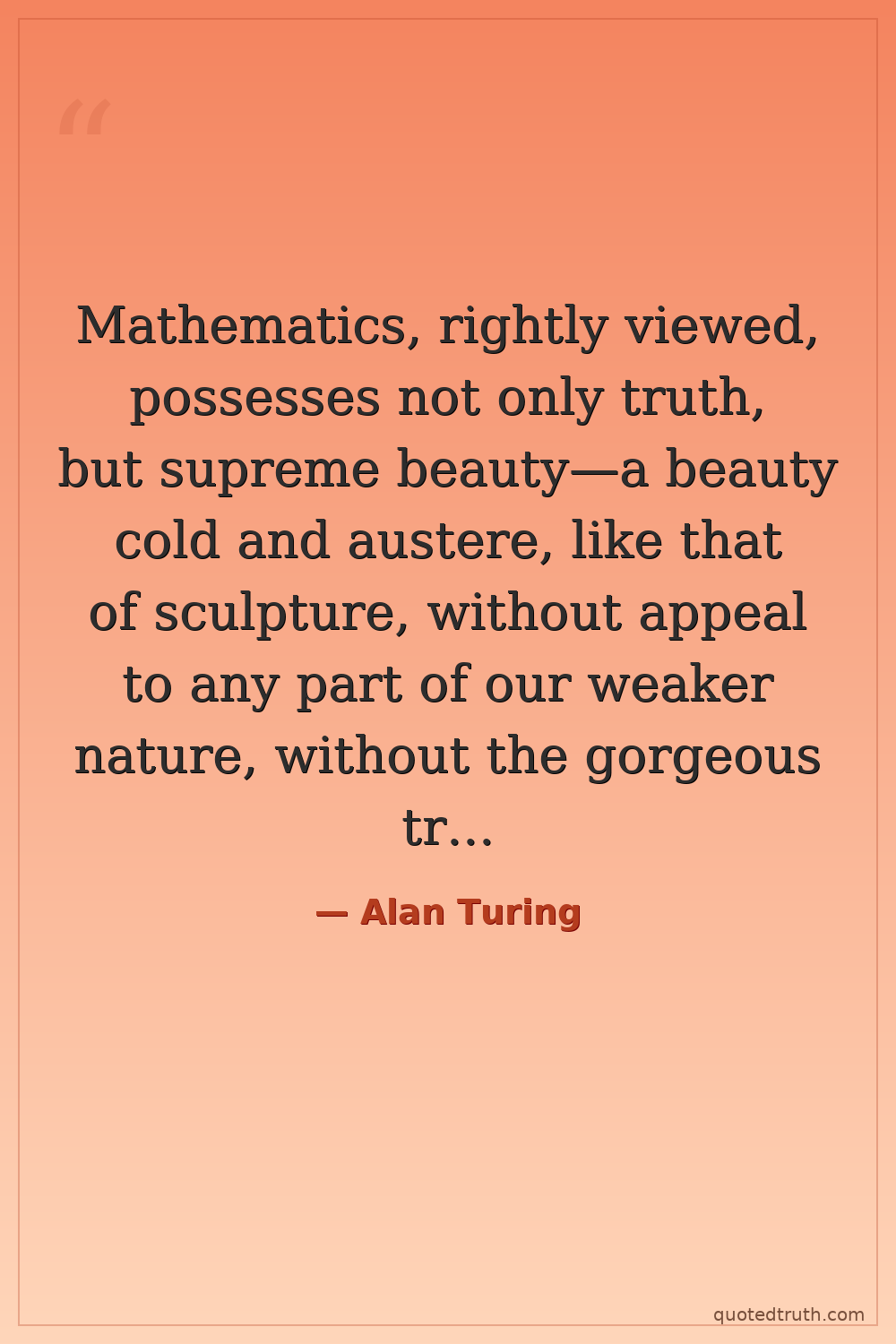
Mathematics, when properly understood, offers more than just correct answers—it delivers a profound aesthetic experience. Its beauty is severe and detached, resembling sculpture rather than the emotional richness of painting or music. It doesn't pander to sentiment or comfort. Instead, it achieves a flawless purity through logic and structure alone. This austere elegance, requiring discipline rather than feeling, represents an artistic perfection that rivals or surpasses what any other creative discipline can achieve.
Relevance to Alan Turing
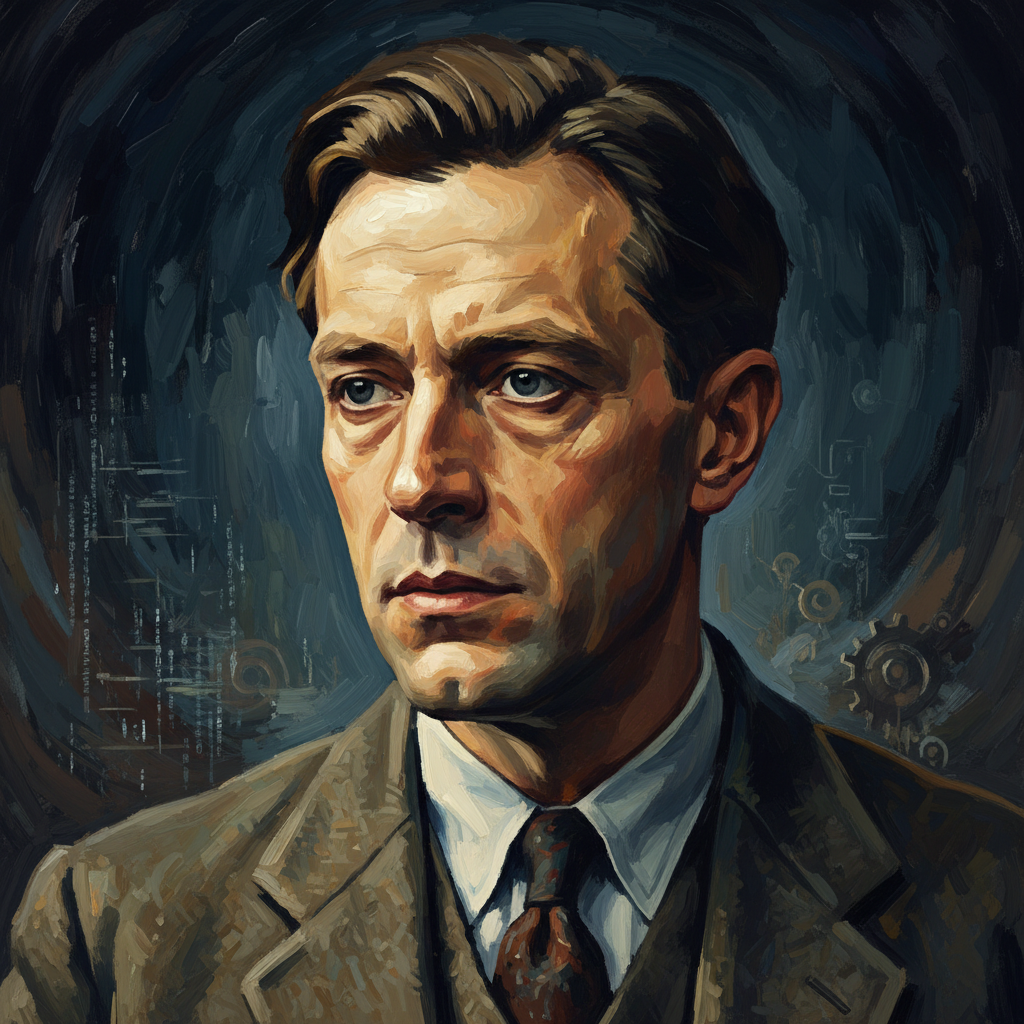
Turing embodied this view through his work on computability, the Turing machine, and the Entscheidungsproblem—abstract structures of breathtaking logical elegance. At Bletchley Park, he treated cryptanalysis as mathematical art, finding beauty in the Bombe's deterministic precision against Enigma. His 1936 paper and later morphogenesis work show a mind drawn to stern formal perfection. Even persecuted by the state he saved, Turing retained faith in mathematics' impersonal purity over human sentiment.
The era
Turing worked during mathematics' golden formalist age—Hilbert's program, Gödel's incompleteness, Church's lambda calculus—when foundational rigor felt revolutionary. World War II weaponized abstract logic at Bletchley Park, proving pure mathematics could topple regimes. Postwar, the dawning computer age (ACE, Manchester Mark 1) made mathematical structures physically real. Yet Britain's 1950s moral conservatism punished Turing's homosexuality with chemical castration in 1952, making mathematics' indifferent purity a stark refuge from human cruelty.
AI-generated insights based on extensive research and information for context. Factual errors? Email [email protected].