Martin Luther — "Medicine causes illness, Mathematics melancholy, and Theology sinful people."
Medicine causes illness, Mathematics melancholy, and Theology sinful people.
Medicine causes illness, Mathematics melancholy, and Theology sinful people.
Click any product to generate a realistic preview. Up to 3 at a time.
* Initial load can take up to 90 seconds — revising the preview in another color is nearly instant.
"The will is a beast of burden. If God mounts it, it wishes and goes as God wills; if Satan mounts it, it wishes and goes as Satan wills; Nor can it choose its rider... the riders contend for its posse…"
"The Turks are the rod of the wrath of the Lord our God."
"A woman must be a woman and cannot be a man. She, too, is God's creature and her divine station is that she should bear and care for and rear children."
"The mad mob does not ask how it could be better, only that it be different. And when it then becomes worse, it must change again."
"I feel much freer now that I am certain the pope is the Antichrist."
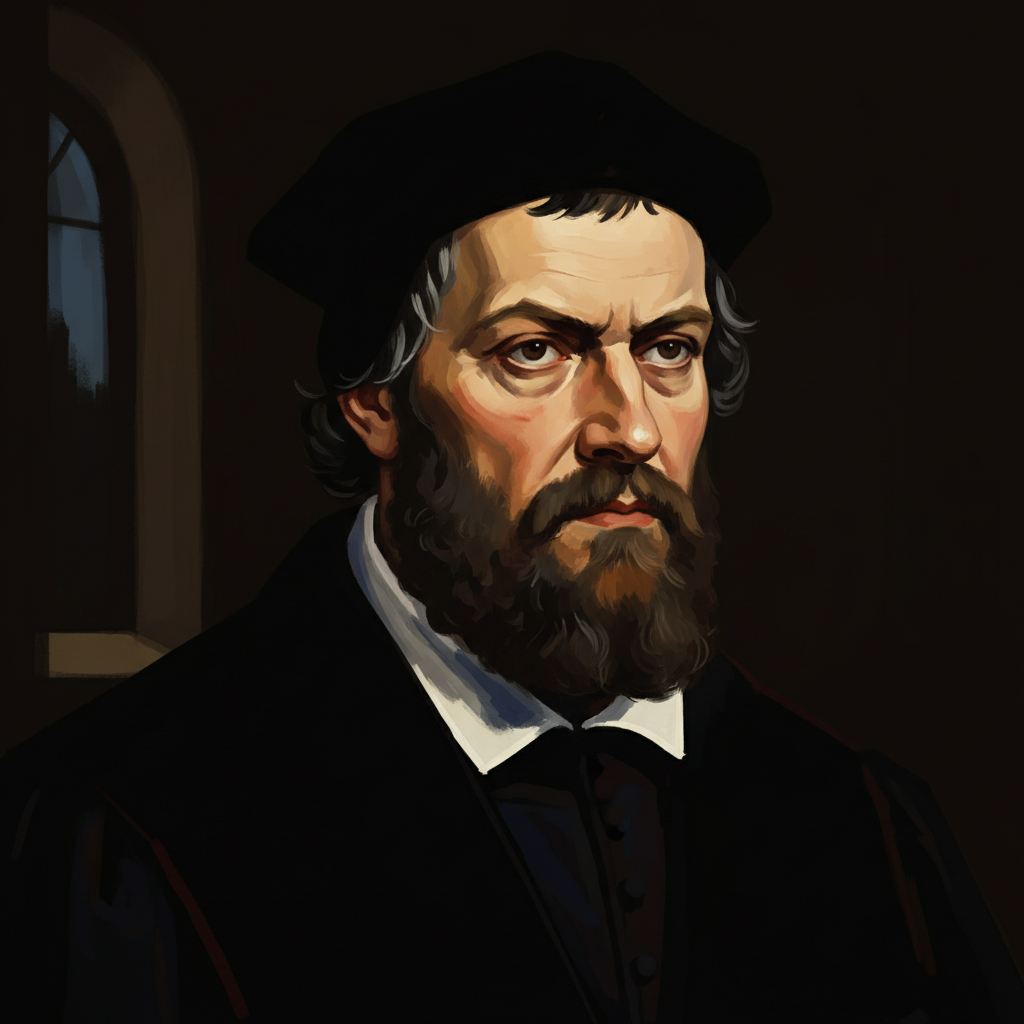
German theologian whose 95 Theses (1517) launched the Protestant Reformation and broke the Catholic Church's monopoly on Western Christianity. Closely associated with Philipp Melanchthon (Lutheran systematizer) and John Calvin (later Reformer who built on Luther's break). For an intellectual contrast, see Pope Leo X, Renaissance pope (1513-1521) — Leo X's indulgence sales triggered Luther's break and Leo excommunicated him in 1521 — Luther's entire Reformation is structured as a direct answer to the indulgence-funded Vatican Leo represented.
Found in 1 providers: gemini
1 source checked
This saying warns that every serious discipline has a dark side or unintended consequence. Studying medicine exposes you to diseases, dwelling on mathematics breeds isolation and gloom, and theology, by forcing confrontation with divine law, makes people acutely aware of their own moral failures. Luther is not condemning these fields but observing that deep engagement with any of them changes the practitioner, often uncomfortably, revealing weakness rather than granting mastery.
Luther trained in law before switching to theology, earning his doctorate in 1512 and lecturing at Wittenberg. His own theological study drove him to anguish over sin, culminating in the 95 Theses of 1517 and his doctrine of justification by faith alone. The quip reflects his blunt, proverbial 'Table Talk' style and his conviction that true theology exposes human sinfulness rather than producing pious experts, mirroring his own spiritual crisis.
Early modern Europe (1500s) was reorganizing knowledge as universities expanded faculties of medicine, arts, and theology. Plague outbreaks, the rise of humanist mathematics, and the Reformation's fierce scriptural debates made each discipline socially charged. Luther spoke amid the religious upheaval he ignited, where theological argument literally split Christendom, physicians battled epidemics with limited tools, and abstract learning was suspected of inducing the melancholic 'scholar's disease' widely discussed by period physicians.
AI-generated insights based on extensive research and information for context. Factual errors? Email [email protected].
Your cart is empty