What it means
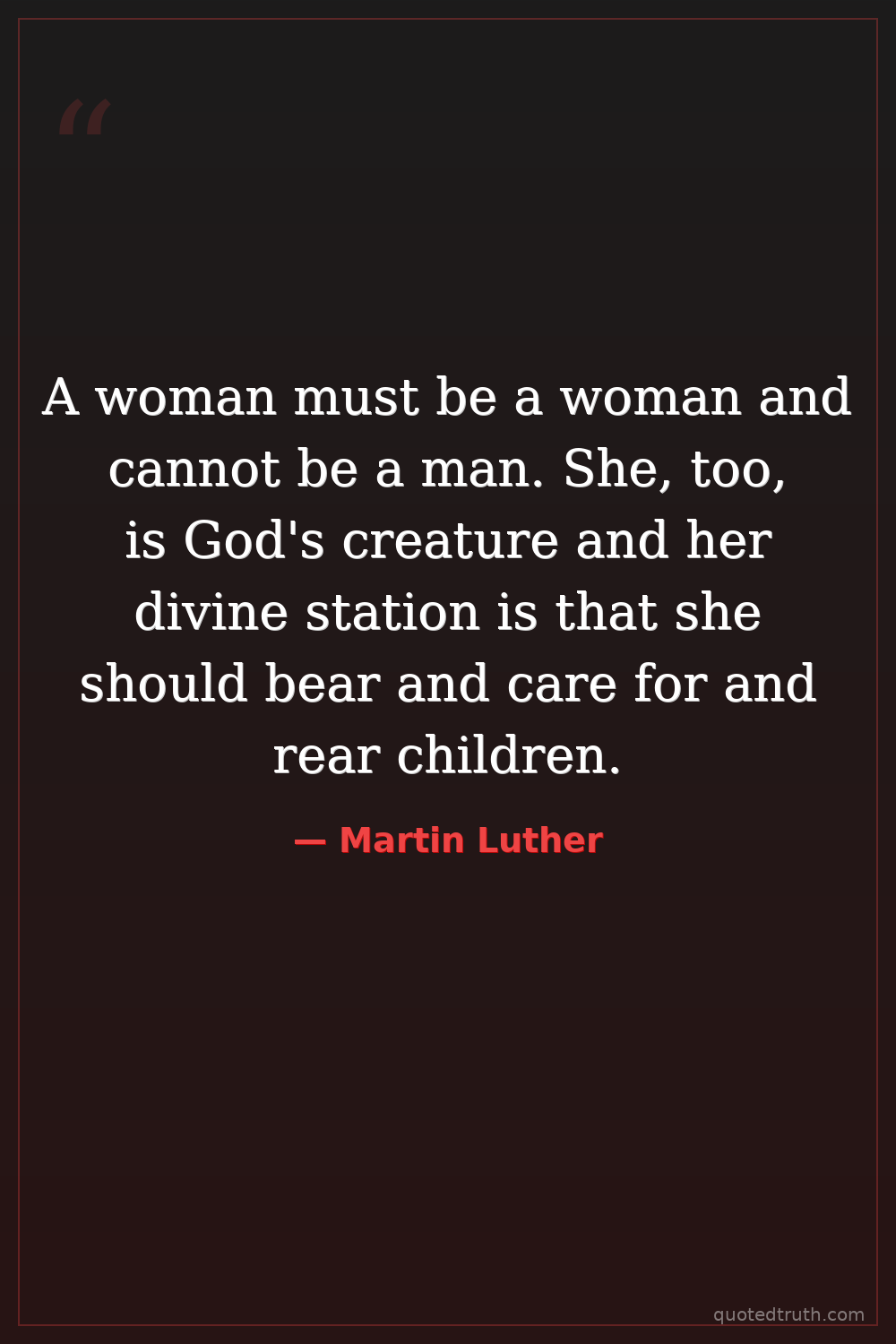
Luther claims women have a fixed, God-given nature that separates them from men, and that their divinely assigned purpose is motherhood: conceiving, nursing, and raising children. He frames biology as destiny, treating female identity as inseparable from domestic and maternal duties. Any attempt to step outside that role would, in his view, violate both nature and divine order rather than express personal choice or ability.
Relevance to Martin Luther
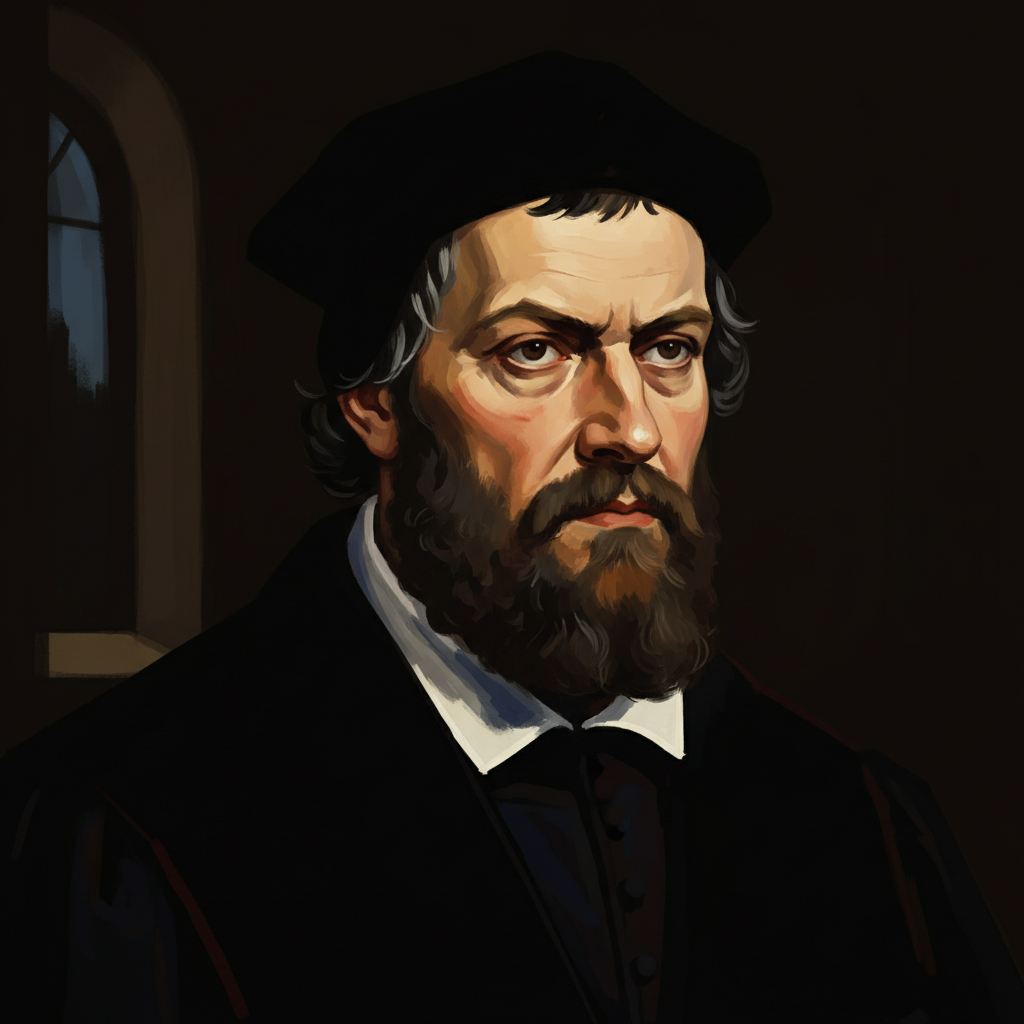
Luther preached that marriage and childbearing were sacred callings, attacking monastic celibacy as unnatural. He left the cloister, married former nun Katharina von Bora in 1525, fathered six children, and praised her household labor while still confining her authority to domestic matters. His sermons and table talk repeatedly grounded gender roles in Genesis, making this statement a direct echo of his theology of vocation, family, and creation order.
The era
In early sixteenth-century Europe, women had no legal autonomy, rarely owned property, and were barred from universities, guilds, and clergy. The Reformation closed convents, removing one of the few paths outside marriage, and reframed the Christian household as the primary female vocation. Humanists debated women's education, but church, state, and emerging Protestant marriage ordinances all treated childbearing as a woman's civic and spiritual duty, making Luther's claim mainstream rather than radical.
AI-generated insights based on extensive research and information for context. Factual errors? Email [email protected].