What it means
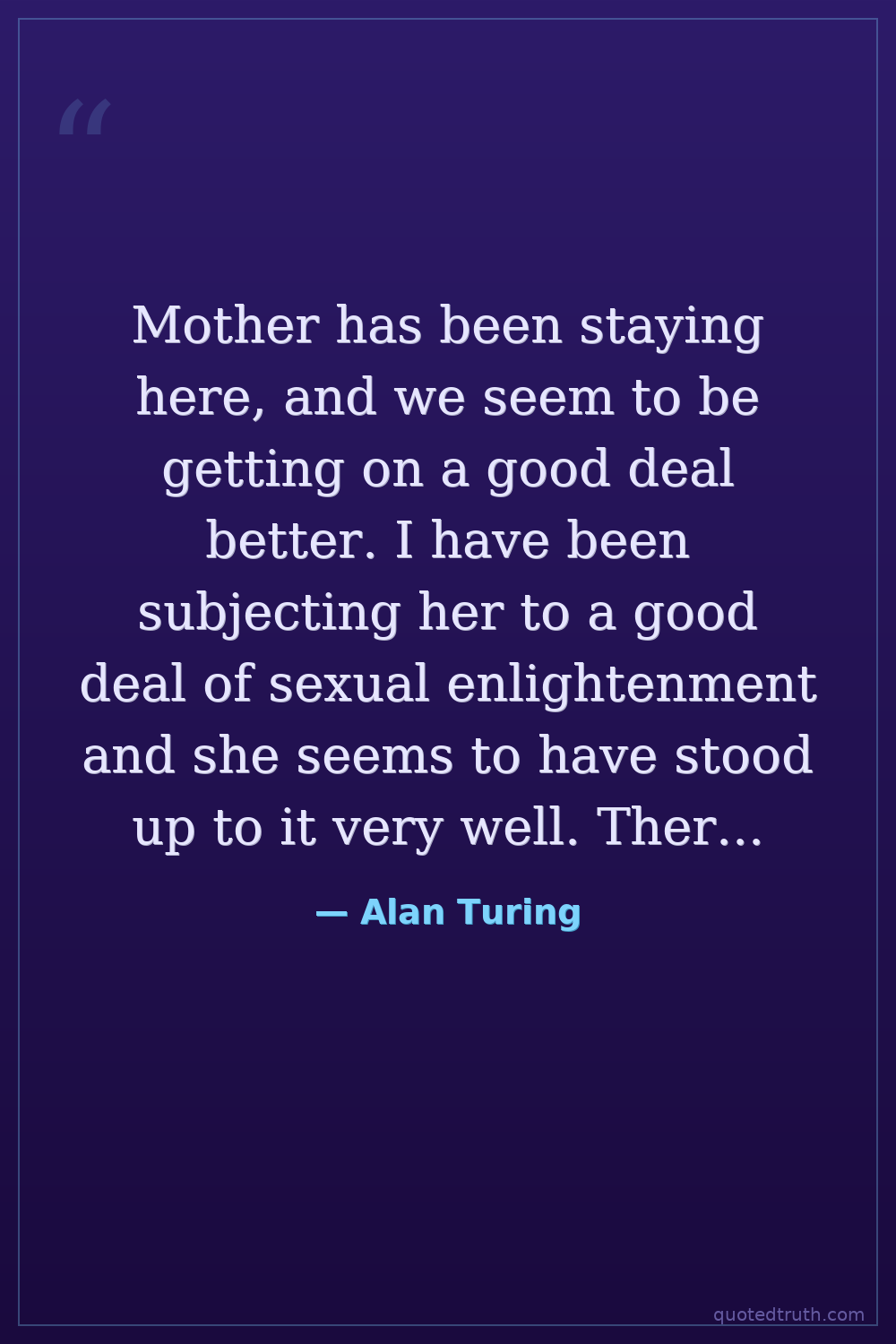
Turing describes candidly discussing his homosexuality with his mother, framing it as 'sexual enlightenment' — treating sexuality as a rational subject for open conversation. The dream sequence adds dry humor: his mother's concern isn't moral condemnation but social propriety. The quote captures his characteristic directness and intellectual honesty, his refusal to hide his identity, and a quietly hopeful reading of his mother's reaction as tolerant rather than rejecting.
Relevance to Alan Turing
Turing was gay in an era when British law criminalized homosexuality. He was arrested in 1952 and subjected to chemical castration as 'treatment.' This letter shows him testing familial acceptance years before his prosecution, using his signature rational framing — making homosexuality an intellectual subject. His relationship with his mother Ethel was complex; she later disputed accounts of his death as suicide, suggesting deep mutual protectiveness.
The era
In postwar Britain, the Labouchere Amendment still criminalized male homosexuality with up to two years' hard labor. Turing wrote this around 1951–52, just before his arrest. Prevailing social expectation demanded absolute secrecy around same-sex attraction. His casual, intellectualized disclosure to his mother was radical defiance of those norms. The Wolfenden Committee wouldn't recommend decriminalization until 1957; Parliament wouldn't act until 1967.
AI-generated insights based on extensive research and information for context. Factual errors? Email [email protected].