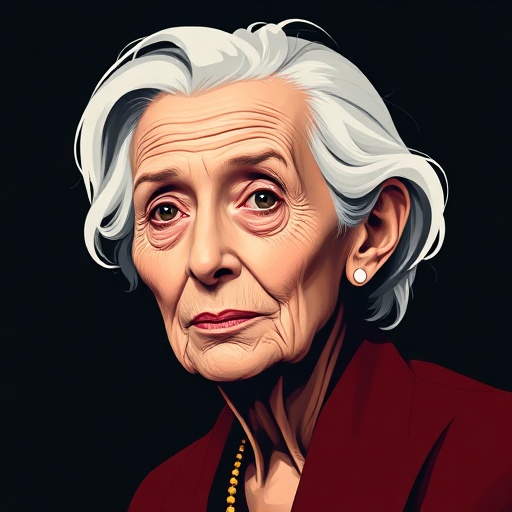
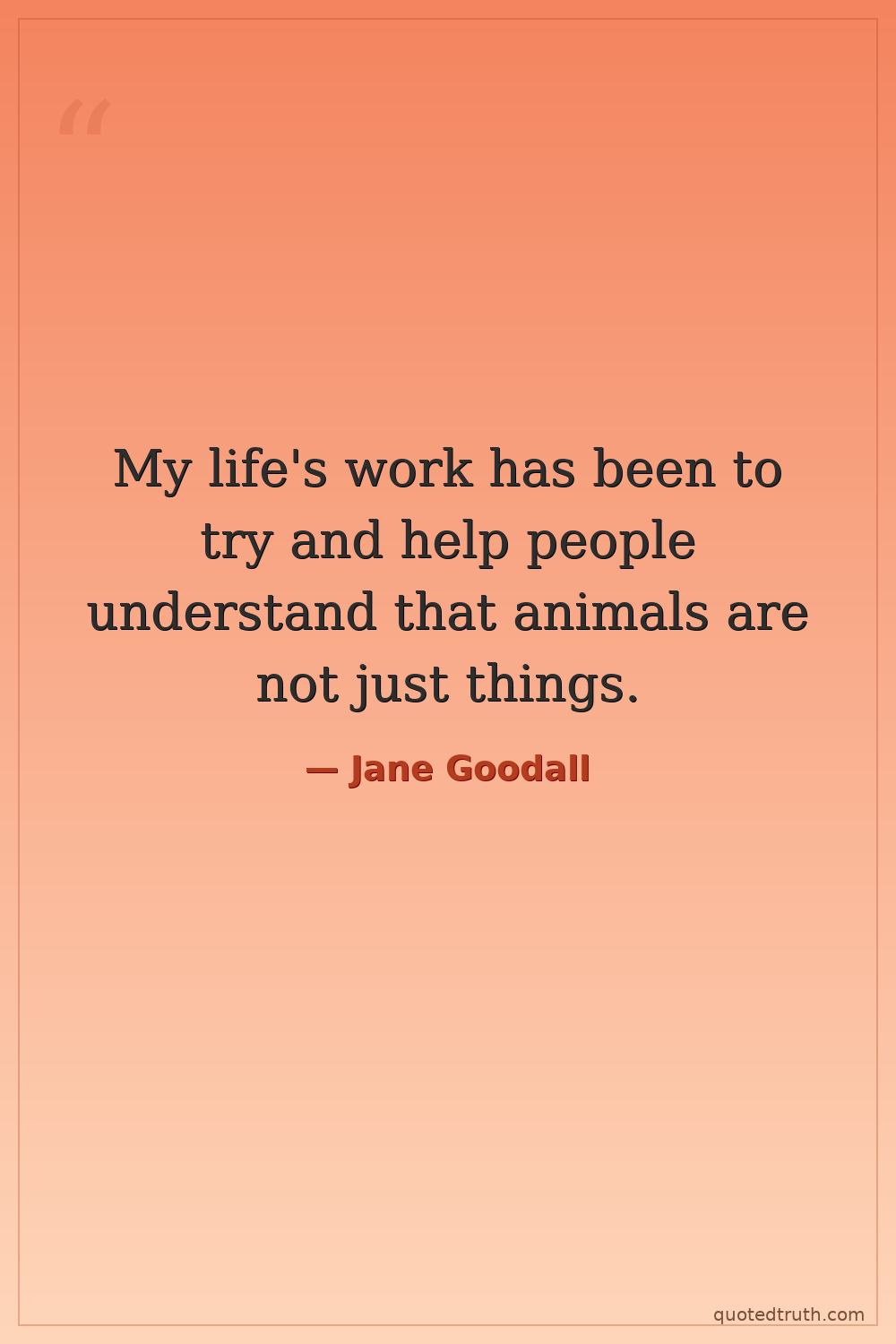
Jane Goodall — "My life's work has been to try and help people understand that animals are not j…"
My life's work has been to try and help people understand that animals are not just things.
My life's work has been to try and help people understand that animals are not just things.
Click any product to generate a realistic preview. Up to 3 at a time.
* Initial load can take up to 90 seconds — revising the preview in another color is nearly instant.
"Every individual matters. Every individual has a role to play. Every individual makes a difference."
"We have to realize that we are part of nature, and not separate from it."
"We are a part of the natural world, and when we destroy it, we destroy ourselves."
"The root of our problems is that we have become disconnected from the natural world."
"We are all interconnected. What we do to the Earth, we do to ourselves."
British primatologist who in 1960 began the longest-running wild primate study at Gombe Stream, transforming our understanding of chimpanzees. Closely associated with Dian Fossey (mountain-gorilla researcher) and Birutė Galdikas (orangutan researcher; together with Goodall and Fossey one of Louis Leakey's 'Trimates'). For an intellectual contrast, see Walter Palmer, American dentist who killed Cecil the Lion in Zimbabwe in 2015 — Palmer represents the trophy-hunting tradition Goodall's life's work has been organized against — the colonial-era hunter-naturalist worldview that treated primates and big game as specimens or trophies, which Goodall's Roots & Shoots and Jane Goodall Institute exist specifically to displace.
Found in 1 providers: grok
1 source checked
Animals possess emotions, social bonds, and inner lives — they are not mere resources or objects to be used or discarded. The speaker has spent a lifetime challenging the dominant human-centric worldview that treats creatures as tools or property. Recognizing animals as beings who feel, suffer, and form relationships demands a fundamental ethical shift in how we treat them and the natural world.
Goodall began her chimpanzee research at Gombe in 1960, controversially naming individual chimps and documenting their emotions, tool use, and social complexity — behaviors scientists then attributed only to humans. Her data forced a redefinition of what it means to be human. Later she became a global conservation advocate, founding the Jane Goodall Institute and Roots & Shoots youth program, driven by the conviction that animals deserve dignity and protection.
Goodall's career spans an era of massive industrialization of animal use — factory farming exploded mid-20th century, laboratory experimentation on animals peaked in the 1970s–80s, and habitat destruction accelerated worldwide. Peter Singer's Animal Liberation (1975) and the animal rights movement challenged these norms. Today, with biodiversity collapse and climate-driven extinction, Goodall's insistence that animals have intrinsic worth rather than instrumental value has become a cornerstone of conservation ethics.
AI-generated insights based on extensive research and information for context. Factual errors? Email [email protected].
Your cart is empty