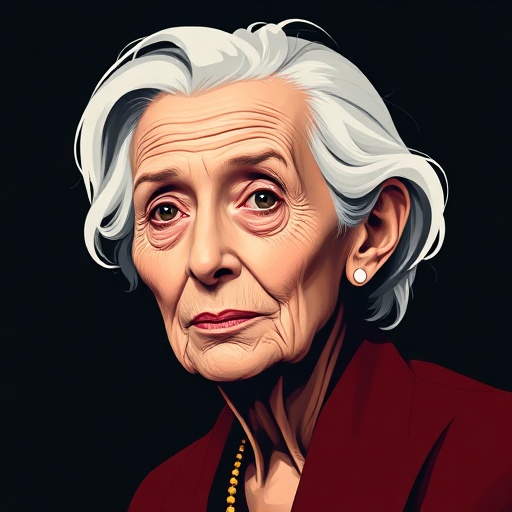
Jane Goodall — "My message is one of hope, but it's also a call to action."
My message is one of hope, but it's also a call to action.
My message is one of hope, but it's also a call to action.
Click any product to generate a realistic preview. Up to 3 at a time.
* Initial load can take up to 90 seconds — revising the preview in another color is nearly instant.
"Every day is a new opportunity to make a positive impact on the world."
"The root of our problems is that we have become disconnected from the natural world."
"We have to be the guardians of the planet, and protect it for generations to come."
"The greatest threat to our planet is the belief that someone else will save it."
"I've always felt that the human brain is the greatest weapon we have, and also the greatest tool."
British primatologist who in 1960 began the longest-running wild primate study at Gombe Stream, transforming our understanding of chimpanzees. Closely associated with Dian Fossey (mountain-gorilla researcher) and Birutė Galdikas (orangutan researcher; together with Goodall and Fossey one of Louis Leakey's 'Trimates'). For an intellectual contrast, see Walter Palmer, American dentist who killed Cecil the Lion in Zimbabwe in 2015 — Palmer represents the trophy-hunting tradition Goodall's life's work has been organized against — the colonial-era hunter-naturalist worldview that treated primates and big game as specimens or trophies, which Goodall's Roots & Shoots and Jane Goodall Institute exist specifically to displace.
Found in 1 providers: grok
1 source checked
Hope alone is not enough — it must drive people to act. The quote rejects passive optimism or wishful waiting. Instead, it frames hope as an obligation: if you believe a better outcome is possible, you are responsible for pursuing it. The two halves of the message are inseparable; acknowledging the potential for improvement demands that people do something concrete to realize it rather than simply feel encouraged.
Goodall witnessed chimpanzee habitat destruction firsthand at Gombe and spent decades watching ecosystems collapse globally. Rather than retreat into despair or denial, she founded the Jane Goodall Institute and the Roots and Shoots youth program to convert concern into organized effort. She travels nearly 300 days a year delivering this exact message. Her entire post-research career is built on refusing to let hope be passive — she embodies the call she issues to others.
From the 1990s onward, successive IPCC reports and biodiversity assessments documented alarming environmental decline, yet public response remained inconsistent. The early 21st century saw both rising eco-anxiety and widespread disengagement — people felt the crisis was too large for individual action to matter. Goodall's framing directly confronts that paralysis. Her message gained urgency as global climate summits produced slow progress, positioning hope not as comfort but as a moral catalyst demanding sustained personal and political commitment.
AI-generated insights based on extensive research and information for context. Factual errors? Email [email protected].
Your cart is empty