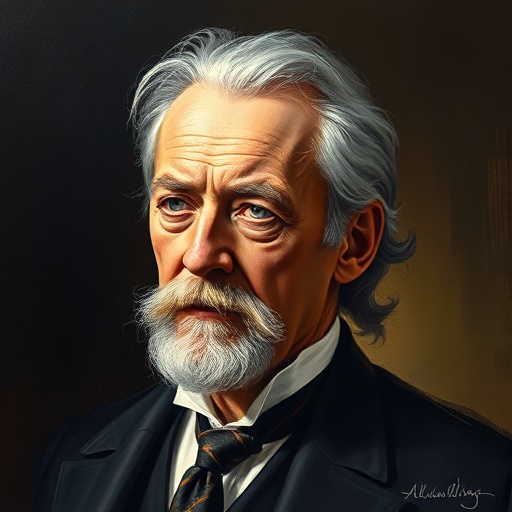
Alexander Fleming — "My work was not a flash of genius, but a gradual unfolding of facts."
My work was not a flash of genius, but a gradual unfolding of facts.
My work was not a flash of genius, but a gradual unfolding of facts.
Click any product to generate a realistic preview. Up to 3 at a time.
* Initial load can take up to 90 seconds — revising the preview in another color is nearly instant.
"I have been very lucky in my scientific career. I have stumbled on things by accident."
"The most important thing in science is not to get discouraged by failures."
"It is not the man who first sees a thing who is the discoverer, but he who sees into a thing."
"I have always been interested in the fight against disease."
"It is not difficult to make microbes resistant to penicillin in the laboratory by exposing them to concentrations not sufficient to kill them, and the same thing has occasionally happened in the body."
Found in 1 providers: grok
1 source checked
Major breakthroughs are rarely the result of sudden inspiration or singular brilliance. Instead, important discoveries emerge slowly through patient observation, careful experimentation, and the steady accumulation of small facts over time. The speaker rejects the romantic myth of the lone genius having an instant epiphany, framing achievement as the product of disciplined, incremental work where understanding builds piece by piece until a larger truth becomes visible.
Fleming's 1928 penicillin discovery is often mythologized as pure luck when mold contaminated a Petri dish, but he himself credited years of bacteriological training, his earlier 1922 lysozyme work, and methodical follow-up observations. A Scottish bacteriologist trained at St. Mary's Hospital and seasoned by WWI wound research, Fleming spent decades studying antibacterial substances. His humility here reflects a career built on noticing what others overlooked rather than chasing dramatic eureka moments.
Fleming worked through an era (1900s–1950s) when bacterial infections like pneumonia, sepsis, and battlefield wounds killed routinely, and the public craved heroic scientific narratives amid two world wars. Press coverage of his Nobel Prize (1945) leaned heavily on the lucky-mold story. Meanwhile, Howard Florey and Ernst Chain's painstaking 1940s work actually turned penicillin into a usable drug, reinforcing Fleming's point that medicine advanced through cumulative laboratory effort, not isolated genius.
AI-generated insights based on extensive research and information for context. Factual errors? Email [email protected].
Your cart is empty