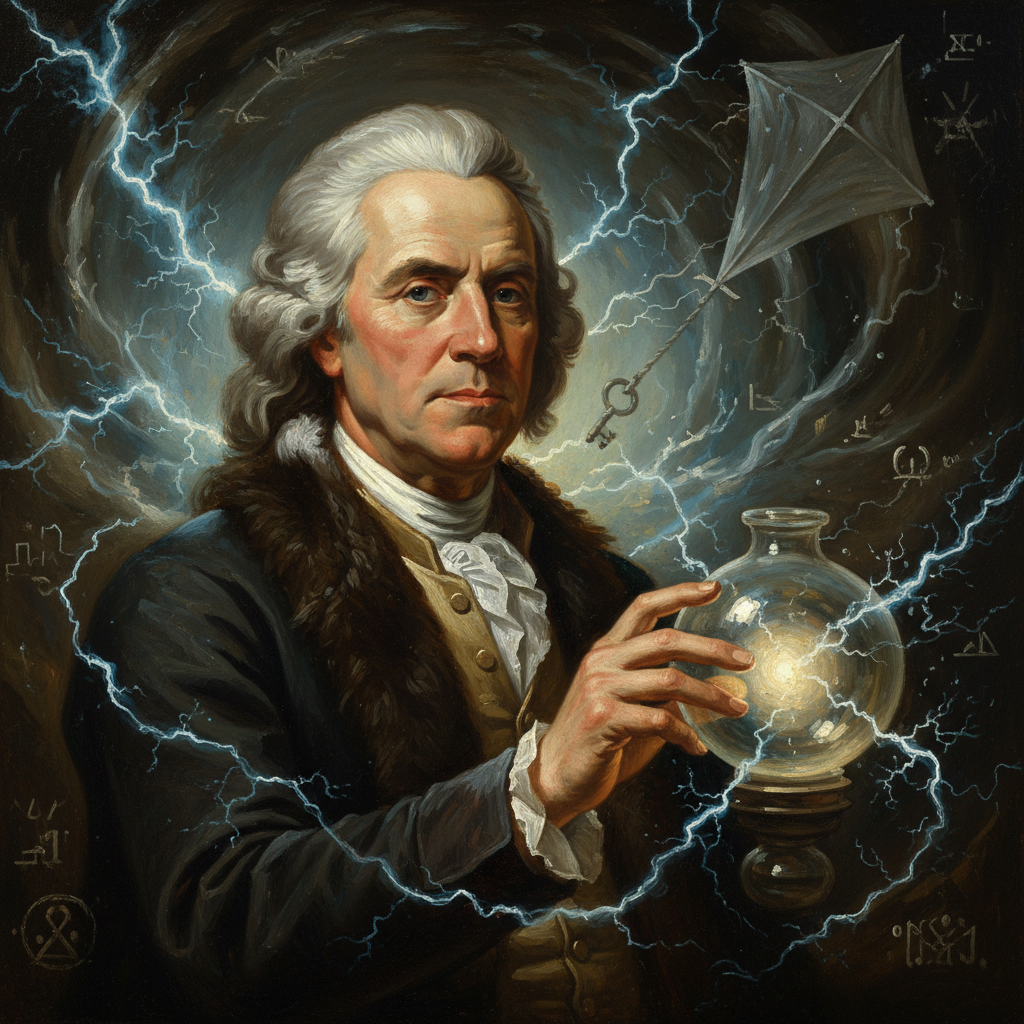
Benjamin Franklin — "Never confuse motion with action."
Never confuse motion with action.
Never confuse motion with action.
Click any product to generate a realistic preview. Up to 3 at a time.
* Initial load can take up to 90 seconds — revising the preview in another color is nearly instant.
"The worship of God is a duty; the hearing and reading of sermons may be useful; but if men rest in hearing and praying, as too many do, it is as if a tree should value itself in being watered and putt…"
"Each year one vicious habit rooted out, in time might make the worst man good throughout."
"Some are weatherwise, some are otherwise."
"Be at war with your vices, at peace with your neighbors, and let every new year find you a better man."
"A man wrapped up in himself makes a very small bundle."
Polymath Founding Father, diplomat, and Poor Richard's Almanack author who helped draft the Declaration of Independence and the Constitution. Closely associated with John Adams (fellow Founder, Massachusetts statesman) and Thomas Jefferson (fellow Declaration drafter). For an intellectual contrast, see Thomas Hutchinson, last royal governor of colonial Massachusetts — Franklin leaked Hutchinson's loyalist correspondence to Boston in 1772 to inflame revolutionary sentiment — Hutchinson represented the colonial-aristocrat crown-loyalty that Franklin's revolution was organized to dismantle.
Found in 1 providers: grok
1 source checked
Being busy is not the same as being effective. Motion means constant activity—meetings, busywork, endless shuffling—without real results. Action means deliberate effort that actually moves a goal forward. You can stay perpetually in motion while accomplishing nothing meaningful. The quote warns against mistaking busyness for productivity or effort for outcome. True progress requires purposeful, results-oriented work—not just the appearance of doing something. Staying occupied is easy; making things actually happen is the point.
Franklin embodied purposeful efficiency. His legendary daily schedule blocked every hour for specific productive goals, not busywork. As a printer, he mastered a trade through disciplined output. His electricity experiments weren't idle tinkering—they produced scientific results that changed civilization. As America's diplomat in France, he secured a concrete military alliance, not just goodwill. His Poor Richard's Almanack constantly preached practical results over mere appearances, reflecting a life built on measurable achievement rather than the illusion of effort.
Franklin lived during the Enlightenment and early industrialization, when empiricism displaced superstition and results replaced ritual. Colonial America demanded genuine productivity—farmers, tradesmen, and merchants survived by output, not appearance. The scientific revolution encouraged experiment over speculation: ideas were proved by what they produced. As political revolution loomed, founding a nation demanded decisive action, not deliberation theater. In an era of building new institutions—governments, universities, postal systems—idle motion was a luxury no serious person could afford.
AI-generated insights based on extensive research and information for context. Factual errors? Email [email protected].
Your cart is empty