Euclid — "No trace of Euclid's personality has survived."
No trace of Euclid's personality has survived.
No trace of Euclid's personality has survived.
Click any product to generate a realistic preview. Up to 3 at a time.
* Initial load can take up to 90 seconds — revising the preview in another color is nearly instant.
"A prime number is that which is measured by a unit alone."
"To construct a square on a given straight line."
"To describe a circle with any centre and radius."
"If equals be subtracted from equals, the remainders are equal."
"Of quadrilateral figures, a square is that which is both equilateral and right-angled; an oblong that which is right-angled but not equilateral; a rhombus that which is equilateral but not right-angle…"
This is a historical statement *about* Euclid, not *by* him. Included to highlight the paucity of personal quotes.
Date: N/A (historical assessment)
ShockingFound in 1 providers: grok
1 source checked
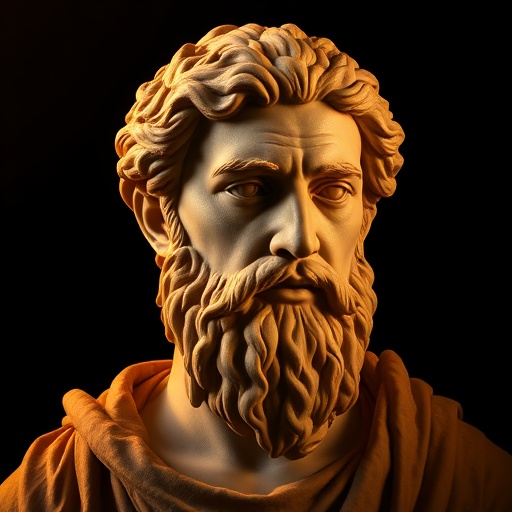
Despite leaving behind one of history's most influential texts — the Elements — almost nothing is known about Euclid as a human being. No letters, no portraits, no firsthand accounts of his life or character have survived. His dates, his appearance, even whether he worked alone or led a school remain uncertain. The man essentially vanished, leaving only mathematics. His work outlived him completely while he himself disappeared into anonymity.
The observation is deeply ironic — Euclid himself is its subject. His masterwork, the Elements, is famously impersonal: no prefaces about his struggles, no dedications to patrons, no rhetorical voice. He wrote as though mathematics speaks for itself, erasing the author entirely. This extreme intellectual discipline may explain the void. He built a monument so self-contained it needed no author, and history obliged by forgetting the man behind it.
Around 300 BCE, Alexandria was becoming the Mediterranean's intellectual hub under Ptolemy I, who founded the great Library. Scholars gathered there, but biographical documentation was sparse — ancient Greeks recorded ideas, not lives. Most of what survived came through later commentators like Proclus, writing 700 years after Euclid. Without personal correspondence or institutional records, anyone who didn't write autobiographically simply vanished as a person, however towering their intellectual legacy.
AI-generated insights based on extensive research and information for context. Factual errors? Email [email protected].
Your cart is empty