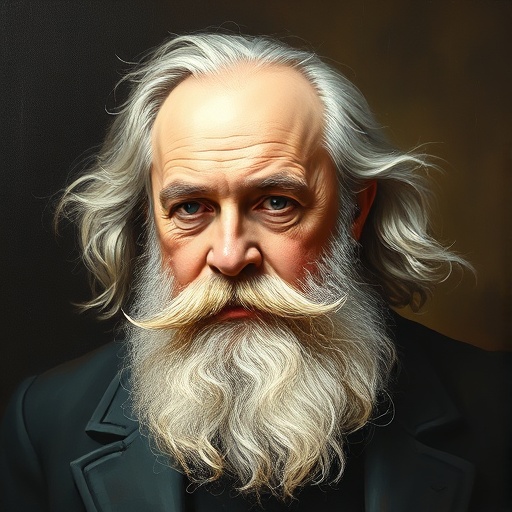
Dmitri Mendeleev — "One day, all elements will be discovered and their properties understood."
One day, all elements will be discovered and their properties understood.
One day, all elements will be discovered and their properties understood.
Click any product to generate a realistic preview. Up to 3 at a time.
* Initial load can take up to 90 seconds — revising the preview in another color is nearly instant.
"Pleasures flit by -- they are only for yourself; work leaves a mark of long-lasting joy, work is for others."
"The time has evidently come for the development of the internal structure of atoms."
"Hypotheses help and guide scientific work — the search for truth — as the tiller's plough helps the cultivation of useful plants."
"I love only science, and my children, and my wife, and my work, and the motherland."
"I consider it my duty to warn against this tendency to make a science of alchemy."
Found in 1 providers: grok
1 source checked
The speaker predicts that science will eventually identify every chemical element that exists and fully grasp how each one behaves. It expresses confidence that nature follows consistent patterns, and that patient investigation will uncover all of them. Rather than treating the material world as mysterious or infinite, it frames chemistry as a finite puzzle with a knowable solution waiting at the end of disciplined research.
Mendeleev built the periodic table in 1869, arranging known elements by atomic weight and leaving deliberate gaps where he predicted undiscovered ones would fit. He even forecast the properties of gallium, scandium, and germanium before they were isolated. This quote captures his defining conviction: elements obey an underlying order, and systematic classification would guide chemists to fill every remaining blank in the table he designed.
Mendeleev worked in late-19th-century Russia during a boom in analytical chemistry, when spectroscopy and improved isolation techniques were rapidly revealing new elements. Only about 63 were known when he published his table. Scientists across Europe were racing to catalog matter, and industrialization demanded purer metals and reagents. His confident forecast fit an era that believed rigorous method and tabulation could tame nature, echoing the broader Victorian faith in progress through classification.
AI-generated insights based on extensive research and information for context. Factual errors? Email [email protected].
Your cart is empty