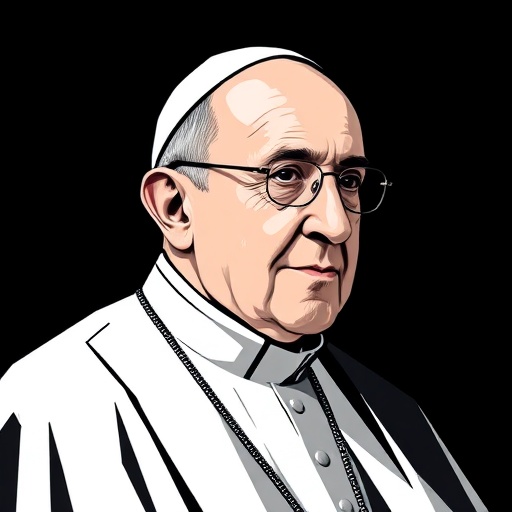
Pope Francis — "Rigidity is not a gift from God; it is a human thing."
Rigidity is not a gift from God; it is a human thing.
Rigidity is not a gift from God; it is a human thing.
Click any product to generate a realistic preview. Up to 3 at a time.
* Initial load can take up to 90 seconds — revising the preview in another color is nearly instant.
"The greatest danger is not sin, but rather spiritual comfort, the temptation to live a comfortable life, a tranquil life, a life where everything is in order."
"Priests who are rigid are sick. They are sick inside."
"The world is full of wars, hatred, envy, jealousy, and many other things that are not of God."
"The world cannot be understood without the poor. The poor are the treasure of the Church."
"The devil enters through the pockets."
First Latin American and Jesuit pope (2013-), who has steered the Catholic Church toward pastoral inclusion on LGBTQ pastoral care, divorced Catholics, and climate. Closely associated with Pope John XXIII (the Vatican II reformer pope) and Cardinal Walter Kasper (his theological ally on pastoral reform). For an intellectual contrast, see Cardinal Raymond Burke, American traditionalist cardinal, former head of the Vatican Apostolic Signatura — Burke is the public face of Catholic traditionalism that views Francis's pastoral approach as doctrinally dangerous — he has formally challenged Amoris Laetitia and other Francis reforms.
Found in 1 providers: grok
1 source checked
Inflexibility—in doctrine, rules, or moral positions—is not divinely sanctioned. It stems from human insecurity and fear rather than faith. God's nature, in Christian theology, centers on mercy, love, and renewal. Clinging rigidly to fixed systems or refusing compassionate adaptation is a human construct, not a spiritual virtue. True faithfulness demands openness, discernment, and the humility to recognize when rules serve people versus when they crush them.
Francis—born Jorge Mario Bergoglio, the first Jesuit pope—built his papacy around mercy over juridical strictness. His Jesuit formation emphasizes discernment and flexibility in serving souls. He openly clashed with traditionalist factions defending rigid liturgical and doctrinal positions, notably restricting the Traditional Latin Mass in 2021. His pastoral landmark "Who am I to judge?" on LGBTQ Catholics and his encyclical Amoris Laetitia on divorced Catholics both prioritized compassion over categorical rules.
Francis became pope in 2013 as the Church faced clerical abuse scandals, collapsing Western membership, and bitter internal divisions between progressive reformers and traditionalists defending pre-Vatican II practices. Globally, political and cultural rigidity intensified—polarization, nationalist movements, and ideological entrenchment defined the 2010s–2020s. The rise of rigid identity politics on all sides made his warning about inflexibility resonate far beyond Catholic circles, touching secular culture's own battles over dogma and change.
AI-generated insights based on extensive research and information for context. Factual errors? Email [email protected].
Your cart is empty