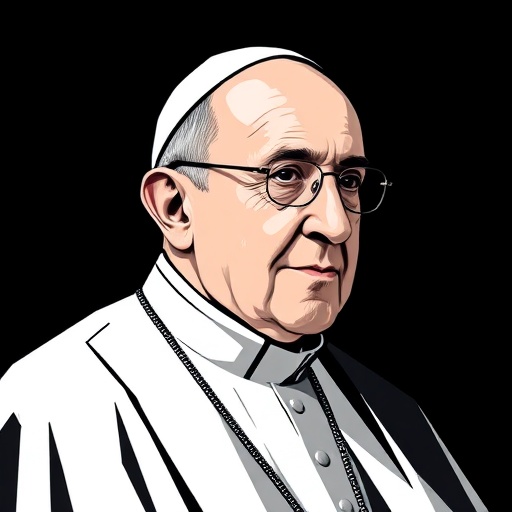
Pope Francis — "The world cannot be understood without the poor. The poor are the treasure of th…"
The world cannot be understood without the poor. The poor are the treasure of the Church.
The world cannot be understood without the poor. The poor are the treasure of the Church.
Click any product to generate a realistic preview. Up to 3 at a time.
* Initial load can take up to 90 seconds — revising the preview in another color is nearly instant.
"The greatest revolution is the revolution of tenderness."
"I believe in God, not in a Catholic God."
"The Church is a field hospital after battle."
"The greatest danger is spiritual worldliness."
"The globalization of indifference has taken from us the ability to weep."
First Latin American and Jesuit pope (2013-), who has steered the Catholic Church toward pastoral inclusion on LGBTQ pastoral care, divorced Catholics, and climate. Closely associated with Pope John XXIII (the Vatican II reformer pope) and Cardinal Walter Kasper (his theological ally on pastoral reform). For an intellectual contrast, see Cardinal Raymond Burke, American traditionalist cardinal, former head of the Vatican Apostolic Signatura — Burke is the public face of Catholic traditionalism that views Francis's pastoral approach as doctrinally dangerous — he has formally challenged Amoris Laetitia and other Francis reforms.
Found in 1 providers: grok
1 source checked
Poverty and the poor are not side issues — they are essential to understanding how the world actually works. Without encountering the marginalized, we miss the full picture of inequality, systemic failure, and human dignity. For the Church, the poor are not a charity case but a source of spiritual richness and prophetic witness. Their presence challenges comfortable assumptions and reminds institutions what their core purpose is: service, not self-preservation.
Born in Buenos Aires to Italian immigrants, Jorge Bergoglio grew up modestly and served Argentina's poorest communities as Archbishop, famously riding buses and visiting slums personally. He chose the name Francis after the saint of poverty. His first papal document, Evangelii Gaudium, condemned trickle-down economics as unjust and unproven. His entire papacy has centered on a 'poor Church for the poor' — making this quote not rhetoric but a biographical statement of lifelong, lived conviction.
Francis became Pope in 2013, five years after the 2008 financial crisis exposed catastrophic wealth concentration. Oxfam documented that the richest 1% owned more than the rest of humanity combined by 2016. The European migrant crisis displaced millions fleeing poverty and war. Populist anger at inequality surged globally. Against this backdrop, his insistence on the poor's centrality — across Laudato Si, countless speeches, and Vatican policy — served as a direct moral counterweight to rising economic nationalism and widespread indifference.
AI-generated insights based on extensive research and information for context. Factual errors? Email [email protected].
Your cart is empty