What it means
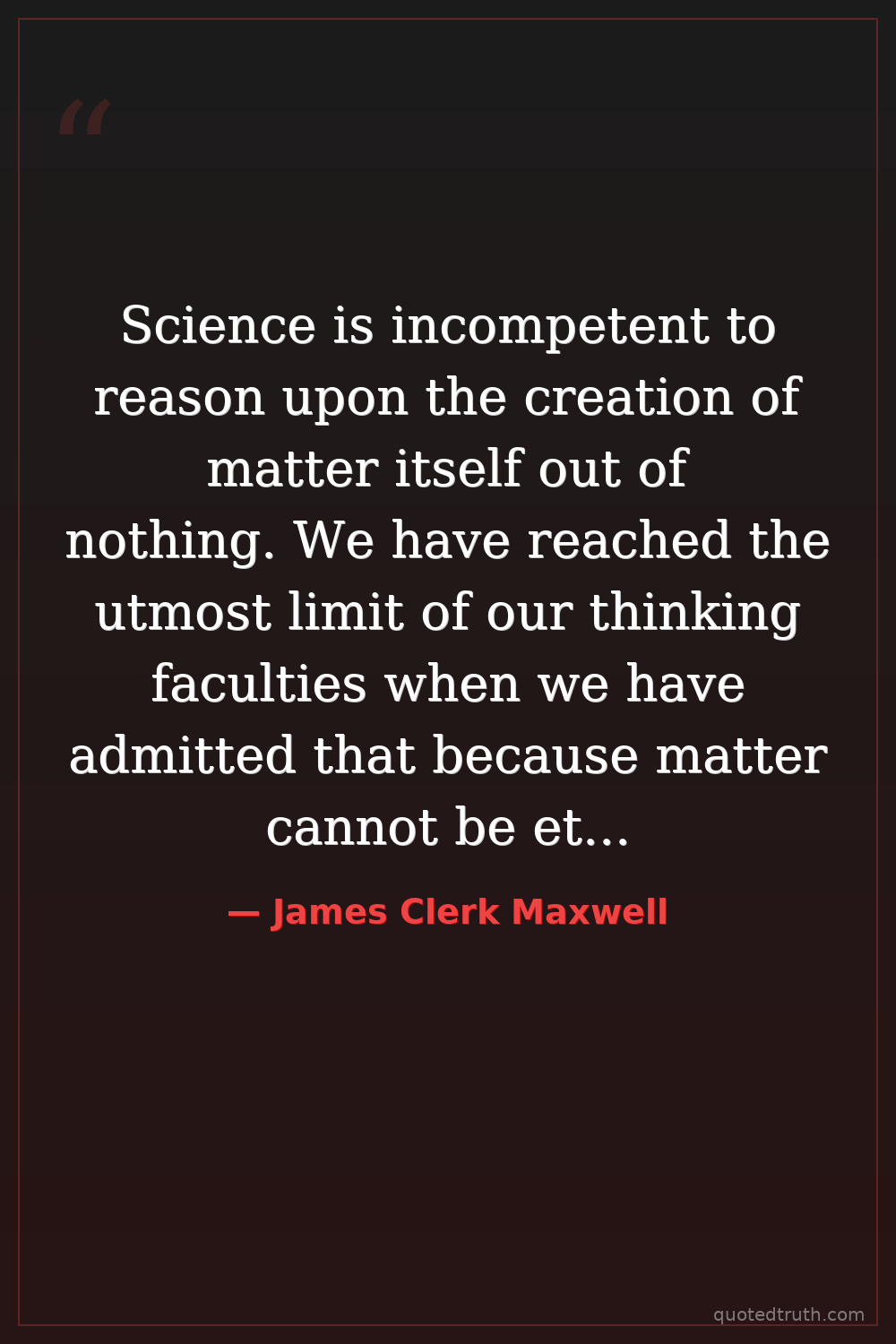
Science can describe how matter behaves and changes, but it cannot explain how matter came into existence from nothing in the first place. Reason can only take us so far: once we accept that matter is not eternal and could not have made itself, we are forced to conclude something outside of nature created it. That conclusion sits beyond what experiment or equation can test.
Relevance to James Clerk Maxwell
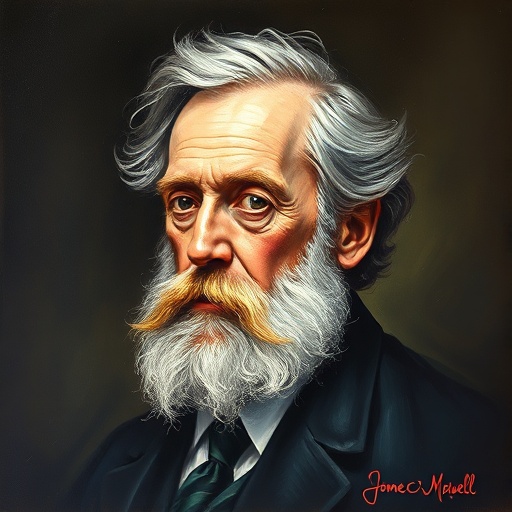
Maxwell unified electricity, magnetism, and light into four equations that became the foundation of modern physics, yet he was a devout Presbyterian who saw no conflict between rigorous science and Christian faith. He kept a handwritten prayer in his lab and read scripture daily. This quote captures his trademark intellectual humility: a man who mathematically described invisible fields still insisted physics has firm boundaries it cannot cross.
The era
Maxwell wrote during the Victorian era when Darwin's 1859 Origin of Species was reshaping how educated Britons thought about nature, design, and God. Tyndall, Huxley and the X Club were aggressively pushing scientific naturalism as a replacement for theology. Maxwell, writing from Cambridge in the 1870s, pushed back by drawing a careful line: science explains mechanism, not ultimate origin, a distinction many of his contemporaries were busy erasing.
AI-generated insights based on extensive research and information for context. Factual errors? Email [email protected].